How to Care for Low Porosity Hair: A Simple Routine
Caring for low porosity hair does not have to mean following a complicated routine. A simple low porosity hair care routine can focus on effective cleansing, balanced conditioning, adequate moisture, and avoiding unnecessary product buildup.
Low porosity hair can sometimes feel confusing. You may apply conditioner or a moisturizing product and still find that your hair does not seem to absorb it easily. At other times, your hair may feel weighed down by products even when the strands do not feel particularly moisturized.
The good news is that caring for low porosity hair does not have to mean following a complicated routine. The goal is to understand how your hair responds to water and products, then build a simple routine around what works for you.
This guide explains how to care for low porosity hair, including cleansing, conditioning, moisturizing, product buildup, drying, and everyday routine adjustments.
Important: Hair porosity is only one characteristic of hair. Texture, density, damage, climate, styling habits, and product choice can also affect how your hair behaves.
What Is Low Porosity Hair?
Hair porosity describes how readily the hair fibre allows moisture to enter and how well it retains that moisture.
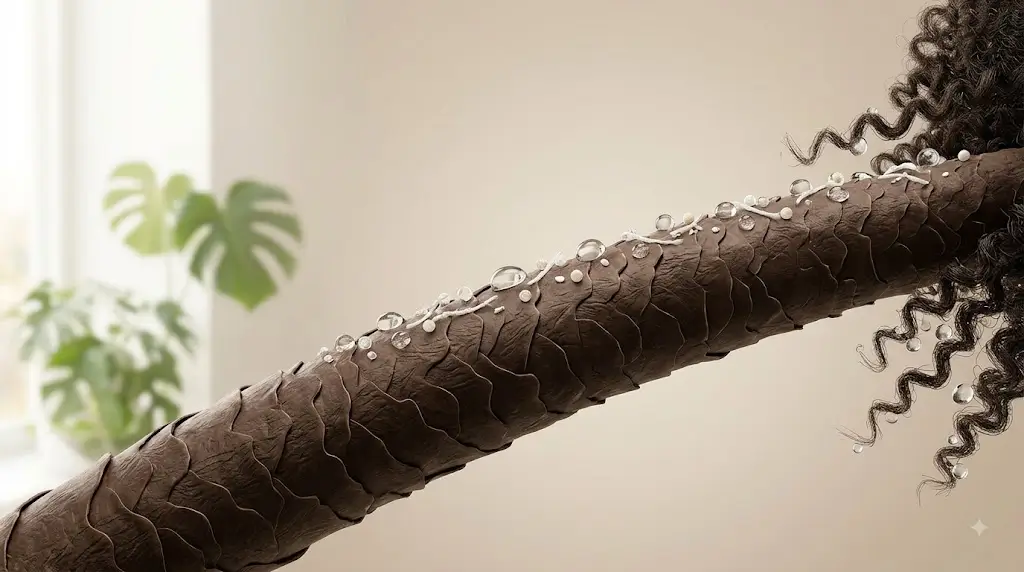
Low porosity hair is generally described as hair with a relatively compact cuticle structure. Because the outer cuticle layers may not open readily, water and some hair products can take longer to interact with the inner parts of the strand.
This does not mean low porosity hair is unhealthy. It simply means that your hair may respond differently to moisture and products compared with hair that has higher porosity.
If you’re still comparing the two main porosity types, our guide to low porosity vs high porosity hair explains the key differences in moisture absorption and retention.
You may notice that:
- Water takes some time to fully wet your hair.
- Products can seem to sit on the surface.
- Heavy products may make your hair feel coated or weighed down.
- Your hair can take a long time to become completely saturated.
- Buildup may become noticeable when several products are layered.
- Lightweight products may feel more comfortable than very rich formulas.
These are possible characteristics, not a checklist that can diagnose your hair porosity on its own.
Why Can Low Porosity Hair Be Difficult to Moisturize?
One of the most common frustrations with low porosity hair is the feeling that products are sitting on the hair instead of becoming part of the moisture routine.
This can happen when too much product is applied at once.
For example, applying a heavy conditioner, leave-in product, cream, and oil together may not necessarily make the hair more moisturized. Instead, the combination can leave a coating on the strands.
Water is still the foundation of a moisture routine. Products are used to support the hair’s feel, manageability, conditioning, and styling needs.
That is why a simple routine with the right amount of product can often be more useful than continuously adding new products.
A Simple Low Porosity Hair Care Routine
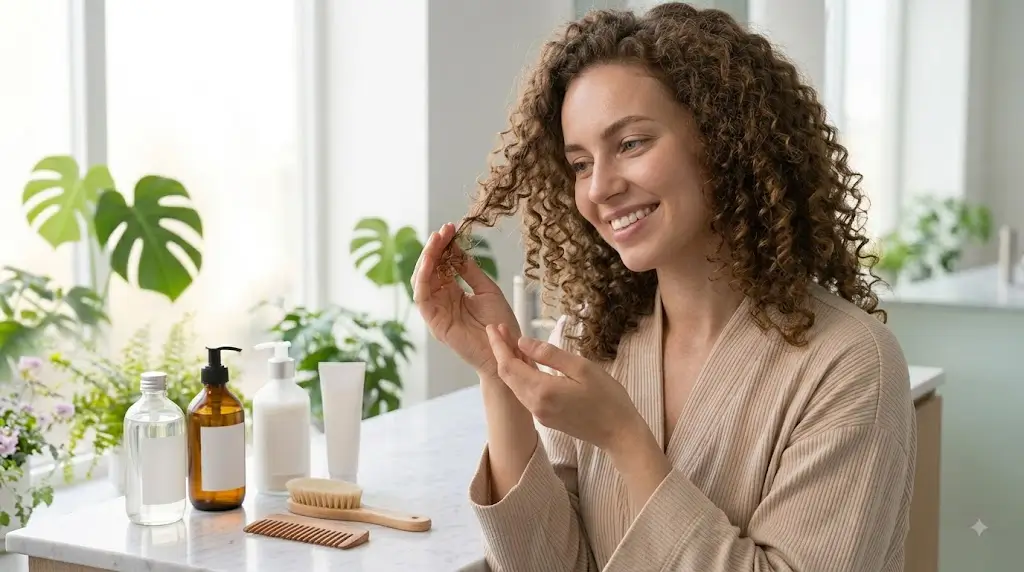
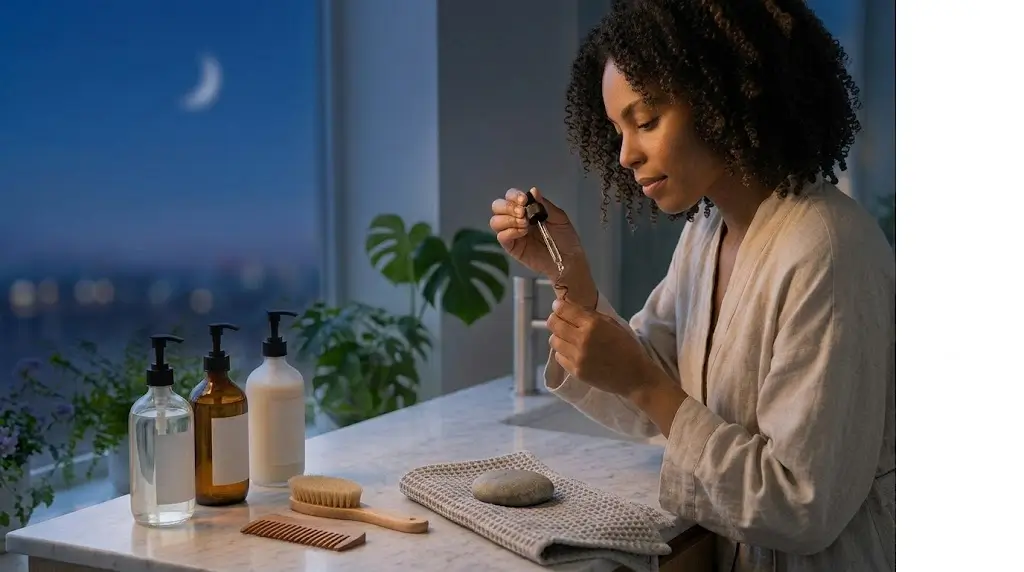
You do not need a dozen products to build an effective routine.
A practical routine can be divided into five basic stages:
- Cleansing
- Conditioning
- Moisturizing
- Styling
- Maintaining and adjusting the routine
Let’s look at each one.
1. Start With Effective Cleansing
Regular cleansing is especially important if your hair tends to collect product residue.
Shampoo removes excess oil, styling products, environmental residue, and other buildup from the scalp and hair.
The exact washing frequency depends on your scalp, hair texture, lifestyle, styling routine, and personal preference. There is no single schedule that works for everyone.
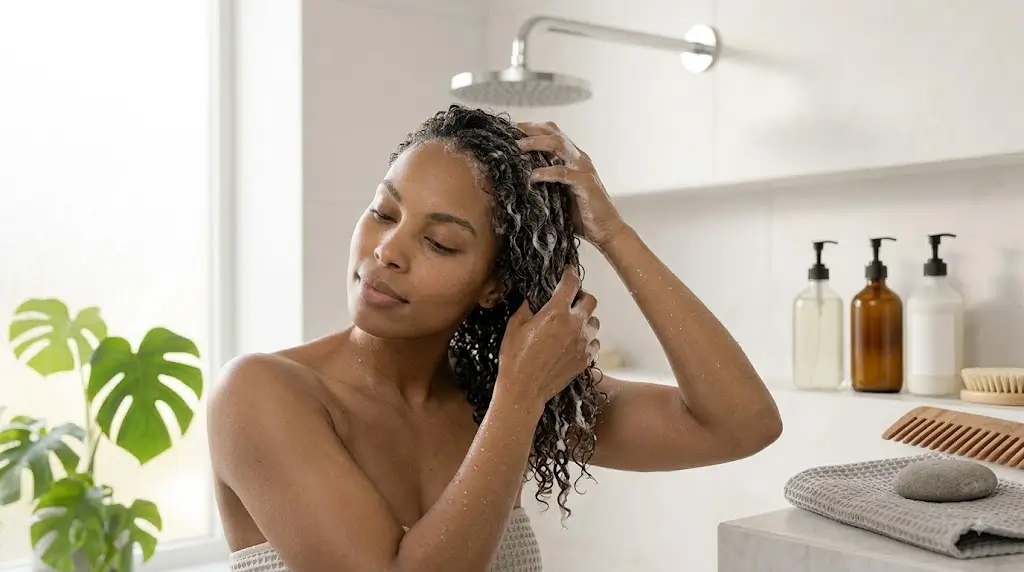
When cleansing, focus on the scalp
Apply shampoo primarily to the scalp and massage gently with your fingertips.
The lengths of the hair generally do not need aggressive scrubbing. The shampoo and water flowing through the lengths during rinsing can help clean them.
Avoid using your fingernails to scratch the scalp.
If your hair frequently feels coated, dull, sticky, or unusually difficult to wet, consider whether product buildup may be contributing to the problem.
2. Use Conditioner Without Overloading the Hair
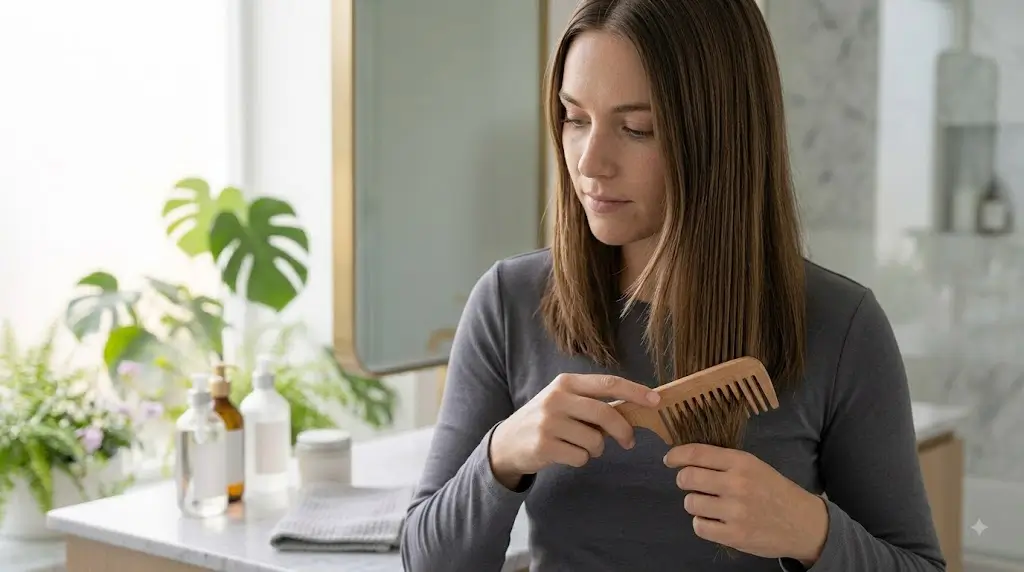
Conditioner can help improve softness, manageability, and detangling.
For low porosity hair, however, using a very large amount of a rich conditioner is not necessarily better.
Start with a moderate amount and distribute it evenly through the lengths and ends.
A useful approach
After shampooing:
- Gently squeeze excess water from the hair.
- Apply conditioner mainly through the lengths.
- Distribute it evenly.
- Leave it on according to the product directions.
- Rinse thoroughly.
If your hair repeatedly feels heavy after conditioning, try using less product rather than immediately adding another product to compensate.
3. Give Moisture a Chance to Work
Low porosity hair can sometimes respond better when the hair is thoroughly wet before conditioner or a moisturizing product is applied.
Instead of applying a large amount of product to barely damp hair, make sure the hair is adequately wet first.
Water helps hydrate the hair fibre, while conditioning products can help improve softness and manageability.
Think “water first, product second.”
This simple principle can help prevent the common mistake of trying to replace moisture with layers of styling products.
Once you’ve chosen suitable products, learning how to care for low porosity hair can help you build a simple routine around them.
4. Choose Lightweight Products When They Work Better for You
There is no universal list of ingredients that every person with low porosity hair must avoid.
However, if your hair becomes weighed down easily, experimenting with lighter formulas may make your routine easier to manage.
You might prefer:
- Lightweight conditioners
- Lightweight leave-in products
- Water-based styling products
- Light creams
- Products that rinse cleanly
- Fewer layers of styling products
The best choice depends on your individual hair.
Once you understand your routine, choosing suitable low porosity hair products can help you keep the number of products you use more manageable.
A product that works beautifully for one person may feel heavy on another person’s hair, even if both people describe their hair as low porosity.
5. Avoid Product Layering Without a Reason
One of the easiest ways to make a simple routine complicated is to keep adding products.
You might start with:
Shampoo → conditioner → leave-in
Then add:
cream → oil → gel → serum → another moisturizer
At some point, it becomes difficult to know which product is actually helping.
Instead, introduce products one at a time.
Give yourself enough time to observe how your hair responds before adding something else.
This makes it easier to identify what gives you good results and what may be contributing to buildup.
How to Deal With Product Buildup
Product buildup can be especially frustrating when hair already tends to feel resistant to moisture.
Common signs can include:
- Hair feeling coated
- Reduced softness
- Hair looking dull
- Products no longer spreading easily
- Hair feeling heavy
- Difficulty getting hair fully wet
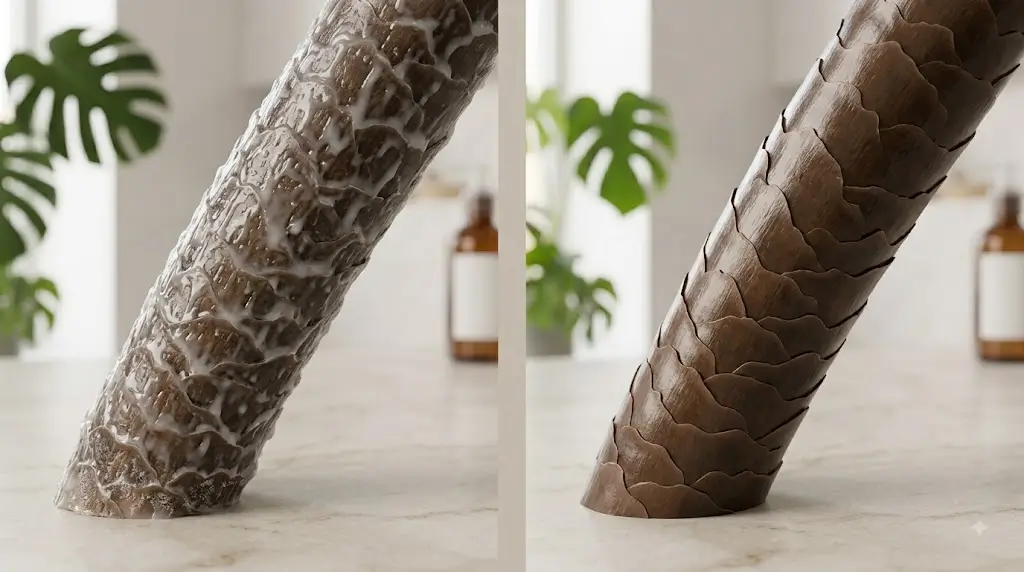
If buildup seems to be the issue, the solution is not necessarily to apply more conditioner.
A suitable cleansing routine can help remove accumulated residue.
If you use several styling products regularly, you may also need to pay closer attention to how frequently your hair needs cleansing.
Keep it simple
Instead of constantly switching products:
Cleanse → condition → observe → adjust
This approach gives you useful information about what your hair actually needs.
Should You Use Heat With Low Porosity Hair?
Some people find that gentle warmth helps their conditioner spread and feel more effective.
However, heat should not be treated as a requirement for low porosity hair.
If you use heat, keep it controlled and follow the instructions for the particular product or device.
Avoid excessive heat exposure, especially when styling frequently.
Your routine should not depend on high temperatures to make products “penetrate” the hair.
A gentle, consistent routine is more practical for long-term hair care.
If your hair behaves differently around moisture, our high porosity hair care routine provides a useful comparison.
How Often Should You Wash Low Porosity Hair?
There is no universal number of days between washes.
Your ideal schedule can depend on:
- Scalp oiliness
- Hair texture
- Exercise
- Climate
- Styling products
- Sweat
- Personal preference
- How your hair feels between washes
If your scalp becomes oily or uncomfortable quickly, you may prefer more frequent washing.
If your scalp and hair remain comfortable for longer, you may prefer a less frequent schedule.
The important point is to avoid choosing a washing schedule solely because you have been told that low porosity hair must be washed at a particular interval.
A Simple Weekly Approach
A basic weekly routine might look like this:
Wash Day
Cleanse → condition → detangle → apply a suitable leave-in or styling product → style
Between Washes
Keep manipulation low and refresh only when necessary.
If your hair still feels comfortable and looks good, you do not need to add another layer of product simply because several days have passed.
When Buildup Appears
Return to your normal cleansing routine rather than continuously layering additional moisturizing products.
Common Low Porosity Hair Care Mistakes
Mistake 1: Using Too Much Product
More product does not automatically mean more moisture.
Excess product can make hair feel heavy or coated.
Mistake 2: Layering Too Many Products
Using several conditioners, creams, oils, and styling products together can make it difficult to understand what your hair actually responds to.
Start with the basics.
Mistake 3: Avoiding Shampoo Because Hair Feels Dry
If your hair feels dry, eliminating cleansing completely may not solve the problem.
Instead, consider whether your cleansing method is too harsh, whether you are using too much product, or whether your conditioning routine needs adjustment.
Mistake 4: Assuming Everyone With Low Porosity Hair Needs the Same Routine
Porosity does not tell you everything about your hair.
Two people can both have low porosity hair but have very different textures, densities, curl patterns, scalp conditions, and styling habits.
Their routines may therefore look different.
Mistake 5: Treating the Float Test as a Definitive Diagnosis
Internet hair porosity tests can be interesting, but they should not be treated as a precise scientific diagnosis of your hair.
Your hair’s real-world behaviour—such as how it wets, dries, responds to products, and develops buildup—can provide more useful practical information.
How to Know If Your Routine Is Working
Instead of judging your routine by the number of products you use, look at how your hair behaves.
A routine may be working well when your hair is:
- Comfortable and manageable
- Easy enough to detangle
- Not excessively coated
- Not constantly weighed down
- Comfortable between washes
- Responding consistently to your usual products
If your hair becomes heavy, dull, coated, or difficult to style, reassess the routine rather than immediately buying another product.
Sometimes using less is the better adjustment.
For a broader approach to building a consistent routine, explore our Complete Hair Care Guide.
Final Takeaway
Caring for low porosity hair does not need to be complicated.
Start with the basics: cleanse the scalp effectively, condition the lengths, keep the hair adequately wet when applying moisture-focused products, and avoid using more product than your hair needs.
If buildup is a recurring problem, simplify your routine and pay attention to how your hair responds after cleansing.
Most importantly, remember that hair porosity is only one part of the picture. Your texture, density, scalp, climate, styling habits, and previous chemical or heat exposure can all influence how your hair behaves.
The best low porosity hair care routine is therefore not necessarily the one with the most products. It is the one that keeps your hair manageable, comfortable, and suited to your individual needs.
Understanding the differences between porosity types is useful, but knowing how to care for low porosity hair is the next step toward building a practical routine.
Frequently Asked Questions
Is low porosity hair difficult to moisturize?
It can sometimes take longer for water and products to interact with low porosity hair, which may make moisturizing feel more challenging. Using enough water, avoiding excessive product layering, and keeping the routine simple can help.
Is low porosity hair always healthy?
No. Hair porosity does not automatically determine whether hair is healthy or damaged. Heat, chemical treatments, mechanical stress, and other factors can affect hair condition.
What products are best for low porosity hair?
There is no single product list that works for everyone. Many people with low porosity hair prefer lightweight products that do not leave excessive residue, but individual results vary.
How often should low porosity hair be washed?
There is no universal schedule. Washing frequency should depend on your scalp, hair, lifestyle, products, climate, and how your hair feels between washes.
Does low porosity hair need heat?
Not necessarily. Some people find gentle warmth useful during conditioning, but heat is not required for a good low porosity hair care routine.
Can low porosity hair have buildup?
Yes. Product buildup can occur when styling or conditioning products accumulate on the hair. A suitable cleansing routine can help manage residue.
Can hair porosity change?
Hair behaviour can change as the hair is exposed to chemical processing, heat, environmental factors, and physical wear. It is therefore better to observe how your hair behaves over time rather than treating porosity as a permanent label.
Editorial Note
Hair porosity is a useful way to think about how hair interacts with moisture, but it is not a complete measure of hair health. Individual results can vary, so use porosity as one practical consideration when building your routine rather than as a strict classification.
For general guidance on caring for your hair and scalp, you can also refer to the American Academy of Dermatology’s hair care resources.
For additional information about hair and scalp health, see the Cleveland Clinic’s hair and scalp resources.