How to Protect Your Scalp From the Sun: 9 Practical Tips
Scalp sun protection is an important part of outdoor hair care, especially when your part line or other areas of the scalp are exposed to direct sunlight.
Your scalp is easy to overlook when you think about sun protection. Hair can provide some coverage, but it does not completely protect the skin underneath—especially around a visible part, hairline, crown, or areas where hair is fine or thinning.
Long periods outdoors can also leave hair feeling dry, rough, or more difficult to manage. If your hair is color-treated, repeated sun exposure can also contribute to unwanted changes in color and condition.
The good news is that protecting your scalp and hair does not have to make your routine complicated. A combination of shade, appropriate headwear, scalp-friendly sun protection, and simple hair-care habits can make outdoor days easier on both your scalp and hair.
The simplest approach is to reduce direct exposure with shade and a suitable hat, while protecting exposed scalp skin with an appropriate sunscreen. Pay particular attention to visible part lines, the hairline, crown, and areas where hair is fine or thinning.
Yes. Your scalp is skin, so areas that are exposed to sunlight can be affected by UV radiation just like other exposed areas of skin.
Hair itself is different. The hair shaft is made primarily of keratin and is not living skin, but prolonged environmental exposure can affect its appearance and feel. Hair may become drier, rougher, more brittle, or more difficult to manage.
The amount of protection naturally provided by your hair also varies. Someone with thick, dense hair may have more physical coverage than someone with fine or thinning hair. A clearly visible part can leave a narrow strip of scalp exposed even when the rest of the head is well covered.
For people who spend long periods outdoors, simple scalp sun protection habits can make outdoor hair care more practical.
That is why scalp protection and hair protection should be treated as related but separate parts of an outdoor hair-care routine.
Why Scalp Sun Protection Matters
The scalp is often forgotten because it is partially covered by hair.
• Part line
• Hairline
• Crown
• Temples
• Very short hair
• Fine or thinning hair
• Bald or closely shaved areas
The more exposed the skin is, the more important practical sun-protection habits become.
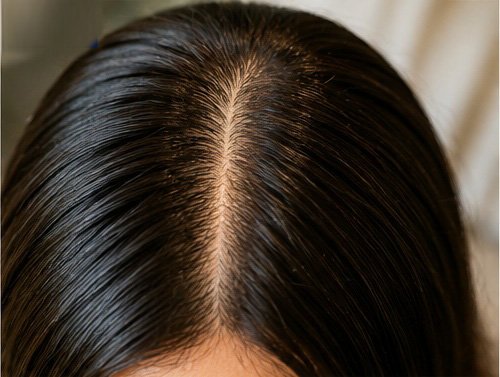
A visible part line can leave a narrow area of scalp directly exposed to sunlight.
How to Protect Your Scalp From the Sun
1. Cover Your Scalp With a Sun-Protective Hat
One of the simplest ways to reduce direct sun exposure is to wear a hat when you are going to spend significant time outdoors. A hat can be particularly useful when your scalp has limited natural coverage from hair.
For longer outdoor periods, a hat with a reasonably wide brim can provide additional coverage around the face, ears, and sides of the head. Choose one that fits comfortably, provides useful coverage, allows airflow, works with your hairstyle, and suits the activity.
2. Pay Attention to Your Part Line
Your part may be one of the most overlooked exposed areas on your scalp. Before spending extended time outdoors, consider wearing a hat, spending more time in shade, changing your part temporarily, or using an appropriate sun-protection product on exposed scalp skin.
3. Consider a Scalp-Friendly Sunscreen
If part of your scalp remains exposed, a sunscreen designed for use on skin may be worth considering. This can be especially relevant for fine or thinning hair, very short hair, closely shaved hair, visible part lines, bald areas, or outdoor activities where a hat is not practical.
Choose a product that is suitable for the exposed skin and follow its label directions. Do not confuse a hair product’s UV-protection claim with sunscreen for exposed scalp skin.
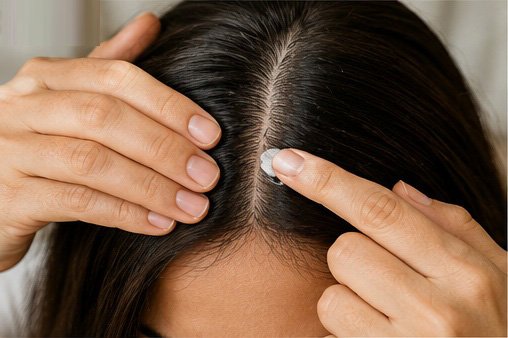
Exposed scalp skin can be protected with an appropriate sunscreen used according to its directions.
4. Use Shade Strategically
Shade is an easy addition to your routine and costs nothing. Sit under an umbrella, choose a shaded area, take indoor breaks during prolonged exposure, use covered seating, and plan outdoor activities around practical shade opportunities.
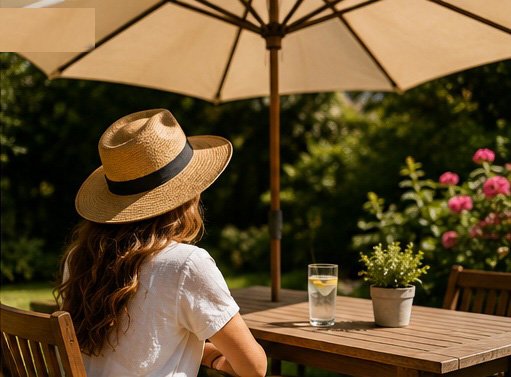
Shade and protective headwear can reduce direct sun exposure during outdoor activities.
5. Choose Hair Products With UV Protection Carefully
Some hair-care products are marketed with UV or sun-protection claims. These may be useful for maintaining the appearance and condition of the hair itself, but they should not automatically be treated as sunscreen for exposed scalp skin.
6. Use Hairstyles That Reduce Direct Exposure
On outdoor days, consider styles that reduce exposed scalp, work comfortably under a hat, keep hair secure in wind, and reduce unnecessary tangling.
How to Protect Your Hair From Sun Damage
Protecting your scalp is only part of the equation. If you spend a lot of time outdoors, your hair can also benefit from a few simple habits.
Keep Hair Conditioned
A suitable conditioner can help maintain softness and manageability as part of your normal hair-care routine.
Reduce Unnecessary Heat Styling
If your hair is already exposed to environmental stress, balancing outdoor exposure with gentler styling habits may help you maintain manageability.
Protect Color-Treated Hair
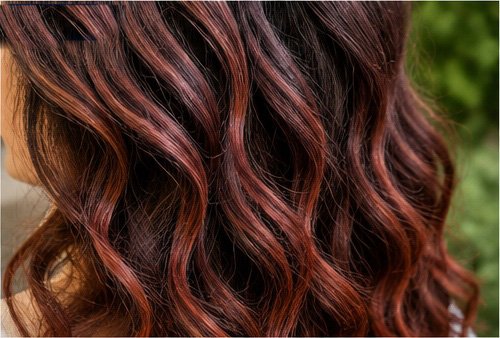
If your hair is color-treated, maintaining its appearance may require extra care. For a more complete routine, see our Hair Care Routine for Color-Treated Hair.
Protective habits can help maintain the appearance and manageability of color-treated hair during outdoor exposure.
The Best Sun Protection Routine for Different Hair Types
Fine or Thinning Hair
Identify exposed areas, use a hat when practical, protect exposed skin appropriately, and avoid relying on hair alone as protection.
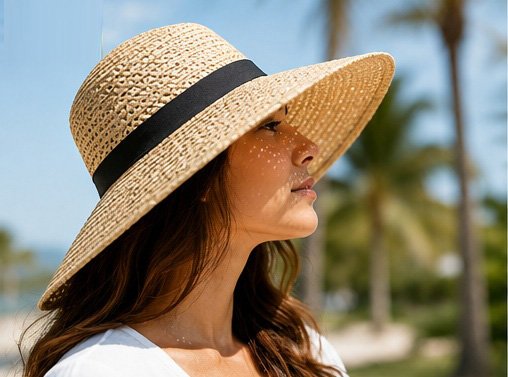
A wide-brimmed hat is one of the simplest options for everyday scalp sun protection.
Curly or Wavy Hair
Plan protection before going outdoors and use a comfortable hat or appropriate protection for exposed scalp areas without unnecessarily disturbing your curl pattern. Explore our Hair Care Routine for Curly Hair.
Color-Treated Hair
Use shade and protective headwear when practical, maintain conditioning, and choose products appropriate for color-treated hair.
Thick Hair
Thick hair can provide physical coverage, but it does not guarantee every part of the scalp is protected. Pay attention to your part, hairline, crown, and areas where hair separates.
Braids and Protective Styles
Protective styles do not automatically protect every part of the scalp. Exposed sections still need attention.
What to Do Before a Beach or Outdoor Day
• Check your scalp exposure.
• Prepare your protection. Have your hat and appropriate sunscreen ready.
• Protect your hair. Follow your normal conditioning or protective routine.
• Plan shade. Know where you can take breaks from direct sunlight.
• Avoid last-minute styling experiments.
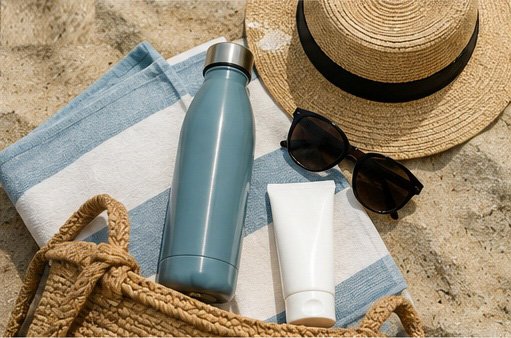
Preparing sun-protection essentials before a beach day makes it easier to follow a consistent routine.
How to Protect Hair and Scalp Around Chlorine and Salt Water
Beach and pool days can expose hair to more than sunlight. Salt water and chlorinated water can affect how hair feels, while sun exposure adds another environmental factor. Before swimming, prepare your hair according to your normal routine; during the day, use a hat or shade when practical; after swimming, rinse and follow your usual cleansing and conditioning routine.
What to Do After Sun Exposure
1. Check Your Scalp
Notice whether exposed areas feel unusually uncomfortable, irritated, or different from normal.
2. Cleanse Gently
Use your usual cleansing routine rather than aggressively scrubbing.
3. Condition Your Hair
If your hair feels dry, follow with a suitable conditioner.
4. Detangle Gently
Work gradually rather than pulling through knots.
5. Give Your Hair a Break
Avoid unnecessary heat styling if your hair already feels dry or stressed.
Common Scalp Sun Protection Mistakes
• Assuming hair completely protects the scalp
• Forgetting the part line
• Using hair products as a replacement for skin sunscreen
• Relying only on one protection method
• Ignoring fine or thinning areas
• Forgetting that outdoor exposure adds up
• Neglecting hair after outdoor activities
How to Choose a Scalp Sunscreen
For exposed scalp areas, consider a sunscreen intended for use on skin, suited to your skin type, comfortable on the scalp, compatible with your routine, and accompanied by clear application directions. If you have a sensitive scalp or a skin condition, professional advice can be useful before introducing a new product.
Scalp sun protection can also include sunscreen on exposed areas of skin when appropriate.
When to Talk to a Dermatologist
Consider seeking professional evaluation for a scalp area that is persistently painful, unusually irritated, bleeding, not healing, developing a new or changing spot, or showing a persistent unusual change.
This article provides general hair-care information and is not a diagnosis.
Frequently Asked Questions
How can I protect my scalp from the sun?
Use a combination of a suitable hat, shade, and sunscreen on exposed scalp skin. Pay attention to visible parts, the hairline, crown, and areas where hair is fine or thinning.
Does hair protect your scalp from the sun?
Hair can provide some physical coverage, but it does not guarantee complete protection. Exposed areas such as a part line may still receive direct sunlight.
Can I use sunscreen on my scalp?
Sunscreen can be appropriate for exposed scalp skin. Choose a product intended for skin and follow its label directions.
Does the sun damage hair?
Prolonged environmental exposure can affect the appearance and feel of hair, potentially making it drier, rougher, or more difficult to manage.
Is a hat enough to protect the scalp?
A suitable hat can provide valuable physical coverage, but protection depends on its design, fit, and the areas it covers. Combining headwear with shade and appropriate sunscreen on exposed skin can provide a more comprehensive approach.
How do I protect thinning hair from the sun?
Focus on protecting the scalp itself because thinning hair can leave more skin exposed. A comfortable hat, shade, and appropriate sunscreen for exposed skin can all be useful.
How can I protect color-treated hair from the sun?
Use shade and protective headwear when practical, maintain conditioning, and choose hair-care products appropriate for color-treated hair.
Your Scalp Sun-Protection Checklist
• Check your part line and exposed scalp
• Wear a suitable hat for prolonged outdoor exposure
• Use sunscreen on exposed scalp skin as directed
• Look for shade during long outdoor periods
• Protect color-treated or dry hair from unnecessary environmental stress
• Rinse and condition hair after swimming when appropriate
• Check your scalp for unusual or persistent changes
Protecting your scalp from the sun does not require a complicated routine. Start by identifying where your scalp is exposed. Then use practical layers of protection: cover exposed areas, seek shade, use appropriate sunscreen on exposed skin, and take care of your hair after prolonged outdoor exposure.
Fine, thinning, curly, thick, and color-treated hair may each require slightly different approaches, but the basic principle remains the same: protect the scalp as skin and care for the hair as hair. With a little preparation, you can enjoy outdoor time while making sun protection a simple part of your regular hair-care routine.
Conclusion
Building a simple scalp sun protection routine can make outdoor days easier to manage.