In contemporary botanical trichology, few natural remedies have garnered as much intense scientific scrutiny and viral adoration as rosemary essential oil (Rosmarinus officinalis). Once relegated to traditional Mediterranean folklore, this aromatic woody herb has transcended social media trends to become a clinically validated powerhouse for hair follicle reactivation and scalp barrier restoration.
Quick Summary: How to Use Rosemary Oil for Hair Growth
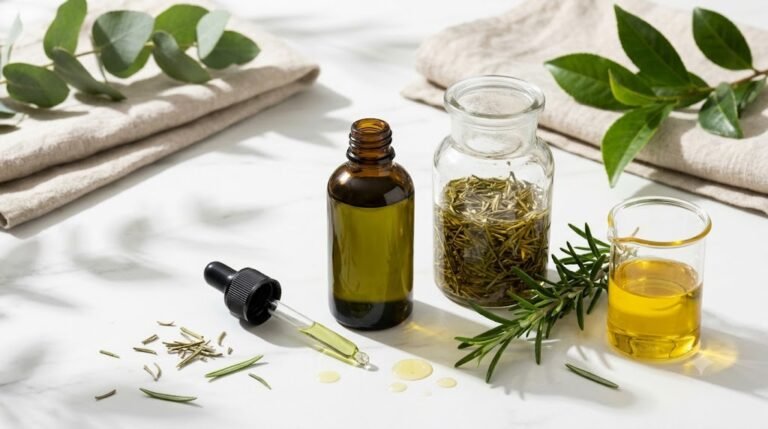
To use rosemary oil safely for hair growth: Always dilute 5 to 6 drops of pure 100% steam-distilled rosemary essential oil into 1 fluid ounce (30 ml) of a carrier oil like jojoba, argan, or pumpkin seed oil (a 2% clinical dilution). Never apply pure essential oil directly to the scalp. Part your hair, massage the blend into thinning scalp zones for 5 minutes, leave on for at least 30 to 45 minutes, and wash out thoroughly with a sulfate-free shampoo 3 to 4 times per week.
However, despite its extraordinary therapeutic promise, thousands of individuals experience severe adverse reactions—ranging from acute chemical burns and contact dermatitis to paradoxical shedding (shock-induced telogen effluvium)—solely due to misapplication, uncalibrated concentrations, and a lack of understanding regarding cutaneous lipid biology.
Navigating the transition from genetic thinning, post-stress shedding, or postpartum loss back to dense, resilient hair requires a disciplined, evidence-based methodology. This comprehensive clinical guide demystifies the molecular pathways of carnosic acid, evaluates landmark clinical trials, provides an interactive precision dilution calculator, and details the exact five-stage massage protocol necessary to achieve professional-grade results safely.
1. Cellular Trichology: Carnosic Acid, Micro-Circulation, and DHT Inhibition
To grasp why rosemary oil is uniquely potent among botanical extracts, one must investigate its biological activity at the level of the dermal papilla—the specialized mesenchymal cells situated at the base of the hair follicle that orchestrate hair fiber synthesis.
Carnosic Acid & Tissue Healing: The principal bioactive constituent responsible for rosemary’s regenerative capability is carnosic acid, a polyphenolic diterpene. Clinical research reveals that carnosic acid accelerates tissue repair and enhances cutaneous microvascular perfusion. By promoting peripheral nerve recovery around dormant follicles, it effectively “awakens” miniaturized follicles that have entered prolonged resting phases.
DHT (Dihydrotestosterone) Pathway Modulation: In androgenetic alopecia (pattern hair loss), circulating testosterone binds with the 5-alpha reductase enzyme in the scalp dermis, converting into DHT. DHT subsequently docks onto androgen receptors, triggering progressive follicular miniaturization. Bio-assays demonstrate that rosemary leaf extract exhibits mild, localized 5-alpha reductase inhibitory activity, helping protect sensitive follicle roots from hormonal suffocation.
Antioxidant Quenching of Lipid Peroxidation: Oxidative stress generated by UV radiation, environmental pollutants, and sebum degradation degrades scalp lipids, leading to premature follicular senescence. Rosemary oil’s dense concentrations of rosmarinic acid and 1,8-cineole actively neutralize reactive oxygen species (ROS), preserving the structural integrity of the scalp barrier.
The Biological Rule: Essential Oils Are Not Hydrating Agents
It is vital to distinguish between cosmetic hydration and essential oil therapy. Essential oils contain no water molecules; they are volatile aromatic phytocompounds. They do not moisturize the hair fiber shaft—instead, they deliver active pharmacological signaling to the living scalp dermis. To hydrate hair lengths, always rely on water-based humectants and leave-in preparations such as our structured hair care routine for curly hair.
2. The Landmark Clinical Trial: Rosemary Oil vs. 2% Minoxidil
The global surge in interest surrounding rosemary oil is anchored in a gold-standard comparative trial published in 2015 in SKINmed Dermatology Journal by Panahi et al. This randomized, single-blind clinical study investigated 100 human subjects experiencing androgenetic alopecia:
Clinical Parameter
Rosemary Oil Protocol (Trial Group)
2% Minoxidil Solution (Control Group)
Trichological Interpretation
3-Month Terminal Hair Count
No statistically significant increase observed.
No statistically significant increase observed.
Both therapies require at least 90 days to transition follicles from telogen to anagen.
6-Month Terminal Hair Count
Significant increase in active terminal hair density.
Significant increase in active terminal hair density (equivalent efficacy).
Rosemary oil demonstrated equivalent performance to pharmaceutical 2% minoxidil at 6 months.
Scalp Itching & Erythema (Side Effects)
Very low incidence of cutaneous irritation.
Significantly higher incidence of severe scalp itching, flaking, and dermatitis.
Rosemary oil exhibited superior dermatological tolerability compared to standard propylene glycol-based minoxidil formulas.
The study’s conclusion was definitive: when applied consistently over a 6-month period in a proper lipid vehicle, rosemary oil matches the therapeutic hair regrowth outcomes of 2% minoxidil without inducing the frequent pruritus and burning associated with synthetic topical solutions.
Select your scalp sensitivity profile and desired batch volume to calculate the exact, medically safe drop count:
4. Choosing the Optimal Carrier Lipid: Comedogenicity and Synergistic Chemistry
Rosemary essential oil cannot migrate through the stratum corneum without a lipid vehicle. The molecular weight and fatty acid profile of your carrier oil govern the depth of follicular absorption:
Carrier Lipid
Dominant Fatty Acids
Comedogenic Rating (0-5)
Trichological Synergy with Rosemary
Best Scalp Match
Golden Jojoba (Simmondsia chinensis)
Gadoleic and erucic wax esters (97% liquid wax).
2 (Non-occlusive)
Chemically identical to human sebum; dissolves hardened wax plugs in follicle funnels.
Balanced, oily, or dandruff-prone scalps.
Virgin Pumpkin Seed (Cucurbita pepo)
Linoleic acid, oleic acid, delta-7-sterols.
2 (Low risk)
Clinically shown to reduce DHT binding; creates an anti-androgenic compound synergy.
Genetic thinning, pattern androgenetic hair loss.
Pure Moroccan Argan (Argania spinosa)
Oleic acid, linoleic acid, high squalene.
0 to 1 (Very light)
Forms a protective antioxidant sheath over the follicle orifice, soothing erythema.
Dry, flaky, mature, or post-menopausal scalps.
Cold-Pressed Castor (Ricinus communis)
Ricinoleic acid (90% fatty acid profile).
1 (High viscosity)
Extremely dense; must be diluted 1:3 with jojoba to avoid suffocating roots.
Coarse Type 4 hairline thinning (edges only).
5. Step-by-Step Protocol: How to Apply Rosemary Oil for Maximum Density
Executing an effective rosemary scalp protocol involves far more than rubbing oil into your hair. Follow this precise 5-stage clinical sequence 3 to 4 times weekly:
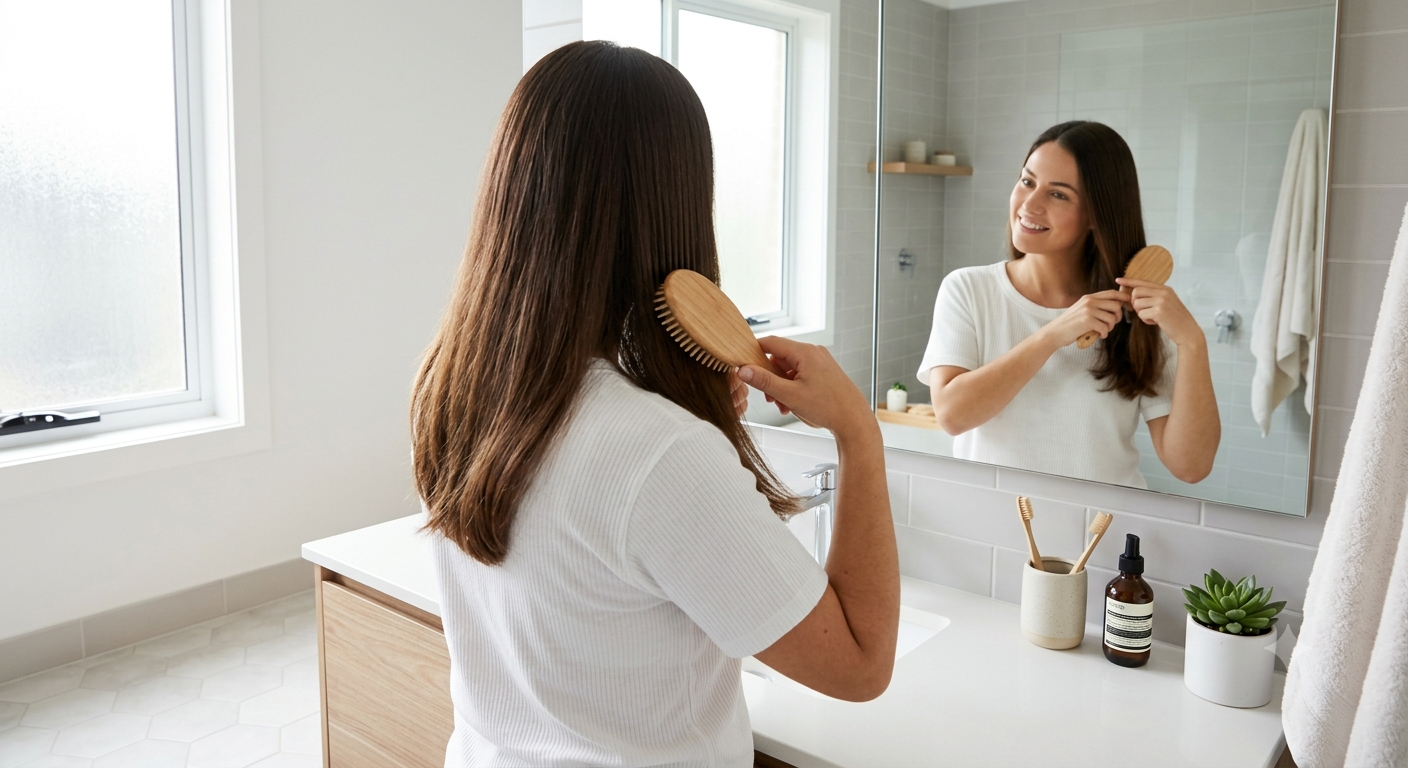
Brush your hair thoroughly using a seamless wide-tooth comb to remove surface debris and tangles, as detailed in our guide on how to detangle hair. Part your hair down the center with a tail comb. Using your comb, section your hair into 4 neat quadrants: two front apex quadrants and two rear occipital quadrants.
Phase 2: Targeted Pipette Dropper Application
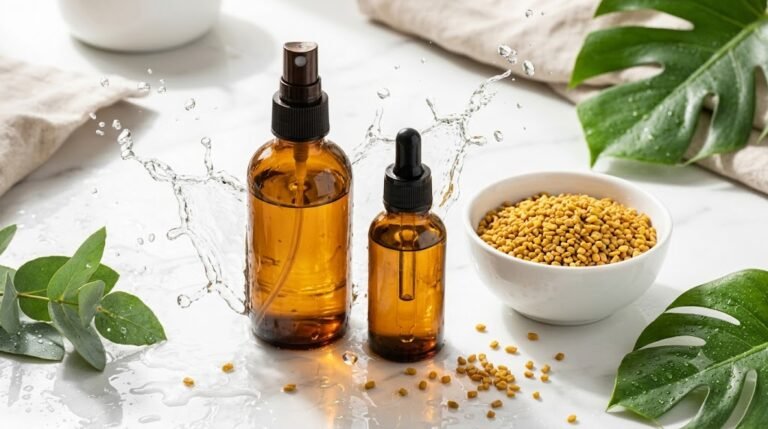
Using your calibrated amber dropper bottle, apply small micro-drops directly along the exposed scalp line. Do not squirt large streams that drip down your neck or face. Ensure the dropper tip stays 1/2 inch away from your scalp to keep the pipette sterile. Focus primarily on areas exhibiting visible thinning, such as the temples, widening center part, and the crown vortex.
Phase 3: The 5-Minute Inversion Micro-Circulatory Massage
Place your clean fingertips (or an ergonomic soft-silicone scalp massager) firmly against your scalp. Gently lower your head forward below heart level—this inverted posture leverages gravity to enhance capillary perfusion to the cranium. Execute firm, slow, circular movements without lifting your fingertips or creating abrasive friction along the hair fibers. You want to mobilize the actual scalp skin over the cranium, stimulating cellular mechanotransduction in the dermal papilla.
Phase 4: Absorption Incubation Window
Allow the active terpenes and carnosic acid molecules to absorb into the follicular infundibulum for a minimum of 30 to 45 minutes. If you tolerate the oil without any warmth or redness, you may safely leave it on overnight under a breathable 100% Mulberry silk bonnet to prevent product transfer to bedding.
Phase 5: Double Cleansing and Cuticle Sealing
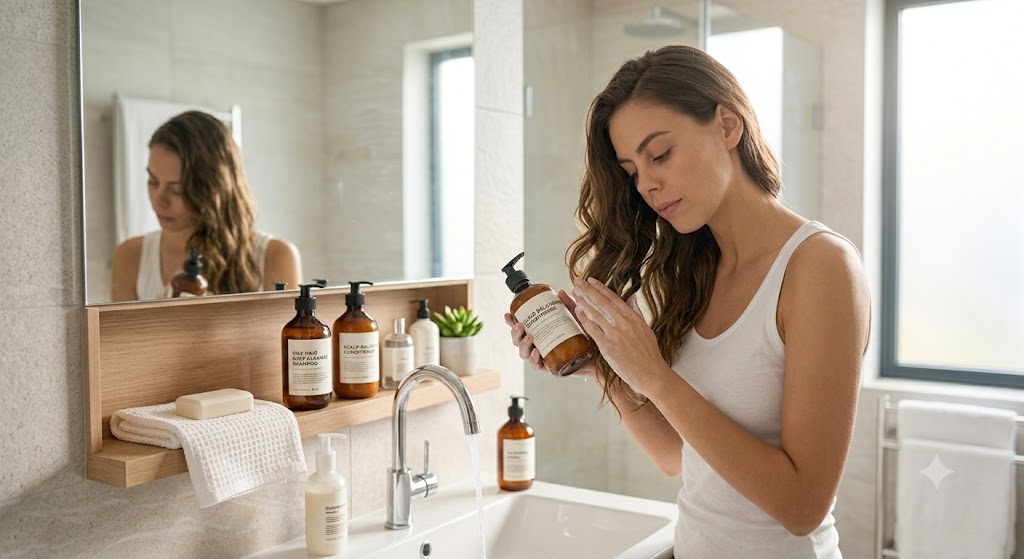
Never rinse oil out with plain water! Water repels oil, leaving a greasy film that traps dead keratocytes. In the shower, apply a small amount of sulfate-free shampoo directly onto your dry-oiled roots before adding water. Massage to emulsify the oils, then add warm water to lather completely. Rinse clean, follow with an elasticity conditioner, and finish your hair lengths with a lightweight serum using our proven technique on how to apply hair serum correctly.
Critical Safety Warnings & Contraindications
While rosemary essential oil is an exceptional botanical active, strict medical boundaries must be observed:
Pregnancy & Lactation: Rosemary oil contains camphor and possesses mild emmenagogue properties (stimulating uterine blood flow). Pregnant or nursing individuals should avoid medicinal rosemary scalp treatments unless explicitly cleared by their obstetrician.
Undiluted Application Warning: Pure essential oil applied raw to the dermis can induce chemical burns and trigger allergic sensitization, permanently precluding you from using botanical products.
Epilepsy and Neurological Conditions: High concentrations of camphor in certain rosemary chemotypes can lower seizure thresholds; consult a physician before using aromatic cineole-rich oils if you manage a neurological condition.
The 24-Hour Patch Test: Always blend 1 drop of rosemary oil with 1 teaspoon of jojoba oil, apply behind the ear or inside the forearm, and verify zero redness or itching after 24 hours.
6. Integrating Rosemary Oil into Textured, Curly, and Chemically Treated Hair
Different hair fiber structures require customized application frequencies to balance scalp stimulation with fiber moisture retention:
Fine, Straight, or Low-Porosity Strands: Fine hair can easily become stringy under oil layers. Apply your rosemary blend as a 30-minute pre-shampoo treatment only. Never leave it on overnight, and always wash with a clarifying wash once every three weeks.
Type 2 Waves & Type 3 Curls: Textured curls thrive when rosemary oil is paired with hydrating botanical water rinses. You can alternate your weekly rosemary oil treatments with our mineral-dense fermented rice water rinse to balance tensile strength with follicular vitality.
Coily Type 4 Textures & Protective Styles: If wearing braids, twists, or locs, mix rosemary oil into an aloe vera hydrosol spray (10 drops of rosemary oil, 1 teaspoon of jojoba oil, and 4 ounces of pure aloe water) to mist directly onto exposed scalp parts without causing product buildup.
7. Frequently Asked Questions
Can I apply pure rosemary essential oil directly to my scalp?
Never apply undiluted pure rosemary essential oil directly to your scalp skin. Pure essential oils contain high concentrations of volatile terpenes (such as 1,8-cineole and camphor) that can trigger immediate chemical burns, acute contact dermatitis, and paradoxical shock-induced telogen effluvium hair shedding. Always dilute in a carrier lipid at a 1% to 2% concentration.
How long does it take for rosemary oil to grow hair?
Consistent clinical trials demonstrate that visible increases in terminal hair count require a minimum of 3 to 6 months of disciplined application (applied 3 to 4 times weekly). The cellular hair growth cycle (anagen phase) cannot be accelerated overnight; patience and consistency are essential.
Is rosemary oil as effective as 2% Minoxidil?
Yes. A landmark comparative clinical study published in 2015 revealed that patients treating androgenetic alopecia with diluted rosemary oil achieved an equivalent increase in hair count compared to those using 2% Minoxidil at the 6-month benchmark, but with significantly less scalp itching and erythema.
Can I leave rosemary oil in my hair overnight?
If your scalp is non-sensitive and you have successfully completed a patch test, leaving a properly diluted blend (1% concentration) overnight under a silk bonnet is safe and allows optimal cellular absorption. However, if you are prone to seborrheic dermatitis or an oily scalp, limit contact time to 45 minutes before shampooing.