1. Introduction: Overcoming the Commercial Anti-Dandruff Trap
Chronic scalp desquamation, universally known as dandruff and seborrheic dermatitis, is one of the most frustrating dermatological challenges experienced by individuals across North America, the UK, and Europe. Confronted with persistent white flakes, inflammatory redness, and relentless pruritus, consumers routinely turn to mass-market medicated shampoos containing zinc pyrithione, ketoconazole, selenium sulfide, or coal tar. While these chemical formulations aggressively suppress fungal colonies, they carry severe cosmetic collateral damage: they strip the scalp’s delicate hydro-lipid barrier, parching hair cuticles until strands resemble brittle straw and accelerating breakage.
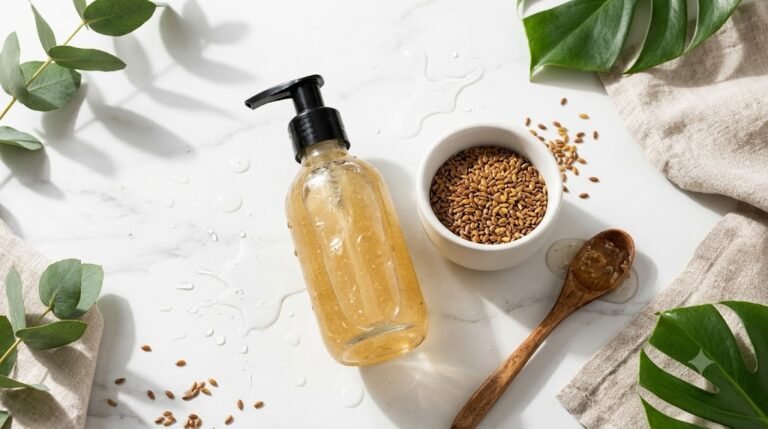
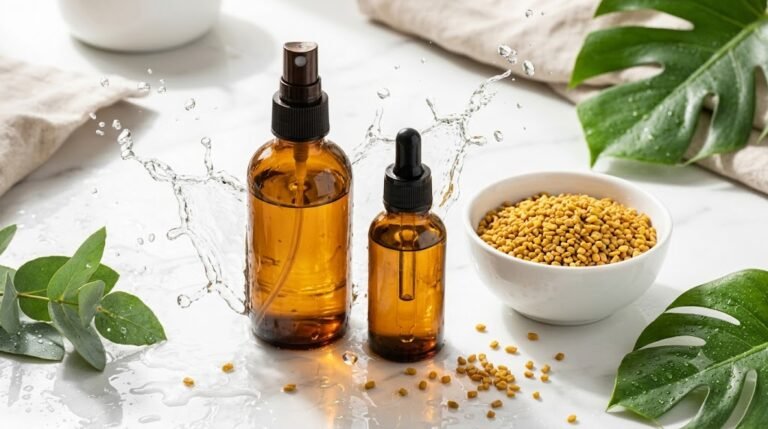
In response to this cycle of scalp rebound and mechanical snapping, clinical trichologists and holistic dermatologists are examining time-tested ancestral botanicals. Foremost among these is the whole seed paste of Trigonella foenum-graecum (fenugreek or methi). Utilized for thousands of years in Ayurvedic medicine and Mediterranean traditional healing, whole fenugreek seeds present an elegant dual-action solution: naturally potent antimicrobial saponins that purge flaking fungal organisms alongside a rich, emollient paste of natural lecithin and plant proteins that condition fragile hair shafts.
While an aqueous fenugreek seed hair rinse delivers lightweight daily hydration, compounding a concentrated DIY fenugreek hair mask creates an intensive conditioning poultice. This comprehensive guide outlines the scientific blueprint for formulating a salon-grade, grit-free fenugreek mask that eradicates stubborn dandruff, soothes inflamed scalp barriers, and promotes lush, thick hair density.
2. The Science: Antifungal Saponins, Lecithin, and Follicle Anchoring
The remarkable ability of ground fenugreek paste to restore scalp equilibrium while transforming limp strands into smooth ribbons of hair is validated by biochemical and mycological research:
A. Disruption of Malassezia Yeast via Steroidal Saponins
Dandruff is largely driven by an overgrowth of Malassezia globosa and Malassezia restricta, commensal yeast species that consume sebum triglycerides and excrete irritating oleic acid onto the scalp. Peer-reviewed mycological literature documented in the National Library of Medicine (PubMed) confirms that fenugreek seeds contain substantial concentrations of steroidal saponins, notably diosgenin, yamogenin, and tigogenin.
These amphiphilic saponins act as nature’s gentle detergents. They permeabilize fungal cell membranes, dismantling protective microbial biofilms without dissolving the essential ceramides and free fatty acids that safeguard your epidermal skin barrier. This effectively arrests the inflammatory cycle responsible for flake formation.
B. Lecithin and Natural Cuticular Replenishment
Chemical dyes, heat tools, and chlorinated water systematically strip the hydrophobic 18-Methyleicosanoic Acid (18-MEA) layer from hair cuticles. Fenugreek seeds boast high endogenous concentrations of natural lecithin—a vital phospholipid complex composed of phosphatidylcholine, phosphatidylethanolamine, and inositol. When applied as a thick paste, lecithin binds directly to fractured keratin sites, sealing open cuticular shingles and restoring mirror-like light reflection without chemical silicones.
C. Protein Fortification and Follicular Anchoring
Fenugreek seeds contain roughly 28% to 30% crude plant protein by dry weight. These bioavailable amino acids penetrate damaged cortex structures, elevating tensile strength to stop breakage. Furthermore, topical fenugreek applications nourish the connective tissue sheath enveloping the dermal root bulb, anchoring hair securely within the follicular canal to curb premature shedding.
3. Quantitative Phytochemical Profile of Ground Fenugreek Paste
A closer look at the nutritional architecture of raw soaked fenugreek seeds demonstrates why this whole-botanical mask outperforms synthetic hair creams per 100 grams of hydrated paste:
Reconstructs brittle keratin; thickens fine strands; reinforces cortex bonds.
Phospholipids (Lecithin)
Phosphatidyl Complexes
High concentration
Re-lipifies the cuticle; restores glossy shine and deep strand elasticity.
Nicotinic Acid (Vitamin B3)
Pyridine Carboxylic Acid
1.5 mg – 2.0 mg
Stimulates micro-capillary vasodilation; delivers nutrients to dormant bulbs.
Elemental Iron
Essential Trace Mineral
33.5 mg
Optimizes dermal oxygen delivery to sustain active anagen hair cycles.
4. The “No-Grit” Blending Technique: Preventing Seed Residue in Hair
The most common complaint surrounding homemade fenugreek masks is the frustrating experience of washing out tiny, stubborn seed fragments. When fenugreek seeds are insufficiently soaked or pulverized in a weak blender, they produce coarse, grainy granules that cling to hair fibers like sand, requiring hours of brushing to remove.
To produce a silky, salon-grade hair paste that washes away effortlessly under running water, follow these three laboratory rules:
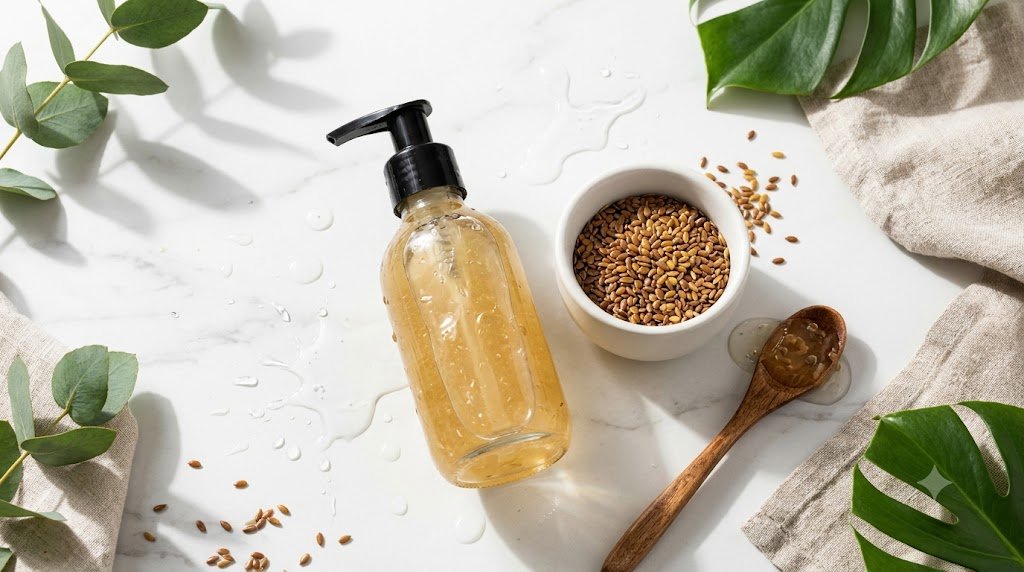
The 14-Hour Hydration Rule: Never attempt to blend seeds soaked for only a few hours. Fenugreek seeds must hydrate in room-temperature distilled water for a full 14 to 18 hours. This allows the outer galactomannan mucilage to swell completely, softening internal cellular fibers.
High-Speed Pulverization with Excess Liquid: Never grind seeds dry. Place the swollen seeds in a high-speed blender alongside the soaking water. Blend on high for a full 3 to 4 minutes until the mixture aerates into an ivory, pudding-like, silky cream.
The Yogurt Emulsion Technique: Whisking whole plain Greek yogurt or pure coconut yogurt into the ground paste introduces lactic acid and lipids that lubricate the mixture, ensuring zero residual granules cling to your hair.
Mastering this classic Ayurvedic formulation delivers instant cooling relief to inflamed scalps and imparts deep tensile resilience to fragile hair strands:
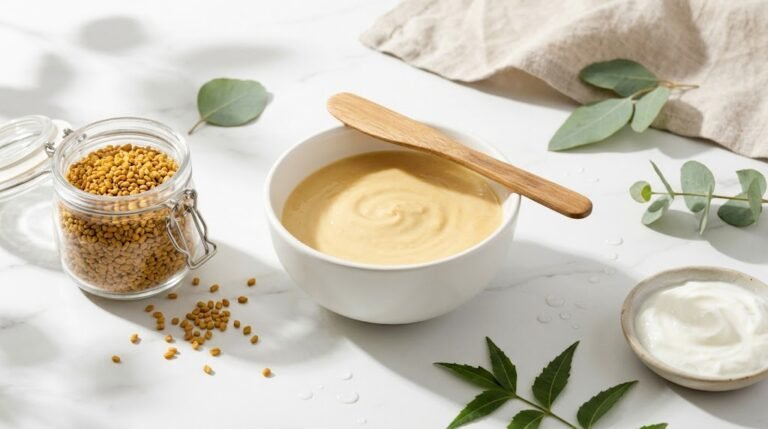
Master Fenugreek & Yogurt Scalp Restorative Mask
Batch Yield: 300 ml | Prep Time: 15 Mins (Plus Soak) | Shelf Life: 48 Hours Fresh
The Purification Rinse: Place whole fenugreek seeds in a fine strainer and rinse under cool water for 30 seconds to remove packaging dust and debris.
The Hydration Window: Transfer rinsed seeds into a glass bowl, add 1.5 cups of distilled water, cover, and let steep undisturbed at room temperature for 14 to 18 hours. The seeds will expand significantly and release slippery mucilage into the water.
High-Velocity Blending: Pour the swollen seeds alongside all the remaining soak water directly into your high-speed blender. Blend continuously for 3 minutes. Stop, scrape down the pitcher sides, and blend for another 60 seconds until the mixture forms a uniform, creamy, light caramel paste.
Compounding Actives: Transfer the blended paste into a clean ceramic bowl. Whisk in 3 tablespoons of Greek yogurt, 1 tablespoon of golden jojoba oil, and 3 drops of tea tree essential oil. Mix vigorously until completely homogeneous.
Immediate Application: Use the mask freshly prepared to take full advantage of its active enzymes and cooling mucilage.
6. Targeted Mask Variations for Specific Hair and Scalp Conditions
Customize your master fenugreek paste by blending in proven botanical partners for specific scalp and hair needs:
A. For Severe Scalp Itch & Chronic Dandruff
The Modification: Add 1 tablespoon of fresh lemon juice and 1 tablespoon of pure organic raw honey.
The Mechanism: Citric acid lowers scalp pH to contract pores, while unpasteurized raw honey introduces osmotic antimicrobial enzymes that soothe inflammation and eliminate flaking.
B. For Thinning Hair & Accelerated Shedding
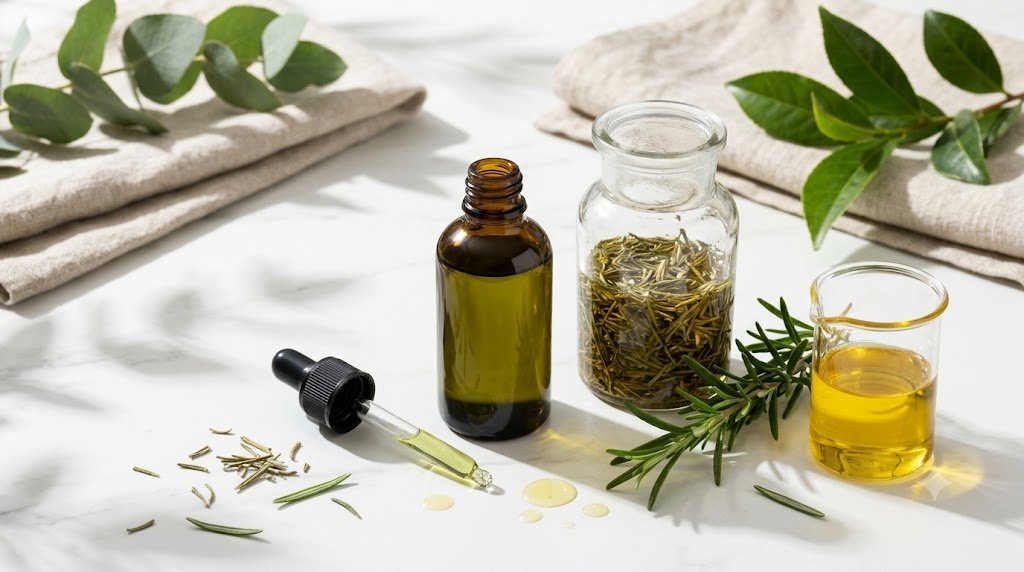
The Modification: Whisk in 1 tablespoon of DIY rosemary infused oil and 2 drops of Peppermint Essential Oil.
The Mechanism: Carnosic acid from rosemary acts synergistically with fenugreek saponins, stimulating capillary vasodilation around the dermal papilla to revitalize sluggish roots.
C. For Severely Damaged & Bleached Curls (High Porosity)
The Modification: Add 2 tablespoons of pure aloe vera gel and 1 tablespoon of extra virgin cold-pressed olive oil.
The Mechanism: Acemannan polysaccharides combine with oleic triglycerides to seal cracked cuticles, boosting curl elasticity and stopping mid-shaft breakage.
7. Step-by-Step Salon Application and Effortless Rinsing Protocol
To reap the structural benefits of a fenugreek mask without tedious cleanup, execute this systematic salon method:
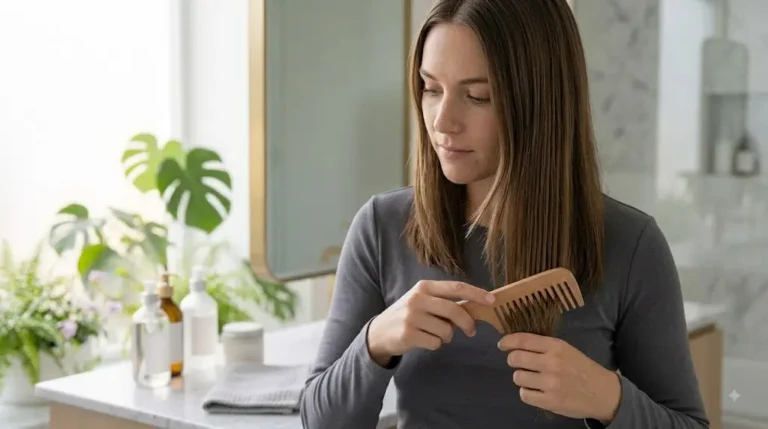
Step 1: Prep and Detangle: Part dry or slightly damp hair into 4 distinct quadrants using wide sectioning clips. Gently detangle knots using a wide-tooth comb.
Step 2: Scalp Application: Dip your cosmetic application brush into the fenugreek mask. Paint the creamy paste directly along your scalp part lines. Work across all quadrants until your entire scalp is covered.
Step 3: Length Saturation: Smooth the remaining mask down the lengths of your hair using flat hands, ensuring dry ends are well coated with conditioning mucilage.
Step 4: The Occlusive Cap (30 to 45 Minutes): Twist hair gently on top of your head and secure with a reusable plastic shower cap. Crucial step: Never let a fenugreek mask dry into a rock-hard crust in open air. Keeping the mask covered traps natural body heat, aiding absorption while keeping the paste creamy and easy to rinse.
Step 5: The Pre-Rinse Emulsification: Step into the shower. Before applying shampoo, duck your head under running lukewarm water and massage your scalp with your fingertips for 2 full minutes. The water emulsifies the yogurt and mucilage, washing away 90% of the paste effortlessly.
Step 6: Gentle Cleansing: Apply a quarter-sized amount of a gentle, sulfate-free shampoo to cleanse your scalp. Follow with a lightweight rinse-out conditioner on mid-lengths and ends.
8. Chemical Stability, Storage Limits, and Preservation Guidelines
Hydrated fenugreek paste contains active water, plant proteins, and galactomannans without synthetic chemical biocides, making it highly susceptible to ambient bacterial colonization if improperly handled.
Standard Refrigerator (4°C / 39°F): Up to 48 hours in a clean, airtight glass container. Beyond 2 days, wild yeasts alter the mask’s texture and scent.
Freezer Cube Method (Recommended for Batch Prep): Up to 3 months. Blend a large batch of pure fenugreek seeds and water (before adding yogurt or oils). Pour into silicone ice cube trays and freeze solid. Pop out 4 cubes prior to wash day, thaw to room temperature, stir in your fresh yogurt and oils, and apply.
9. Contraindications, Allergy Warnings & Patch Test Rules
Allergy Warnings & Safe Botanical Application
While fenugreek is a non-toxic culinary legume safely enjoyed worldwide, topical application requires sensible precautions:
Fabaceae Family Allergies: Fenugreek belongs taxonomically to the legume family. Individuals with known IgE-mediated allergies to peanuts, chickpeas, green peas, or soybeans must avoid topical fenugreek to prevent contact urticaria.
Mandatory 24-Hour Cutaneous Patch Test: Dab a quarter-sized dollop of freshly blended paste behind your ear or on your inner forearm. Let sit unwashed for 24 hours. If persistent burning, hives, or swelling occurs, do not apply to your scalp.
Scent Persistence: Fenugreek contains sotolon, an aromatic lactone with a maple-syrup-like aroma. If this scent lingers after washing, a final rinse with cold water mixed with 1 tablespoon of apple cider vinegar completely neutralizes it.
10. Frequently Asked Questions (FAQ)
Can I use store-bought fenugreek powder instead of whole seeds?
Yes, store-bought organic fenugreek powder is a convenient alternative (use 2 tablespoons powder mixed with 1 cup of warm water to form a paste). However, commercial powder oxidizes more rapidly and tends to form dense clumps if not whisked briskly with warm liquid. Whole seeds soaked overnight yield a smoother, more mucilaginous mask.
How often should I use this fenugreek mask for dandruff?
For active, flaking dandruff or an itchy scalp, apply this mask once a week for 4 consecutive weeks. Once scalp flaking is under control and balance is restored, transition to a maintenance schedule of once every 2 to 3 weeks.
Will this mask weigh down fine or low-density hair?
Because fenugreek is rich in natural plant proteins and mucilage, leaving residue behind can make fine hair feel heavy. To keep strands airy and voluminous, rinse thoroughly under running water and follow with a lightweight clarifying wash.
Can I apply this mask to chemically relaxed or dyed hair?
Yes. Chemically relaxed and dyed strands frequently suffer from cuticular erosion and high porosity. Fenugreek proteins and lecithin patch micro-fractures along damaged shafts, reducing wash-day breakage and restoring softness.
11. Editorial Medical Disclaimer & Final Thoughts
Editorial Medical Disclaimer: The holistic and botanical methodologies compiled by Boldskys are published strictly for educational and informational enlightenment. They do not constitute formal medical counsel, clinical diagnosis, or prescriptive dermatological direction. Always consult a certified dermatologist or trichologist regarding severe scalp disorders, seborrheic dermatitis complications, or chronic hair thinning.
Eradicating stubborn dandruff and building strong, voluminous hair does not require chemical cocktails that strip your scalp’s protective barrier. By honoring the ancient biological intelligence of raw fenugreek seeds and mastering the smooth blending technique, you nourish your scalp with pure antifungal saponins and structural plant proteins.
Soak your first bowl of organic fenugreek seeds this evening, blend your restorative mask tomorrow, and discover how clean botanical science can transform your scalp and hair health.