How to Use Fenugreek Water for Hair Growth: The Complete Step-by-Step DIY Guide
Quick Summary & Core Highlights
- Follicle Stimulation: Fenugreek (Methi) contains concentrated plant proteins and steroidal saponins (diosgenin) that naturally combat follicular miniaturization.
- Cuticle Sealing: Rich in galactomannan mucilage, it delivers instant detangling slip and shields strands from mechanical fracture.
- Extraction Choice: Learn both the Cold-Brew Maceration (best for fine hair) and Gentle Decoction methods.
- Safety First: Complete patch-testing guidelines for those with legume sensitivities.
1. Introduction: The Ancient Superfood for Modern Hair Loss
Few hair care crises are as universally distressing as noticing excessive shedding in the shower drain or watching a visible part line gradually widen under harsh bathroom lights. In an era dominated by overpriced clinical serums, synthetic peptide mixtures, and aggressive chemical treatments that carry concerning side effects, an increasing number of individuals across North America and Europe are turning their attention backward toward botanically validated ancestral traditions. Among these botanical solutions, fenugreek seeds (Trigonella foenum-graecum)—colloquially referred to as methi across South Asia—stand out as one of the most potent, scientifically substantiated natural remedies for reviving dormant hair roots.
Hair thinning is rarely an isolated aesthetic inconvenience; it is almost always the symptomatic consequence of compromised microcirculation, elevated local dihydrotestosterone (DHT) activity, nutritional starvation at the dermal papilla, or persistent micro-inflammation of the scalp tissue. While commercially marketed hair products frequently focus on coating the keratin shaft with silicones to create an illusion of thickness, fenugreek water targets the foundational ecosystem where hair originates: the scalp matrix.
This comprehensive guide delivers an exhaustively researched, laboratory-vetted protocol for preparing, utilizing, and preserving homemade fenugreek water. Whether you are combatting telogen effluvium triggered by chronic stress, recovering from postpartum hair shedding, addressing seasonal moisture depletion, or looking to augment low-density curls with intense structural protein, mastering this simple botanical infusion can profoundly elevate your hair health trajectory.
2. The Science: Why Fenugreek (Methi) Triggers Hair Follicle Regeneration
The beauty industry is filled with wellness trends that collapse under basic scientific scrutiny. Fenugreek, however, is distinct because its efficacy is firmly grounded in biochemistry. To understand why an ordinary seed can exert such dramatic effects on human hair follicles, one must examine its complex bioactive components:
A. High Plant Protein Concentrations and Keratin Building
Hair is structurally composed of keratin—a fibrous, sulfur-rich protein synthesized from systemic amino acids. Fenugreek seeds possess an exceptional protein concentration (approximately 25% to 30% by dry weight). When these seeds undergo aqueous extraction, bioavailable amino acids and low-molecular peptides dissolve directly into the water. Applied topically to the scalp, these proteins coat brittle micro-fissures along the cuticle layer, improve structural tensile strength, and deliver vital raw materials directly adjacent to the follicle openings.
B. Natural Steroidal Saponins and DHT Inhibition
Androgenetic alopecia, commonly known as male- or female-pattern hair thinning, is predominantly mediated by the enzymatic conversion of systemic testosterone into dihydrotestosterone (DHT) via the enzyme 5-alpha reductase. DHT binds avidly to receptors located on genetically vulnerable dermal papilla cells, initiating a destructive process known as follicular miniaturization. With each subsequent growth cycle, the hair shaft emerges thinner, weaker, and shorter, until the pore ceases hair production entirely.
Fenugreek seeds are exceptionally abundant in diosgenin, yamogenin, and tigogenin—steroidal saponins recognized in pharmacological literature for exhibiting anti-androgenic and hormone-modulating characteristics. Topical administration of fenugreek extracts has been demonstrated in independent dermatological models to exert a gentle inhibitory effect against local 5-alpha reductase pathways, shielding the hair matrix from premature senescence without the systemic sexual side effects frequently associated with pharmaceutical anti-androgens.
C. Mucilage Polysaccharides for Cuticle Sealing
Anyone who has ever soaked dry fenugreek seeds in water has observed the rapid formation of a slippery, viscous gel. This phenomenon occurs because the outer seed coat contains an extraordinarily dense concentration of water-soluble galactomannan polysaccharides, known broadly as mucilage. Mucilage functions as nature’s bio-compatible conditioner:
- It glides smoothly over individual hair strands, dissolving knots and preventing mechanical shear breakage during brushing.
- It establishes a breathable, weightless humectant barrier that traps atmospheric moisture within the strand without attracting suffocating ambient debris.
- It imparts brilliant, glassy light reflection to the hair fiber, restoring luminosity to sun-bleached or chemically over-processed strands.
D. Trigonelline, Nicotinic Acid, and Dermal Microcirculation
Fenugreek contains high levels of the alkaloid trigonelline, alongside abundant reserves of nicotinic acid (a biological cousin of niacin / Vitamin B3). Nicotinic acid acts as a biological vasodilator. When applied via a gentle scalp massage, it stimulates capillary pervasiveness, causing surrounding blood vessels to dilate. This surge in microcirculation ensures an accelerated delivery of oxygen, glucose, and systemic micronutrients directly into the capillary loops servicing each active follicle, thereby prolonging the anagen (active growth) phase of the human hair cycle.
3. Nutritional Breakdown of Fenugreek Seeds
To appreciate why fenugreek seeds perform like an all-in-one topical multivitamin for thinning hair, let us examine their nutritional profile per 100 grams of raw seed material:
| Nutrient / Bioactive | Concentration | Direct Hair Benefit |
|---|---|---|
| Crude Protein | 23.0g – 26.5g | Reinforces the cortex; prevents split ends and internal fiber fracture. |
| Elemental Iron | 33.5 mg (>180% DV) | Boosts scalp oxygenation; prevents shedding linked to low ferritin. |
| Potassium | 770 mg | Maintains scalp electrolyte balance; supports follicular cell hydration. |
| Zinc | 2.5 mg | Regulates cellular division; accelerates epidermal regeneration. |
| Nicotinic Acid (B3) | 1.6 mg | Stimulates micro-capillary vasodilation; clears follicular stagnation. |
| Galactomannans (Mucilage) | 45.0g – 50.0g | Provides effortless slip; detangles knots; seals cuticles weightlessly. |
| Diosgenin & Saponins | 1.2% – 2.0% | Displays natural 5-alpha reductase balancing; controls excess sebum. |
| Lecithin | High Concentration | Natural emollient that coats hair shafts, imparting glossy, mirror-like shine. |
4. Step-by-Step DIY Recipe: Cold Brew vs. Warm Decoction Method
When producing homemade botanical extracts, your extraction method directly governs the chemical integrity of the finished preparation. High, prolonged heat can denature sensitive polypeptide chains and degrade fragile vitamins, whereas insufficient extraction leaves valuable saponins locked within the seed hull.
Equipment and Ingredients Checklist
- Fenugreek Seeds: 2 tablespoons (30g) certified organic, whole yellow seeds.
- Purified Water: 2 metric cups (500 ml) steam-distilled or RO-filtered water (avoid hard tap water).
- Glass Vessel: 16-ounce sanitized glass mason jar with airtight lid.
- Filtration: Fine-mesh stainless steel sieve, culinary nut-milk bag, or cheesecloth.
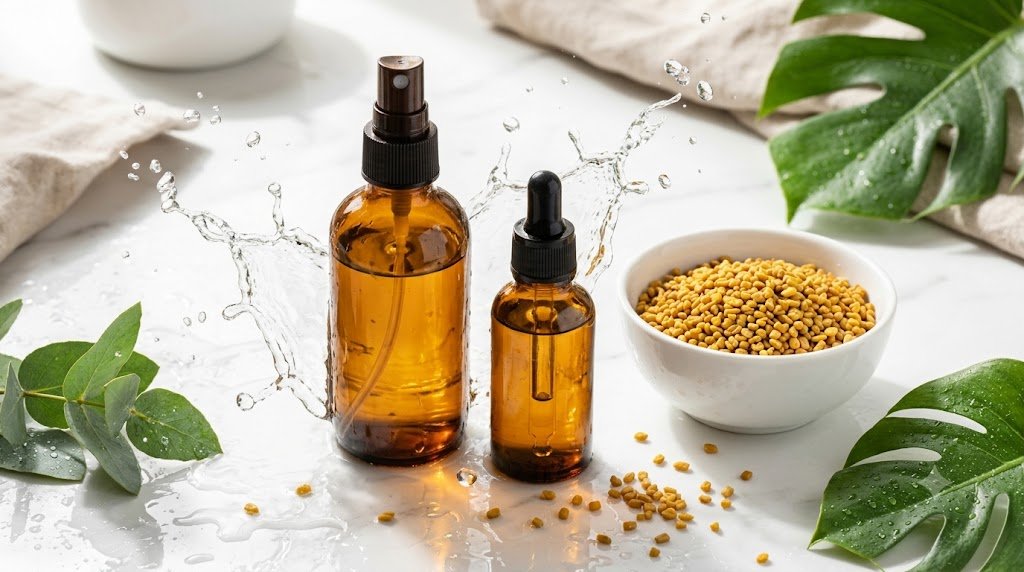
- Storage: Amber glass spray bottle with an adjustable mist nozzle.
Method A: The Cold-Brew Overnight Infusion (The Gold Standard)
- Rinse and Purify: Place 2 tablespoons of organic fenugreek seeds in a fine strainer and rinse under cold water for 30 seconds to remove dust and debris.
- Submerge in Glass Jar: Transfer the seeds to your sterilized glass mason jar. Pour in 2 cups (500 ml) of room-temperature distilled water.
- The Cold Maceration Window: Seal tightly and leave in a dark cupboard for 12 to 24 hours. The seeds will swell to double their size, and the water will turn a warm golden-amber with a silky texture.
- Precision Straining: Strain the liquid through cheesecloth into a clean bowl, separating all swollen seeds completely.
- Decanting: Funnel the liquid into your amber spray bottle and store immediately in the refrigerator.
Method B: The Gentle Warm Decoction (Quick Method)
- Add 2 tablespoons of rinsed fenugreek seeds and 2.5 cups of distilled water to an enamel or stainless steel saucepan.
- Heat over medium until small bubbles appear around the edges. Do not allow a rolling boil.
- Lower the flame to the lowest setting, cover with a tight lid, and simmer gently for 12 to 15 minutes.
- Remove from heat and allow it to cool covered for 45 minutes to reach room temperature.
- Strain through a fine cloth, transfer to an amber spray bottle, and refrigerate.
5. How to Apply Fenugreek Water for Optimal Results
Protocol 1: The Daily Follicular Stimulating Scalp Mist (Leave-In)
Best For: Receding edges, crown thinning, dry itchy scalp, and postpartum shedding.
- Part hair into 4 sections (front-left, front-right, crown, and nape).
- Hold spray 2 inches from the scalp and mist 2-3 times directly onto each part line.
- Massage gently with finger pads for 4 to 5 minutes to stimulate local microcirculation.
- Allow to air dry. It leaves no greasy or sticky residue.
Protocol 2: The Pre-Shampoo Intensive Scalp Drench
Best For: Heavy buildup, persistent flakes, stubborn dandruff, or low-porosity hair.
- Saturate the entire scalp and root zone 30 to 45 minutes before showering.
- Cover with a plastic shower cap to trap body heat and open pores.
- Wash thoroughly with a gentle sulfate-free shampoo, followed by conditioner on the ends.
Protocol 3: The Post-Wash Cuticle Sealing Conditioning Rinse
Best For: High porosity, curly or coily textures (2C–4C), and color-treated hair.
- Wash and condition hair normally.
- Pour 1 cup of chilled fenugreek water evenly over hair as a final rinse.
- Do not rinse out with tap water; gently blot with a microfiber towel to seal cuticles and prevent frizz.
6. Frequency and Hair Routine Integration by Hair Type
- Fine or Low-Density Hair (Types 1A–2A): 2 to 3 times weekly maximum as a pre-shampoo treatment or light roots-only mist.
- Wavy and Medium-Density Hair (Types 2B–3A): 3 to 4 times weekly as a daily scalp leave-in and post-wash rinse.
- Curly, Coily, and High-Porosity Hair (Types 3B–4C): Daily or every other day as the liquid hydrating foundation in the L.O.C. (Liquid-Oil-Cream) styling method.
7. Fenugreek Water vs. Rosemary Water: The Comparison
| Feature | Fenugreek Water | Rosemary Water |
|---|---|---|
| Primary Action | Protein replenishment, mucilage hydration, natural steroidal saponins. | Microvascular dilation (carnosic acid), DHT modulation, astringent. |
| Best Suited For | Dry scalp, brittle lengths, frizz, breakage, low-elasticity curls. | Androgenetic thinning, excessively oily scalps, sluggish follicles. |
| Feel on Hair | Softening, silky conditioning slip. | Lightweight, water-thin, slightly clarifying finish. |
8. Storage, Shelf-Life, and Preservation Guidelines
- Room Temperature: 24 to 36 hours maximum before bacterial proliferation begins.
- Refrigerated (4°C / 39°F): 7 to 10 days in a sealed amber glass bottle.
- Frozen (Ice Cube Trays): Up to 90 days. Thaw 1 or 2 cubes overnight before use.
- Natural Extender: Add 3 to 4 drops of organic Peppermint or Tea Tree Essential Oil to provide natural antimicrobial protection while masking the maple-sweet aroma.
9. Side Effects, Contraindications, and Safety
Important Medical & Allergy Precautions
Legume Allergies: Fenugreek belongs to the Fabaceae family. If you are allergic to peanuts, chickpeas, or soybeans, avoid topical use.
Mandatory Patch Test: Dab a small amount behind your ear or inner forearm. Check for redness or itching after 24 hours before applying all over your scalp.
Pregnancy: Concentrated fenugreek has historically been associated with mild uterine stimulation; consult your physician before using therapeutic botanical leave-ins during pregnancy.
10. Frequently Asked Questions (FAQ)
Does fenugreek water permanently cure genetic hair thinning?
No topical remedy permanently alters genetics. However, regular application strengthens existing fibers, minimizes breakage, and soothes micro-inflammation to support fuller-looking hair.
Will fenugreek water make my hair smell like maple syrup?
The natural compound sotolon has a sweet maple scent. It fades once hair dries, but adding 2-3 drops of lavender or peppermint essential oil neutralizes it completely.
Can I leave fenugreek water on my scalp overnight?
Yes, provided you do not have active fungal scalp infections. Mist your scalp before bed, let it dry for 15 minutes, and style normally the next day.
Will it stain bleached or platinum blonde hair?
Because of its natural golden tone, daily use on very porous, platinum blonde hair might leave a faint warm hue. Perform a single strand test first or opt for the lighter Cold-Brew method.
11. Final Thoughts and Your Hair Growth Journey
True structural hair transformation is an exercise in sustained biological consistency. Follicular regeneration operates along slow, deliberate biological timeframes; anagen follicles require approximately 90 to 120 days of sustained nutritional abundance and mechanical stimulation to shift from a resting state into a productive, robust growth phase.
By integrating this cost-effective, clinically substantiated DIY Fenugreek Water Masterclass into your weekly hair regimen, you are stepping away from synthetic, harsh chemical quick-fixes and nourishing your hair follicles with pure botanical medicine. Prepare your first batch tonight, perform your patch test, and take your first step toward thicker, healthier, and naturally resilient hair.