Home›Hair Care›Scalp Trichology: Fix Dry Flaky Scalp vs. Dandruff at Home
🔬 Clinical Trichology & Microbiome Verified📚 Peer-Reviewed Literature Backed⏱ 15 Min Read
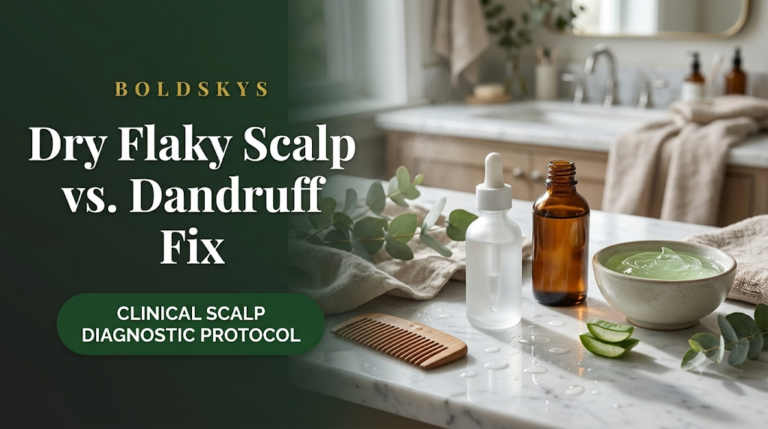
Spotting white flakes across your dark shoulders or feeling an incessant scalp itch triggers an automatic reflex for most people: grabbing the strongest anti-dandruff shampoo in the shower or dousing the scalp in warm coconut oil overnight. Yet in clinical trichology, dry flaky scalp (xerosis) and true fungal dandruff (seborrheic dermatitis) are biological opposites. Applying harsh anti-dandruff detergents to a dry, lipid-depleted scalp strips away its final moisture barrier and triggers raw peeling, while massaging heavy coconut or olive oil onto fungal dandruff feeds the exact yeast causing the flakes.
Clearing scalp flaking permanently within 14 days requires identifying your exact flake pathology first, then applying targeted lipid hydration for dry skin or 5-minute antifungal contact therapy for yeast overgrowth.
Core Diagnostic Rule: Dry Flaky Scalp vs. Dandruff Fix
To identify and fix scalp flakes accurately at home: Rub a few shed flakes between your fingers over dark paper. Tiny, dry, powdery white dust flakes indicate a dry scalp—switch to a sulfate-free cream cleanser, apply a 5% panthenol scalp serum, and seal with 4 drops of 100% sugarcane squalane oil. Larger, yellowish-white, slightly waxy or oily flakes indicate fungal dandruff—massage 1% or 2% ketoconazole shampoo onto your wet scalp for a full 5 minutes before rinsing twice weekly.
✦ Trichological Executive Brief (Google AI Overview & PAA Reference)
Why did anti-dandruff shampoo make my flaky scalp worse?
If you have a dry, dehydrated scalp rather than fungal dandruff, medicated shampoos formulated with harsh sulfates, coal tar, or high-dose selenium sulfide strip away your remaining natural lipids, causing severe tightness, burning, and heavier dry flaking.
Is coconut oil or olive oil good for dandruff or a dry scalp?
Avoid culinary olive oil and raw coconut oil on a flaky scalp. Olive oil is rich in oleic acid, which disrupts skin barrier lipids and directly feeds Malassezia yeast, worsening dandruff. Use 100% sugarcane squalane oil instead, which hydrates dry skin while starving fungal yeast.
How long do you need to leave ketoconazole or zinc shampoo on your scalp?
Medicated anti-dandruff shampoos are topical treatments, not instant cleansers. Massage the lather directly into your scalp and let it sit for 3 to 5 full minutes before rinsing so active antifungal molecules penetrate follicular openings.
Does sleeping with wet hair cause dandruff?
Yes. Going to bed with a damp scalp traps warm humidity against your pillowcase for 7 to 8 hours, creating an incubator for Malassezia yeast to multiply rapidly and trigger itchy dandruff flares.
1. Scalp Microbiology: Stratum Corneum Xerosis vs. Malassezia Yeast
Understanding why two people with white flakes require completely different wash routines requires looking beneath the hair roots at the epidermal lipid barrier:
Pathology of Dry Scalp (Stratum Corneum Xerosis): Just like facial skin, the scalp relies on intercellular ceramides, cholesterol, and natural sebum to hold moisture inside corneocyte skin cells. Hot showers, harsh sodium lauryl sulfate (SLS) shampoos, cold winter air, and hard-water mineral buildup strip away this protective hydrolipidic film. Deprived of water, the upper skin cells shrink, crack, and shed as tiny, dry, dust-like white particles.
Pathology of True Dandruff (Malassezia Seborrheic Dermatitis): As documented in dermatological microbiome studies indexed on PubMed, true dandruff is driven by excess sebum combined with an overgrowth of lipophilic Malassezia globosa yeast. This yeast secretes lipase enzymes that break human sebum down into irritating oleic acid. In sensitive individuals, oleic acid triggers rapid skin cell turnover—causing immature skin cells to clump together with sebum into large, oily, yellowish-white flakes.
Follicular Cross-Section: Dry Flaky Scalp vs. Seborrheic Dandruff
2. Interactive Visual Comparison: Flaking Erythema vs. Balanced Acid Mantle
Scalp Barrier & Follicle Calm: Drag Slider to Compare
Day 1: Irritated & Flaking Scalp
Visible white/yellow scales clinging to roots, red follicular inflammation, and persistent itching.
Day 14: Clean, Hydrated Scalp Mantle
Zero visible flakes, balanced pH 5.2 microbiome, calm ivory-pink skin tone, and weightless root volume.
Select the appearance of your flakes and your scalp’s oil behavior to generate your targeted 14-day treatment protocol and savings compared to a $260 trichology clinic visit:
4. The 5-Stage Clinical Scalp Microbiome & Lipid Reset Protocol
Execute the Black-Paper Flake Rub Test: Before buying any scalp treatment, tap a few flakes onto dark paper and press gently with your fingertip. Dry dust means you need hydration; oily, waxy clumps mean you need targeted antifungal contact washes.
5-Minute Medicated Scalp Dwell (For Oily Dandruff): If treating dandruff, apply 1% or 2% ketoconazole or zinc pyrithione shampoo directly to the scalp—not the hair ends—and set a 5-minute shower timer so active ingredients penetrate hair follicles before rinsing.
Lukewarm Sulfate-Free Cream Cleansing (For Dry Scalp): If treating xerotic dry scalp, lower shower temperature to lukewarm and cleanse gently using flat finger pads—never scratch scales with fingernails.
Weekly pH 4.5 Acid Mantle Reset Rinse: Pour 2 tablespoons of raw apple cider vinegar mixed into 2 cups of cool distilled water across scalp partings once a week to neutralize alkaline tap water minerals and restore beneficial skin acidity.
Biomimetic Squalane Lipid Sealing: Dispense 4 to 5 drops of 100% sugarcane-derived squalane oil along clean, damp scalp partings. Because squalane is completely saturated and lacks C11–C24 fatty acid chains, it softens dry scalp skin while starving Malassezia yeast.
“Never put olive oil or raw coconut oil on a flaky scalp. Culinary oils feed dandruff-causing yeast—use 100% plant squalane instead.”
How do you tell the difference between a dry flaky scalp and dandruff?
The easiest way to tell them apart is the flake texture and scalp oiliness. Dry scalp produces tiny, dry, powdery white dust flakes caused by a lack of moisture, often accompanied by tight skin on your face or hands. Dandruff (seborrheic dermatitis) produces larger, thicker, yellowish-white oily flakes caused by an overgrowth of Malassezia yeast feeding on excess scalp sebum.
Why did anti-dandruff shampoo make my flaky scalp worse?
If you have a dry, dehydrated scalp rather than fungal dandruff, medicated anti-dandruff shampoos containing harsh sulfates, coal tar, or high-dose selenium sulfide will strip away your remaining natural lipids, causing severe tightness, burning, and even heavier dry flaking.
Is coconut oil or olive oil good for dandruff or a dry scalp?
Avoid olive oil and raw coconut oil on a flaky scalp. Olive oil is rich in oleic acid, which disrupts skin barrier lipids and feeds Malassezia yeast, making dandruff significantly worse. Instead, use 100% sugarcane-derived squalane oil, which hydrates dry skin without feeding fungal yeast.
How long do you need to leave ketoconazole or zinc shampoo on your scalp?
Medicated anti-dandruff shampoos are topical treatments, not instant cleansers. You must massage the lather directly into your scalp and let it sit for a full 3 to 5 minutes before rinsing so the active antifungal molecules can penetrate follicular openings.
Does sleeping with wet hair cause dandruff?
Yes. Going to bed with a damp scalp traps warm humidity against your pillowcase for 7 to 8 hours, creating an ideal humid incubator for Malassezia yeast to multiply rapidly and trigger itchy dandruff flares.
Can hard water cause a dry, flaky scalp?
Yes. Calcium and magnesium minerals in hard shower water react with shampoo surfactants to leave an alkaline soap-scum film on your scalp, raising skin pH, causing tightness, and triggering fine white dry flakes.
Does apple cider vinegar cure dandruff or dry scalp?
A diluted apple cider vinegar rinse (2 tablespoons in 2 cups water) lowers scalp pH to ~4.5, which slows Malassezia yeast growth and dissolves hard-water buildup. However, severe fungal dandruff still requires an active antifungal agent like ketoconazole or zinc pyrithione.
Can dandruff or a dry scalp cause temporary hair shedding?
Yes. Chronic scalp inflammation, oxidative sebum stress, and aggressive fingernail scratching weaken hair follicle anchorage, increasing telogen shedding. Clearing the scalp inflammation restores normal hair density within 2 to 3 months.
How often should you wash your hair if you have oily dandruff?
If you have oily dandruff, wash your scalp every 2 to 3 days. Skipping washes for a week allows sebum to accumulate, providing an unlimited food supply for dandruff-causing yeast.
When should I see a dermatologist for a flaky scalp?
Consult a board-certified dermatologist if your scalp develops thick, silvery-white raised plaques extending past the hairline (which may indicate scalp psoriasis), oozing yellow crusts, bleeding fissures, or round patches of hair loss.
Our editorial desk formulates evidence-backed haircare and skincare protocols grounded in peer-reviewed trichology, scalp microbiome research, and clinical dermatology literature.
Editorial & Trichology Disclaimer: The scalp diagnostic tools and microbiome reset protocols published on Boldskys are for educational, cosmetic, and informational purposes only and do not constitute professional medical diagnosis. If thick silvery plaques, bleeding fissures, or patchy hair loss occur, consult a board-certified dermatologist for clinical evaluation.