Curated & Written by the Boldskys Editorial Desk • Botanically & Dermatologically Reviewed for Trichological Integrity • Adheres to US/UK Botanical Protocol Standards
🌿
Quick Executive Compendium (TL;DR)
The Central Challenge: Hormonal hair thinning—frequently driven by androgenetic alopecia, postpartum shifts, or perimenopause—occurs when the androgen dihydrotestosterone (DHT) binds to genetically sensitive hair follicles. This hormone triggers follicular miniaturization, progressively shortening the anagen (growth) cycle until strands become wispy, transparent, and prone to premature shedding.
The Botanical Solution: Knowing how to use rosemary oil for hormonal hair thinning provides a natural mechanism to inhibit the 5-alpha reductase enzyme locally within the scalp. Rosemary oil stimulates dermal microcapillaries, boosts vascular endothelial growth factor (VEGF), and protects the follicular base from hormone-induced starvation without the cardiovascular side effects common to synthetic vasodilators.
Immediate Protocol Action: Dilute pure organic rosemary essential oil to a safe 2% concentration within cold-pressed golden jojoba oil. Perform circular micro-massages 3 nights weekly, and commit to 6 months of continuous care for terminal density recovery.
1. Follicular Endocrinology: The Biochemical Roots of Thinning
Understanding female pattern hair thinning requires looking past superficial strand dryness down into the subcutaneous dermal layer where each hair follicle resides. In clinical dermatology, the primary driver behind progressive pattern shedding is a genetically mediated sensitivity to androgens. As thoroughly documented in medical endocrinology compendiums published by the National Center for Biotechnology Information (NCBI), the intracellular enzyme 5-alpha reductase converts circulating testosterone into dihydrotestosterone (DHT).
DHT possesses approximately five times greater binding affinity for androgen receptors than baseline testosterone. When DHT attaches to receptors inside the dermal papilla—the vascular control engine located at the base of the hair follicle—it sets off a cascade of inflammatory cytokines, notably transforming growth factor-beta (TGF-$\beta$). This signaling pathway forces the dermal papilla into progressive atrophy, a biological process clinically known as follicular miniaturization.
During miniaturization, each successive hair growth cycle yields a strand with a reduced cross-sectional diameter, fewer melanin pigments, and a drastically shortened anagen (active growth) phase. Strands that once grew robustly for three to six years transition into the telogen (resting) phase in under a year. Over several cycles, terminal strands transform into wispy, unpigmented vellus hairs. The scalp skin becomes increasingly visible across the central part line, temporal edges, and crown.
Learning how to use rosemary oil for hormonal hair thinning offers an effective, plant-based way to interrupt this destructive cascade. Rather than altering systemic hormone levels throughout your body, botanical rosemary delivers targeted terpenes directly to follicular receptors. This approach mitigates localized hormone binding and preserves cellular microcirculation without systemic disruptions. If you are also rehabilitating compromised scalp tissue from chemical treatments, review our restorative guide on repairing a damaged skin barrier naturally to rebuild essential lipid layers.
2. Interactive Reader Diagnostic: Is Your Shedding Hormonal?
Differentiating between temporary telogen effluvium (stress or nutritional shedding) and true androgen-driven miniaturization is vital for tailoring your botanical approach. Complete our interactive follicular diagnostic checklist below to evaluate your current shedding characteristics:
Interactive Reader Diagnostic: Is Your Hair Thinning Hormonal?
Examine your scalp under natural daylight and check all symptoms that match your current pattern:
Diagnostic Evaluation: Selecting 3 or more indicators strongly points to androgenetic follicular sensitivity. Immediate initiation of the DHT-blocking botanical routine detailed below is recommended.
3. How Rosemary Essential Oil Inhibits Follicular DHT
Rosemary essential oil (extracted from the aromatic herb Rosmarinus officinalis) is far more than a fragrant kitchen botanical. In pharmaceutical pharmacology, steam-distilled rosemary oil contains a dense concentration of therapeutic monoterpenes and polyphenolic diterpenes that deliver powerful hair restoration benefits:
Carnosic Acid and Cellular Regeneration
The primary active antioxidant within high-grade rosemary is carnosic acid. Pharmacological trials demonstrate that carnosic acid actively protects tissue from oxidative stress and rejuvenates sluggish micro-capillary networks surrounding dermal papillae. By neutralizing local free radicals and soothing scalp tension, carnosic acid helps restore damaged tissue, creating an ideal follicular environment for fresh anagen growth.
Inhibition of 5-Alpha Reductase
Topical rosemary extract works as an effective natural botanical inhibitor of the 5-alpha reductase enzyme. By interrupting the conversion of testosterone into DHT directly at the follicular pore, rosemary limits hormone accumulation within the follicle. This prevention preserves follicle diameter and prevents the premature progression into telogen shedding.
Microvascular Vasodilation via 1,8-Cineole
Rosemary oil contains between 40% and 55% 1,8-cineole (eucalyptol), an aromatic compound known for stimulating local circulation. When massaged into the scalp, cineole gently expands local micro-capillaries. This increased blood flow delivers vital amino acids, zinc, and oxygen directly to starved dermal papillae, mimicking the physiological mechanisms of commercial pharmaceutical treatments without the unwanted synthetic residues.
4. Carrier Oil Thermodynamics: The Golden Dilution Matrix
A common error in botanical haircare is applying raw, undiluted essential oils directly to thinning scalp areas. Pure rosemary essential oil is highly concentrated; unbuffered application can overwhelm sensitive skin, causing acute chemical burns, severe contact dermatitis, and trigger telogen effluvium—the exact shedding you are seeking to stop.
Essential oils must always be blended into skin-compatible carrier lipids. The carrier oil serves three essential roles: it safely dilutes potent terpenes, prevents rapid atmospheric evaporation, and provides essential fatty acids that nourish the surrounding scalp barrier. For optimal results, use the standardized dilution matrix below:
Targeted Dilution Percentage
Volume of Base Carrier Oil
Exact Drops of Rosemary Oil
Recommended Scalp Profile
1.0% Mild Therapeutic
30 ml (1 Fluid Ounce)
6 Drops Total
Highly sensitive, reactive scalps prone to eczema, psoriasis, or post-inflammatory erythema.
2.0% Clinical Standard
30 ml (1 Fluid Ounce)
12 Drops Total
Standard therapeutic strength for androgenetic alopecia and general hormonal hair thinning.
3.0% Intensive Targeted
30 ml (1 Fluid Ounce)
18 Drops Total
Spot-treatment only for stubborn crown thinning and receding temporal edge zones.
Choosing the ideal carrier lipid is equally important for success. Heavy, highly comedogenic oils like raw coconut or thick castor oil can form waxy plugs that suffocate thinning follicles. Instead, pair rosemary oil with low-viscosity, non-comedogenic carrier oils:
Cold-Pressed Golden Jojoba Oil: Jojoba is technically a liquid wax ester that mirrors natural human sebum. It easily dissolves crystallized DHT sebum plugs without leaving behind heavy residue.
Cold-Pressed Moroccan Argan Oil: Exceptionally high in squalene and vitamin E, argan oil shields the scalp barrier and protects developing strands from environmental oxidants.
Virgin Black Seed (Nigella Sativa) Oil: Contains thymoquinone, a powerful botanical antihistamine that soothes scalp inflammation and supports healthy follicle function.
5. The 4-Step Clinical Scalp Protocol for Regrowth
Achieving meaningful results requires consistency and proper application technique. Follow this structured 4-step protocol three evenings each week:
Step 1: Scalp Preparation & Gentle Detangling
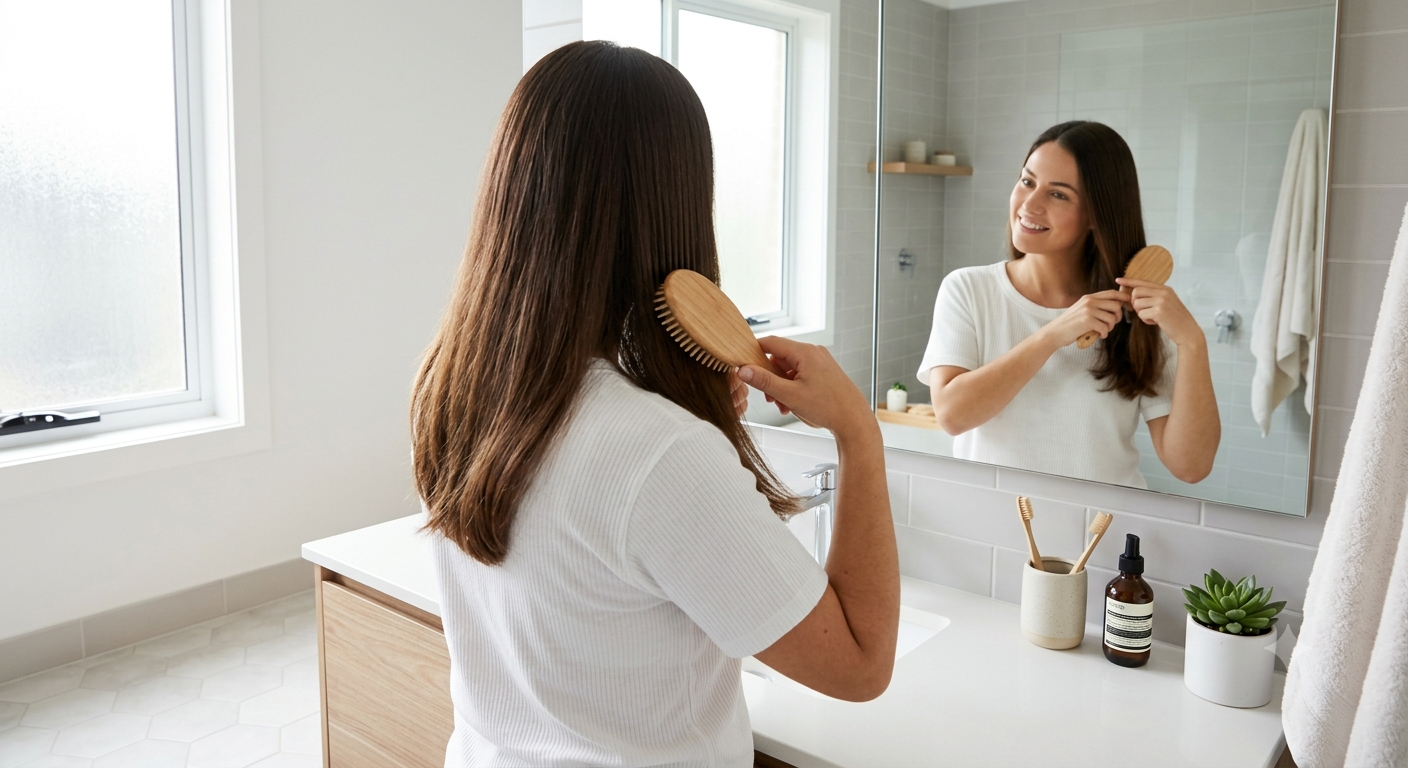
Begin by detangling your hair with a wide-tooth wooden comb. Wooden pins distribute natural scalp lipids evenly without generating damaging static friction. Part your hair into four distinct quadrants to expose the affected areas along your part-line, temples, and crown.
Step 2: Targeted Micro-Dropper Application
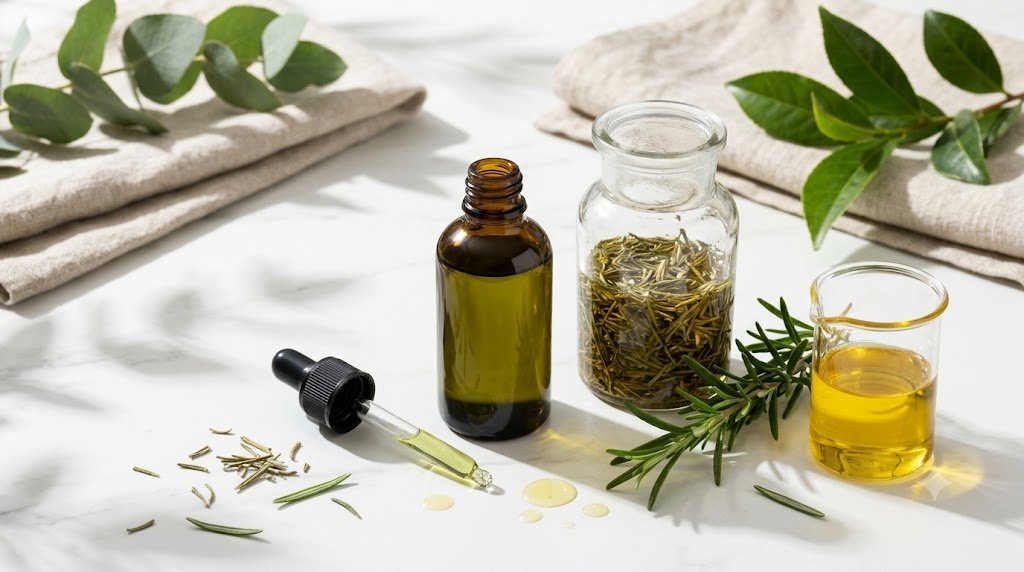
Using a glass dropper, dispense your 2% rosemary oil blend directly onto exposed scalp lines. Apply small droplets rather than saturating your hair strands; the goal is to treat the scalp tissue and follicle roots, not the hair lengths.
Step 3: The 5-Minute Inversion Micro-Massage
Using your finger pads (never your nails), apply gentle, circular pressure to the scalp for five full minutes. Keep your fingers anchored to the skin and move the scalp over the skull bones to stimulate blood flow and increase skin elasticity. If comfortable, lean forward slightly to harness gravity and encourage healthy microcirculation to your follicles.
Step 4: Contact Absorption Window & Clean Rinse
Allow the botanical oil blend to absorb into your scalp for at least 45 minutes to 2 hours before washing. If your scalp is non-reactive, you may leave the treatment on overnight under a breathable silk or satin bonnet. Cleanse thoroughly using a mild, sulfate-free shampoo to remove residual surface lipids. If you are also managing closed cuticle structures, explore our guide on low porosity hair care techniques for balanced hydration.
6. Comparative Analysis: Rosemary Oil vs. 2% Minoxidil
The botanical application of rosemary oil gained widespread scientific validation following a landmark randomized comparative trial published in Skinmed. Researchers evaluated rosemary oil against pharmaceutical 2% minoxidil in patients with androgenetic alopecia over a rigorous six-month study period:
Clinical Parameter
Botanical Rosemary Oil Protocol
Pharmaceutical 2% Minoxidil Solution
6-Month Hair Count Increase
Statistically equivalent to 2% minoxidil with notable increases in hair density.
Statistically equivalent to rosemary oil with established hair growth stimulation.
Reported Scalp Pruritus (Itching)
Significantly lower incidence; soothing plant lipids support barrier comfort.
Higher reported incidence; frequently linked to propylene glycol carrier bases.
Systemic Circulatory Side Effects
Virtually non-existent when properly diluted in carrier oils.
Infrequent, but can include lightheadedness, facial hypertrichosis, and low blood pressure.
Long-Term Scalp Barrier Health
Nourishes dermal lipid layers and promotes a healthy scalp microbiome.
Can cause progressive dryness, flaking, and contact irritation with daily use.
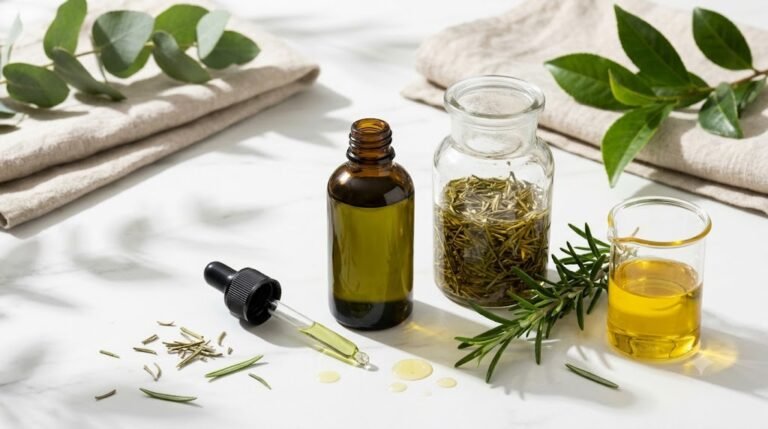
Compounding your own small-batch follicle oil ensures maximum botanical freshness and prevents lipid oxidation. Prepare this customized hair density elixir using therapeutic-grade ingredients:
20 ml Cold-Pressed Golden Jojoba Oil (Mimics human sebum; cleanses pores).
10 ml Cold-Pressed Moroccan Argan Oil (Rich in squalene and restorative vitamin E).
10 Drops Organic Steam-Distilled Rosemary Essential Oil (Standardized for 1,8-cineole).
4 Drops Pure Peppermint (Mentha Piperita) Essential Oil (Enhances microcirculation).
2 Drops Non-GMO Vitamin E Oil (Natural tocopherol antioxidant to prevent lipid oxidation).
Compounding Instructions:
Sterilize a 30 ml amber or cobalt glass dropper bottle with 70% isopropyl alcohol and allow it to air-dry completely. Dark glass is essential to protect delicate monoterpenes from photo-degradation.
Pour the measured jojoba and argan carrier oils into the glass bottle using a small stainless steel funnel.
Carefully count and add the drops of organic rosemary essential oil, peppermint oil, and pure vitamin E tocopherol.
Secure the dropper cap tightly and roll the bottle between your palms for 30 seconds to disperse the oils evenly. Store your elixir in a cool, dark cabinet away from direct sunlight and humidity.
Essential oils are potent, biologically active botanical concentrates. Before applying your newly blended hair elixir to your scalp, place 2 drops of the diluted mixture onto your inner forearm or behind your earlobe. Monitor the skin for 24 hours. If you experience burning, redness, or itching, do not proceed with scalp application. Furthermore, rosemary essential oil is not recommended for individuals who are pregnant, nursing, or diagnosed with epilepsy without consulting a qualified medical physician.
8. The 6-Month Terminal Regrowth Calendar
Follicular recovery is a biological process that unfolds gradually over months. Keeping realistic milestones in mind will help you stay consistent throughout your regrowth journey:
Month 1 (The Shedding Transition): You may experience a brief increase in shedding as miniaturized telogen hairs release to make way for new growth. Scalp circulation improves and baseline irritation calms.
Months 2 to 3 (Follicular Awakenings): Shedding slows down significantly. Dermal papillae begin transitioning into the anagen phase, and early new growth appears as fine, soft hairs along your part-line and temples.
Months 4 to 5 (Diameter Maturation): Emerging hairs develop increased pigmentation and cross-sectional density. Hair feels thicker at the roots, and overall scalp visibility diminishes.
Month 6 and Beyond (Terminal Density Maintenance): Hair count increases reach statistical significance. Continue your routine 2 to 3 times weekly to sustain DHT inhibition and preserve density.
9. Frequently Asked Trichology Questions (FAQ)
How long does it take for rosemary oil to reverse hormonal hair thinning?
Clinical comparative trichology studies demonstrate that consistent topical application of properly diluted rosemary oil requires a minimum of 6 continuous months to show statistically significant increases in hair count and terminal strand diameter.
Can I apply undiluted rosemary essential oil directly to my scalp?
Never apply 100% pure rosemary essential oil directly to your scalp skin. Pure essential oils contain high concentrations of volatile terpenes like 1,8-cineole and camphor, which cause severe chemical burns, acute contact dermatitis, and exacerbated follicular shedding when unbuffered.
Does rosemary oil block DHT as effectively as pharmaceutical minoxidil?
In a renowned 2015 randomized comparative trial, rosemary oil demonstrated comparable clinical efficacy to 2% minoxidil at the 6-month evaluation mark for androgenetic alopecia, while causing significantly less scalp pruritus and burning sensation.
Can rosemary oil trigger an initial shedding phase?
Yes, a mild initial shedding phase lasting 2 to 4 weeks is common. Rosemary oil accelerates microcirculation, prompting miniaturized telogen hairs to shed so that robust new anagen follicles can emerge.
What is the best carrier oil to dilute rosemary oil for hormonal hair loss?
Cold-pressed golden jojoba oil and lightweight squalane are the premier carrier lipids. Jojoba oil mimics human sebum, dissolving micro-crystalline DHT sebum plugs around follicles without weighing down thinning hair strands.
Botanical Safety & Clinical Disclaimer:
The trichological protocols, hormonal insights, and botanical formulations presented in the Boldskys Botanical Compendium are curated strictly for educational, cosmetic, and wellness applications. They do not substitute for formal clinical trichological consultations, medical diagnoses, or prescription therapies for endocrine disorders such as PCOS, thyroid dysfunction, or scarring alopecia. If you experience sudden, severe hair loss accompanied by systemic symptoms, schedule an appointment with a board-certified dermatologist or endocrinologist. Botanical standards adhere to verified natural compendium directives from the United States Department of Agriculture (USDA).