Introduction
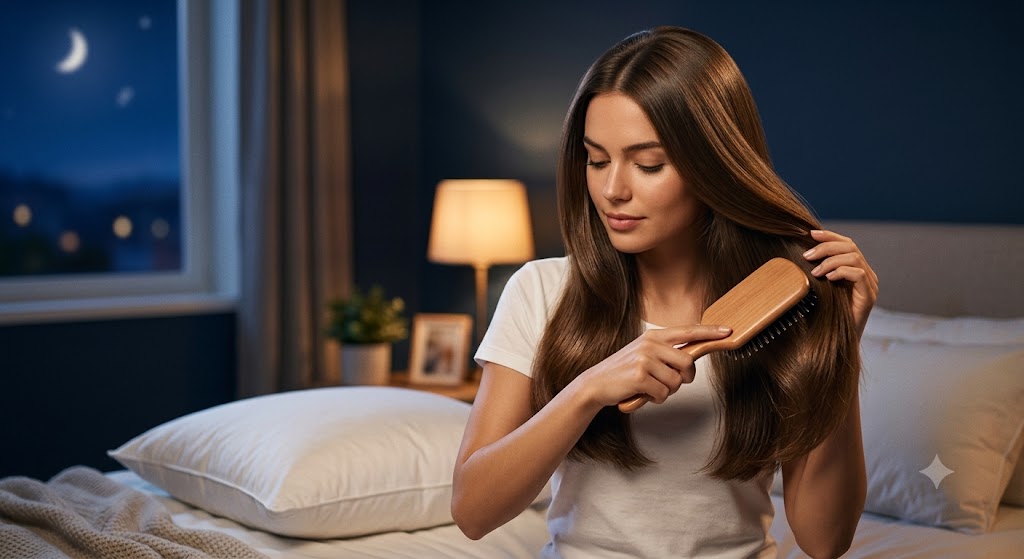
A simple night hair care routine can help keep your hair clean, comfortable, and easier to manage the next morning. While you sleep, your hair may rub against your pillow, become tangled, or lose its style. A few gentle bedtime habits can help reduce unnecessary friction and make your morning routine easier.
The best nighttime routine depends on your hair type, scalp condition, lifestyle, and personal preferences. Rather than following complicated trends, focus on simple habits that you can practice consistently.
This guide explains practical evening hair care tips that are suitable for most hair types and are designed to support healthy-looking hair.
Table of Contents
A bedtime routine works best when it is part of a complete hair care plan. Read our Complete Hair Care Guide to learn daily, weekly, and monthly habits that support healthy-looking hair.
Why a Night Hair Care Routine Matters
Your hair experiences friction while you sleep. Depending on your hair type, this may lead to tangles, flattened hair, or increased frizz by morning.
A gentle evening routine may help you:
- Remove tangles before bed.
- Keep your hair easier to manage in the morning.
- Reduce unnecessary pulling while brushing.
- Maintain a comfortable scalp.
- Prepare your hair for the next day.
Remember, healthy-looking hair develops through consistent care rather than overnight results.
If hair shedding is also part of your concern, our Hair Care Routine for Hair Fall guide explains how gentle daily handling can fit into a broader hair-care routine.
Evening Hair Care Checklist
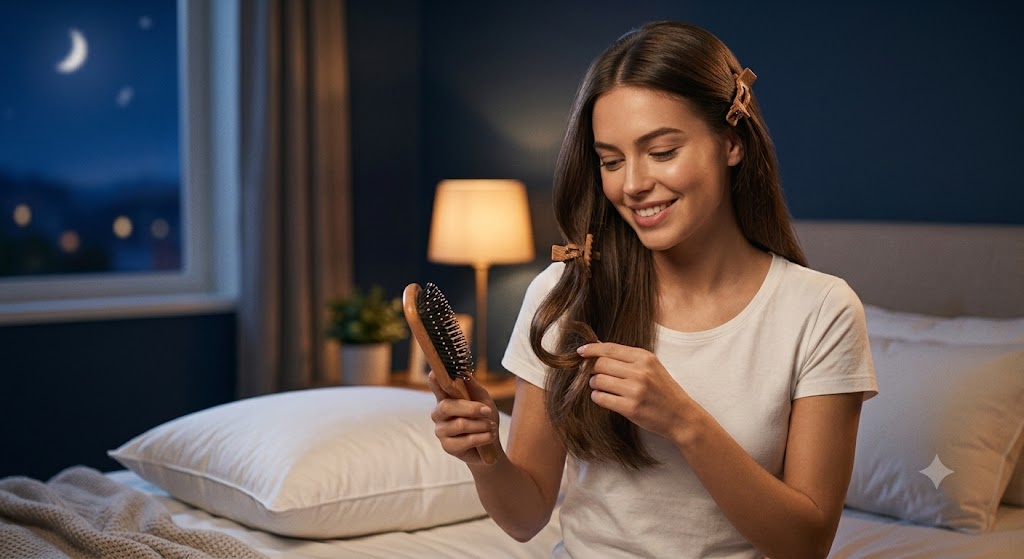
Before going to bed, consider these simple habits:
✅ Gently detangle your hair.
✅ Remove hair accessories that pull tightly.
✅ Make sure your scalp feels clean and comfortable.
✅ Avoid sleeping with wet hair whenever possible.
✅ Choose a comfortable hairstyle for sleeping.
A routine that takes only a few minutes is often easier to maintain consistently.
Common Bedtime Hair Care Mistakes
Many people unintentionally develop bedtime habits that may make hair harder to manage the next day.
Sleeping with Tightly Tied Hair
Very tight hairstyles may place unnecessary tension on the hair and scalp.
Choose a loose, comfortable hairstyle if you tie your hair before sleeping.
Going to Bed with Product Buildup
Heavy styling products left on the hair for extended periods may make some hair types feel weighed down.
Follow the product’s instructions and cleanse your hair according to your routine.
Sleeping with Wet Hair
Some people prefer to let their hair dry before sleeping, as damp hair may become more tangled overnight.
If your hair is wet, allow it to dry as much as practical before bedtime.
Ignoring Your Scalp
A healthy hair care routine includes paying attention to your scalp as well.
If you notice persistent itching, pain, redness, or unusual symptoms, consult a qualified healthcare professional.
Prepare Your Hair for a Comfortable Night

Your bedtime routine does not need to be complicated.
Simple habits include:
- Gently detangling your hair.
- Choosing a comfortable hairstyle.
- Keeping your scalp clean.
- Avoiding unnecessary pulling.
Consistency is usually more beneficial than using many products.
Quick Tip
Spending just five minutes on gentle hair care before bed may help make your hair easier to manage the following morning.
Night Hair Care and Your Hair Type
Your bedtime routine may vary depending on whether your hair is:
- Straight
- Wavy
- Curly
- Coily
Understanding your natural hair type helps you choose suitable care techniques.
Not sure about your natural hair pattern? Read our guide on how to identify your hair type before creating your nighttime routine.
How to Detangle Your Hair Before Bed
Detangling your hair before sleeping may help reduce knots and make your morning routine easier.
Instead of pulling through tangles, use a gentle approach.
General Detangling Tips
- Start from the ends of your hair.
- Work upward gradually toward the roots.
- Hold sections of your hair gently while brushing.
- Use slow, gentle movements.
- Stop and loosen larger tangles carefully instead of forcing the brush through them.
Gentle handling may help reduce unnecessary hair breakage.
Choose a Comfortable Sleeping Hairstyle
Some hairstyles may help keep hair organized while you sleep.
Examples include:
- A loose braid
- A loose ponytail
- A loose bun (if comfortable)
- Leaving shorter hair naturally loose
Avoid hairstyles that pull tightly on your scalp for long periods.
Comfort should always be your priority.
Keep Your Pillowcase Clean
Your pillowcase comes into contact with your hair and scalp every night.
General hygiene habits include:
- Wash pillowcases regularly according to the fabric care instructions.
- Replace damaged pillowcases when needed.
- Keep your sleeping area clean.
Good overall hygiene supports a comfortable sleeping environment.
Avoid Sleeping with Wet Hair
Many people prefer allowing their hair to dry before going to bed.
Depending on your hair type, sleeping with very wet hair may make it more difficult to manage the following morning.
If your hair is damp:
- Gently towel dry without rubbing aggressively.
- Allow it to air dry as much as practical.
- Avoid excessive heat unless following the manufacturer’s instructions.
Protect Your Hair Overnight
Your hair naturally moves while you sleep.
Simple habits that may help include:
- Avoid sleeping with tight hair accessories.
- Remove clips that may cause discomfort.
- Use comfortable hairstyles.
- Detangle before bed rather than the next morning.
Small daily habits often make routines easier to maintain.
If your hair tends to become tangled overnight, our guide on How to Detangle Hair explains gentle ways to work through knots as part of your regular routine.
Don’t Forget Your Scalp
Healthy-looking hair begins with a healthy scalp.
Before bedtime, take a moment to notice whether your scalp feels:
- Comfortable
- Dry
- Oily
- Itchy
- Irritated
Persistent or worsening symptoms should be evaluated by a qualified healthcare professional.
A comfortable scalp is an important part of healthy hair care. Read our Healthy Scalp Care Guide for practical tips that support long-term scalp health.
Night Hair Care and Your Morning Routine
A simple bedtime routine can make your morning hair care easier.
By reducing tangles overnight, you may spend less time brushing and styling after waking up.
Morning and night routines work best when they support each other.
After waking up, continue your routine with our Morning Hair Care Routine guide to keep your hair manageable throughout the day.
Quick Tip
You don’t need an expensive nighttime hair care routine.
Simple, consistent habits are often easier to maintain than complicated routines with many products.
Build a Routine That Fits Your Lifestyle
There is no single bedtime routine that works for everyone.
Choose habits that fit:
- Your hair type
- Your scalp condition
- Your daily schedule
- Your personal comfort
A routine you can follow consistently is usually more beneficial than one that is difficult to maintain.
Night Routine for Straight Hair
Straight hair is often easier to brush but may become oily more quickly than some other hair types.
A simple bedtime routine can help keep it manageable the next morning.
General Tips
- Gently brush your hair before sleeping.
- Remove any styling products according to their instructions if needed.
- Avoid tying your hair too tightly.
- Keep your pillowcase clean.
- Sleep with your hair comfortably arranged.
A simple routine is often easier to follow consistently.
Night Routine for Wavy Hair
Wavy hair may lose definition or become tangled during sleep.
General bedtime habits include:
- Gently detangle before bed.
- If appropriate for your hair type, loosely gather your hair to reduce tangling.
- Avoid brushing aggressively after your hair has dried.
- Keep your scalp clean and comfortable.
Choose the approach that best suits your natural wave pattern.
For a more complete bedtime routine, explore our Night Hair Care Routine guide for practical tips on preparing your hair before sleep.
Night Routine for Curly Hair
Curly hair benefits from gentle handling while preparing for sleep.
General suggestions include:
- Separate curls gently using your fingers if needed.
- Avoid excessive brushing that may disrupt your curl pattern.
- Choose a comfortable sleeping hairstyle.
- Remove tight hair accessories before bed.
Everyone’s curls are unique, so adjust your routine according to your individual needs.
Night Routine for Coily Hair
Coily hair is naturally delicate and often benefits from minimizing unnecessary friction overnight.
General care habits include:
- Handle hair gently while detangling.
- Avoid pulling through knots.
- Use comfortable protective hairstyles if they suit your routine.
- Follow a consistent hair care routine that matches your needs.
Gentle handling may help reduce unnecessary breakage.
Build Healthy Evening Habits
Nighttime hair care is not only about your hair.
A consistent evening routine may also include:
- Removing hair accessories before sleeping.
- Keeping your sleeping area clean.
- Washing pillowcases regularly.
- Checking your scalp for any unusual changes.
Small habits practiced consistently are often easier to maintain over time.
Frequently Asked Questions
Should I brush my hair before bed?
Many people find that gently detangling their hair before bed makes it easier to manage the next morning. The best approach depends on your hair type and personal routine.
Is it okay to sleep with tied hair?
A loose and comfortable hairstyle may be suitable for some people. Avoid hairstyles that place excessive tension on your hair or scalp.
Should I sleep with wet hair?
Many people prefer allowing their hair to dry before bedtime, as very wet hair may become more tangled overnight. The best approach depends on your hair type and routine.
Does a night hair care routine improve hair growth?
A bedtime routine helps improve hair care habits and manageability, but it does not guarantee faster hair growth. Hair growth is influenced by genetics, nutrition, hormones, overall health, and other individual factors.
How often should I follow a night hair care routine?
A night hair care routine can be followed every evening. The exact steps may vary depending on your hair type, scalp condition, and daily activities.
How long should a night hair care routine take?
For most people, a simple night hair care routine takes about 5 to 10 minutes. A routine that is easy to maintain consistently is often more beneficial than a complicated one.
If your hair and scalp have spent a long day outdoors, our guide to Scalp Sun Protection can help you build better protection into your daytime routine.
When to See a Doctor
Consult a qualified dermatologist or healthcare professional if you notice:
- Sudden or severe hair loss.
- Persistent scalp itching or pain.
- Swelling, redness, or open sores.
- Unusual discharge.
- Symptoms that continue despite changing your routine.
Professional evaluation can help identify the underlying cause.
Trusted Resources
Readers who wish to explore evidence-based information can visit these official organizations:
Medical Disclaimer
This article is provided for educational and informational purposes only. It is not a substitute for professional medical advice, diagnosis, or treatment. Hair care routines should be tailored to individual needs. If you have persistent scalp irritation, unusual hair loss, pain, swelling, or any other concerning symptoms, consult a qualified healthcare professional or dermatologist. Never delay seeking professional medical advice because of information you have read online.
Conclusion
A simple night hair care routine can help keep your hair more manageable and prepare it for the next day. Gentle habits such as detangling before bed, choosing a comfortable sleeping hairstyle, and keeping your pillowcase clean can become part of a practical long-term routine.
Following a night hair care routine consistently may help keep your hair easier to manage as part of your overall hair care habits.
Healthy-looking hair develops through consistent care rather than quick fixes. Your hair type, scalp condition, lifestyle, and overall health all play a role in choosing the routine that works best for you.
If you experience persistent scalp irritation, unusual hair loss, pain, swelling, or other concerning symptoms, consult a qualified dermatologist or healthcare professional for personalized advice.
A simple night hair care routine is easier to maintain when you follow the same healthy habits every evening.
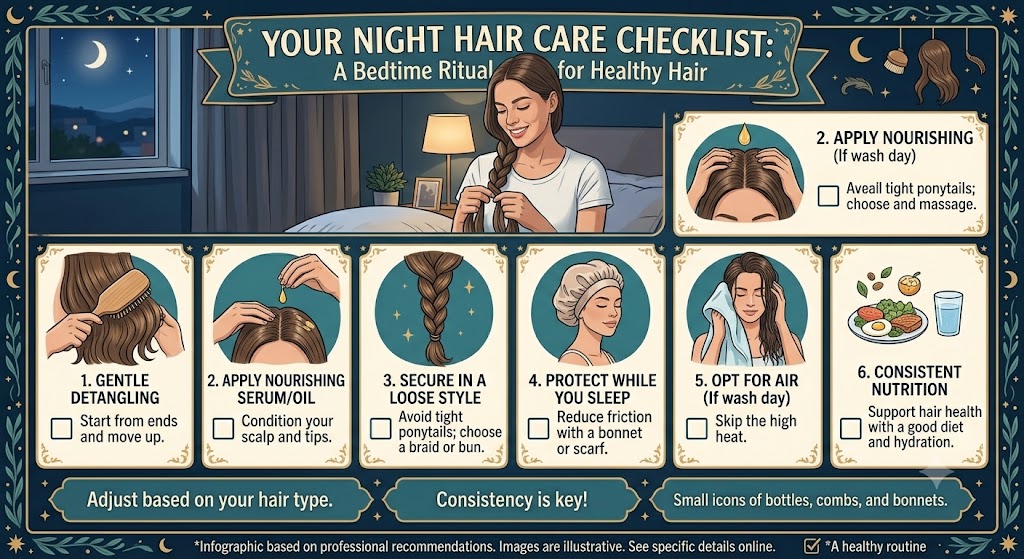
Night Hair Care Checklist
✅ Before Going to Bed
- Gently detangle your hair.
- Remove tight hair accessories.
- Check that your scalp feels comfortable.
- Allow damp hair to dry as much as practical.
- Choose a comfortable sleeping hairstyle.
✅ Daily Habits
- Handle your hair gently.
- Avoid unnecessary pulling.
- Keep your sleeping area clean.
- Avoid sleeping with heavy product buildup if cleansing is appropriate for your routine.
- Follow a consistent bedtime routine.
✅ Weekly Habits
- Wash pillowcases regularly.
- Clean combs and brushes.
- Review your hair care products.
- Check for product buildup.
- Replace damaged hair accessories if necessary.
Small everyday mistakes can affect your hair over time. Read our guide on common hair care mistakes to learn which habits are worth avoiding.
Key Takeaways
✔ A gentle bedtime routine helps reduce overnight tangles.
✔ A consistent night hair care routine is easier to maintain than a complicated routine.
✔ Comfortable hairstyles may reduce unnecessary tension.
✔ Clean pillowcases support good hair and scalp hygiene.
✔ A healthy scalp is an important part of healthy-looking hair.
✔ Consistency is more important than using many products.
✔ Seek professional medical advice for persistent hair or scalp concerns.