Introduction
Hair Care Guide: Healthy-looking hair starts with simple daily habits and a consistent routine. This complete guide explains washing tips, scalp care, common mistakes, and practical hair care advice for every hair type.
Healthy-looking hair is often the result of consistent care rather than expensive products. A simple routine that matches your hair type can help keep your hair clean, manageable, and less prone to damage. Whether your hair is straight, wavy, curly, or coily, understanding its needs is the first step toward building a routine that works for you.
Hair is affected by many factors, including age, genetics, styling habits, environmental exposure, diet, and overall health. Because everyone’s hair is different, there is no single routine that works for everyone. Instead, the goal is to choose habits that support the health of your hair and scalp over time.
In this guide, you’ll learn:
- How to identify your hair type
- A simple daily hair care routine
- Weekly and monthly hair care practices
- Common mistakes that may damage hair
- Tips for keeping your scalp healthy
- When it’s important to seek professional medical advice
This article is designed for educational purposes and should not replace advice from a qualified healthcare professional or dermatologist.
If you’re new to building a healthy routine, start with understanding how often you should wash your hair based on your hair type and lifestyle.
Table of Contents
Why Hair Care Matters
Hair care is about more than appearance. Healthy hair often starts with a healthy scalp. A consistent routine may help reduce unnecessary breakage, dryness, and product buildup while making hair easier to manage.
Some everyday habits can influence the condition of your hair, including:
- Washing your hair appropriately for your hair type
- Protecting hair from excessive heat
- Choosing gentle hair care products
- Maintaining a balanced diet
- Managing stress
- Getting enough sleep
Small daily habits often make a bigger difference than using multiple products at once.
If you’ve recently colored your hair, our Hair Care Routine for Color-Treated Hair guide explains simple daily habits, weekly care, and heat protection tips to help maintain healthy-looking hair.
Hair Care Guide for Different Hair Types
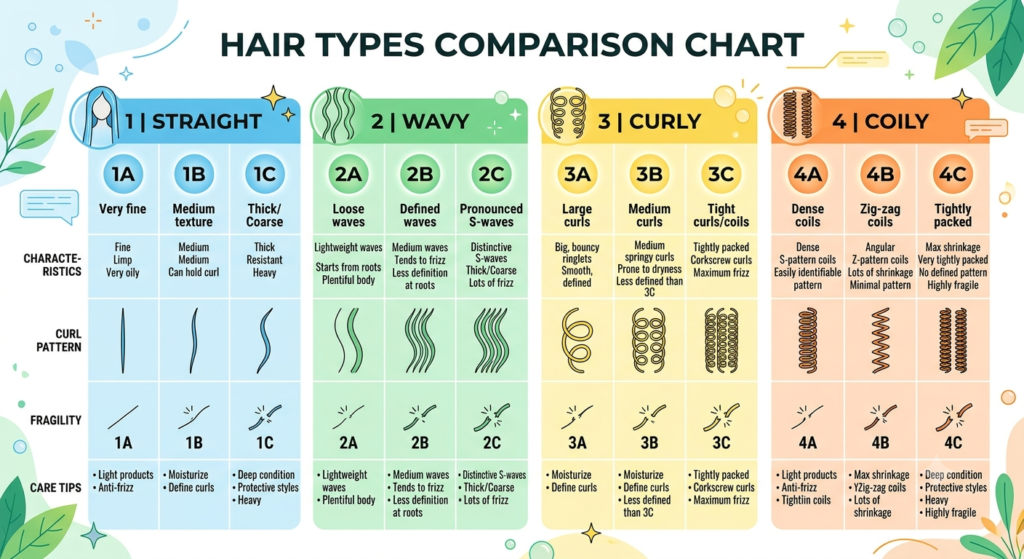
Before choosing products or creating a routine, it’s helpful to understand your hair.
Straight Hair
Straight hair usually distributes natural oils more easily from the scalp to the ends. It may become oily faster than other hair types.
General Care Tips
- Wash when needed based on oil buildup.
- Avoid heavy products that may weigh hair down.
- Use lightweight conditioners.
If you want to build a routine around your own hair texture and scalp needs, see our How to Build a Simple Hair Care Routine That Fits Your Hair Type.
Wavy Hair
Wavy hair can sometimes become frizzy while also developing dry ends.
General Care Tips
- Use lightweight moisturizing products.
- Avoid brushing aggressively when dry.
- Air drying may help reduce frizz for some people.
If you have naturally fine strands, explore our guide to a hair care routine for fine hair for more targeted everyday care.
Curly Hair
Curly hair often needs additional moisture because natural oils may not travel as easily along the hair shaft.
General Care Tips
- Use moisturizing conditioners.
- Detangle gently.
- Avoid excessive heat styling whenever possible.
If you have naturally curly hair, explore our Hair Care Routine for Curly Hair guide for practical daily care tips.
Coily Hair
Coily hair is generally more fragile and may benefit from regular moisturizing and gentle handling.
General Care Tips
- Reduce unnecessary manipulation.
- Use protective hairstyles appropriately.
- Keep the scalp clean while maintaining moisture.
Before choosing products, learn How to Identify Your Hair Type so you can build a routine that matches your individual hair needs.
Daily Hair Care Guide – Complete Hair Care Guide
Consistency is often more important than complexity. A simple daily routine may help maintain healthy-looking hair.
Morning Routine
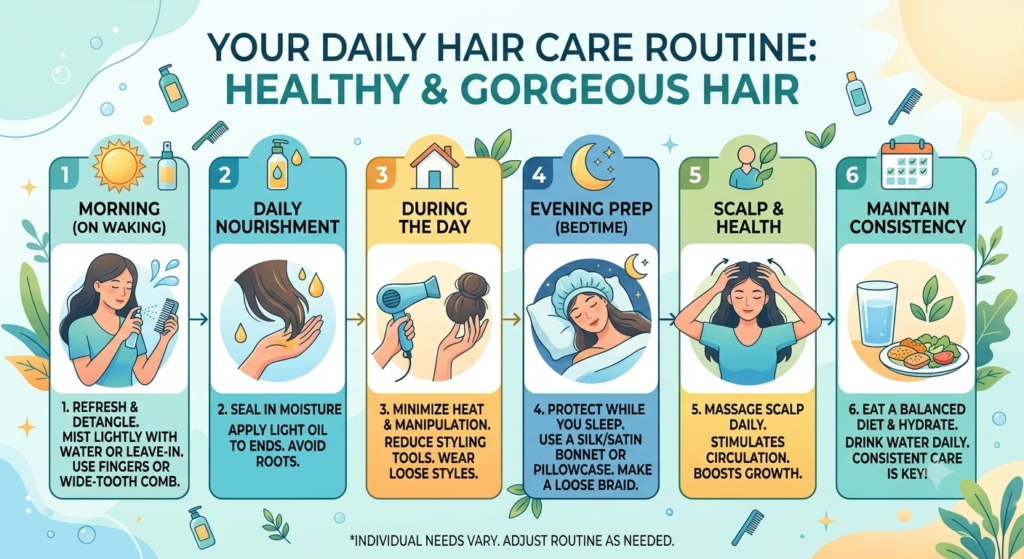
1. Check Your Hair
Take a quick look for:
- Dryness
- Oiliness
- Tangles
- Scalp irritation
Understanding how your hair feels each day helps you decide whether you need washing, conditioning, or simply gentle styling.
Understanding your hair porosity can also help you make more informed choices about moisture, conditioning, and everyday care.
2. Detangle Gently
If needed, gently detangle your hair starting from the ends and gradually working upward. Using excessive force may increase hair breakage.
For curly or coily hair, detangling while the hair is damp and conditioned may be more comfortable for some people.
Wondering how often you should wash your hair? Our detailed guide explains the ideal hair washing routine for different hair types, scalp conditions, and lifestyles.
3. Protect Against Heat
If you plan to use heat styling tools such as a blow dryer, curling iron, or straightener, consider using a heat protectant product according to the manufacturer’s instructions.
Limiting excessive heat exposure may help reduce damage over time.
4. Protect Your Hair Throughout the Day
Daily exposure to sunlight, wind, pollution, and friction from clothing or accessories can gradually affect hair.
Simple protective habits may help reduce unnecessary damage:
- Wear a hat when spending long periods in strong sunlight.
- Tie long hair loosely during physical activities.
- Avoid overly tight hairstyles that pull on the scalp.
- Use soft hair ties instead of rubber bands.
- Be gentle when removing clips or hair accessories.
Small protective habits can make a noticeable difference over time.
Avoid common habits that may affect your hair by reading our Common Hair Care Mistakes guide.
5. Stay Hydrated
Water plays an important role in overall health, including the health of your skin and scalp.
While drinking more water alone will not solve every hair concern, staying adequately hydrated supports normal body functions that contribute to healthy hair.
Start every day with simple habits by following our Morning Hair Care Routine guide.
Evening Hair Care Routine
Night-time hair care is often overlooked, but it can help reduce tangles and friction while you sleep.
Brush Gently Before Bed
If appropriate for your hair type, gently detangle your hair before sleeping.
Avoid excessive brushing, as too much friction may contribute to breakage.
If you are also noticing increased shedding alongside dry or difficult-to-manage hair, our Hair Care Routine for Hair Fall guide covers gentle daily habits and practical hair-handling tips.
Sleep on a Clean Pillowcase
Hair comes into contact with your pillow every night.
Keeping pillowcases clean may help reduce the transfer of dirt, oil, and hair products back onto the hair and scalp.
Some people also prefer smooth pillowcase fabrics because they may reduce friction, although experiences vary.
Avoid Sleeping with Wet Hair
Sleeping with wet hair may increase tangling and make some hair types more prone to breakage due to the increased fragility of wet hair.
If possible, allow your hair to dry before going to bed.
Don’t forget your evening routine. Read our Night Hair Care Routine for practical bedtime hair care tips.
Weekly Hair Care Guide
A weekly routine focuses on deeper care than everyday maintenance.
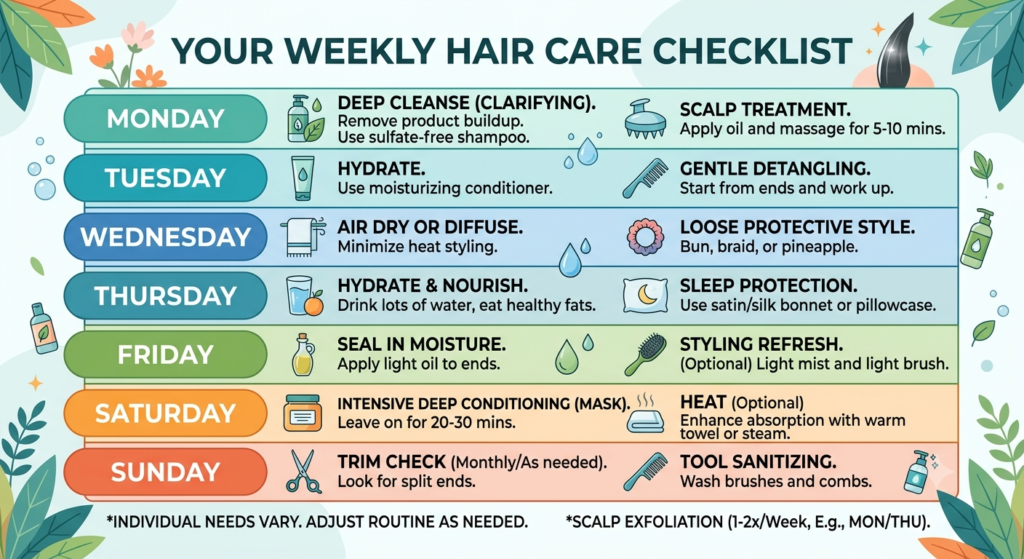
Deep Conditioning
Conditioners help smooth the hair and improve manageability.
Some people also choose to use a deep conditioner once a week, especially if their hair feels dry or has been exposed to frequent heat styling.
When choosing a conditioner:
- Select one suitable for your hair type.
- Follow the instructions on the product label.
- Rinse thoroughly unless the product is designed to be left in.
If your hair has become weak due to heat styling, chemical treatments, or everyday damage, read our Hair Care Routine for Damaged Hair guide to learn simple daily habits that can help improve hair manageability.
Clarify Product Buildup
Hair styling products may gradually build up on the hair and scalp.
Using a clarifying shampoo occasionally—if appropriate for your hair type—may help remove excess buildup.
However, using clarifying products too frequently may leave some hair types feeling dry.
If your hair tends to resist moisture or become weighed down by products, our guide on how to care for low porosity hair offers a simple routine to consider
Trim Split Ends
Hair trimming does not make hair grow faster.
However, regular trims may improve the appearance of damaged ends and help reduce further splitting.
Many people choose to trim their hair every few months depending on hair length, style, and condition.
Clean Hair Tools
Hairbrushes, combs, and styling tools collect:
- Hair
- Dust
- Oil
- Product residue
Cleaning these items regularly helps maintain better hair hygiene.
Monthly Hair Care Routine
Monthly maintenance helps keep your routine effective.
Review Your Products
Hair needs may change with:
- Weather
- Humidity
- Age
- Hair coloring
- Lifestyle changes
Review whether your shampoo, conditioner, and styling products still suit your current hair condition.
If your hair seems to lose moisture quickly or tends to feel dry and frizzy, learning How to care for high-porosity hair can help you build a more suitable routine.
Check for Scalp Changes
Take a few minutes to observe your scalp.
Look for:
- Persistent redness
- Excessive flakes
- Painful bumps
- Unusual irritation
If these symptoms continue or worsen, it is advisable to seek evaluation from a qualified healthcare professional.
Hair fall can be influenced by everyday hair care habits. Explore our Hair Care Routine for Hair Fall guide to learn gentle washing techniques, scalp care practices, and practical daily habits that support healthier-looking hair.
Refresh Your Routine
Ask yourself:
- Does my hair feel dry?
- Does it become oily quickly?
- Am I using too many products?
- Have I changed my styling habits recently?
Simple adjustments over time often work better than constantly changing multiple products.
A healthy scalp is the foundation of healthy-looking hair. Read our Healthy Scalp Care Guide for practical daily scalp care tips.
Healthy Hair Habits
Healthy hair is influenced by daily lifestyle habits as well as hair products.
Some habits that may support overall hair health include:
- Eating a balanced diet that provides adequate protein and essential nutrients.
- Getting enough sleep.
- Managing stress where possible.
- Avoiding smoking.
- Protecting hair from excessive heat and harsh chemical treatments.
- Following product instructions carefully.
Healthy hair care is usually built through consistency rather than quick fixes.
If you are wondering How Often Should You Wash Your Hair?, our dedicated guide explains how washing frequency can vary by hair type, scalp needs, and lifestyle.
Hair Care Guide Common Mistakes to Avoid
Even with good intentions, certain everyday habits may contribute to hair damage over time. Recognizing these habits can help you make informed choices and support healthier-looking hair.
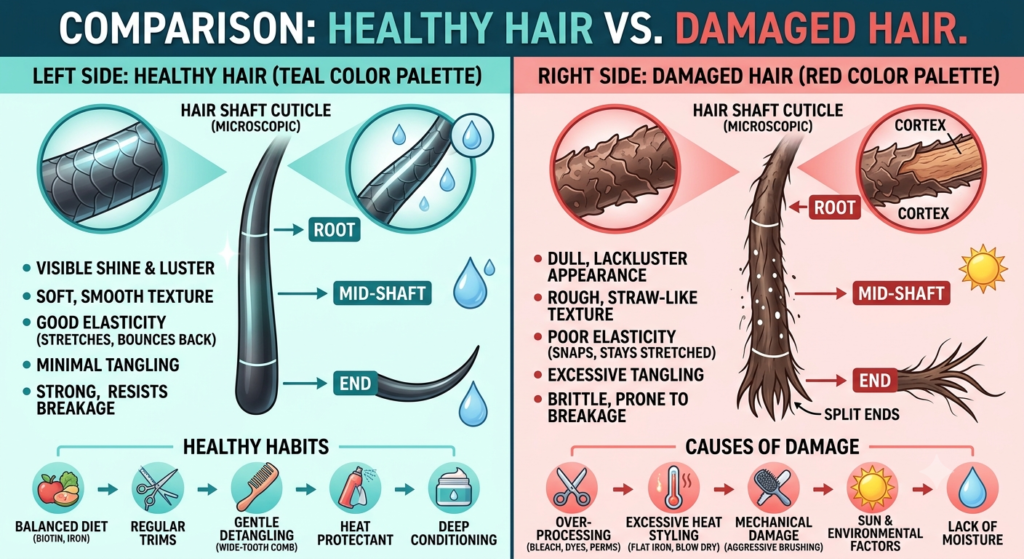
1. Washing Your Hair Too Often
Washing too frequently may remove natural oils from the scalp, especially if you use strong cleansing products.
Instead of following a fixed schedule, consider washing your hair based on your hair type, lifestyle, and how oily or dirty your hair becomes.
2. Using Very Hot Water
Very hot water may leave some people’s hair and scalp feeling dry.
Many people find that lukewarm water is more comfortable for washing hair.
If you are wondering How Often Should You Wash Your Hair?, our dedicated guide explains how washing frequency can vary by hair type, scalp needs, and lifestyle
3. Excessive Heat Styling
Frequent use of:
- Hair dryers
- Curling irons
- Flat irons
may contribute to dryness or breakage over time.
If you use heat styling tools, follow the manufacturer’s instructions and consider using a heat protectant product.
4. Tight Hairstyles
Very tight ponytails, buns, or braids may place continuous tension on the hair.
Over time, excessive pulling may contribute to hair breakage or traction-related hair loss in some individuals.
Changing hairstyles regularly and avoiding excessive tension may help.
5. Skipping Conditioner
Conditioners can help improve hair manageability and reduce friction during brushing.
Choose a conditioner that matches your hair type and use it according to the product instructions.
6. Brushing Wet Hair Aggressively
Wet hair is generally more fragile than dry hair.
Detangle gently using a suitable comb or brush, starting from the ends and gradually working upward.
Gentle handling is an important part of everyday hair care, and our guide on How to detangle hair explains a simple approach for working through knots gradually.
7. Using Too Many Hair Products
Applying multiple styling products every day may increase product buildup.
Keeping your routine simple often makes it easier to understand what works best for your hair.
8. Ignoring Your Scalp
Healthy-looking hair begins with a healthy scalp.
Pay attention to signs such as:
- Persistent itching
- Excessive flakes
- Pain
- Redness
If symptoms continue, seek professional medical advice.
Sun exposure is another part of everyday hair care, so our guide to Scalp Sun Protection explains practical ways to protect exposed scalp areas during outdoor activities.
This Hair Care Guide brings together simple daily habits, weekly care tips, and practical advice for maintaining healthy-looking hair.
If you’re comparing different moisture behaviours, our guide to low porosity vs high porosity hair explains how these two porosity types differ and what that can mean for your routine.
Frequently Asked Questions (FAQ)
How often should I wash my hair?
There is no universal schedule.
The ideal frequency depends on factors such as:
- Hair type
- Scalp oil production
- Physical activity
- Climate
- Personal preference
People with oily hair may choose to wash more frequently, while those with dry or curly hair may wash less often.
Does trimming hair make it grow faster?
No.
Hair trimming does not increase the rate of hair growth.
However, trimming split ends may improve the appearance of hair and help reduce further splitting.
Can changing my diet improve my hair?
Hair health can be influenced by overall nutrition.
Eating a balanced diet that provides adequate protein, vitamins, and minerals supports normal body functions involved in hair growth.
If you suspect a nutritional deficiency, consult a qualified healthcare professional.
If your strands are naturally fine or your hair appears low in volume, our Hair Care Routine for Thin Hair guide offers practical tips for gentle daily care, styling, and product selection.
Is it okay to use hair oil every day?
Some people use hair oil regularly, while others prefer occasional use.
The best approach depends on your hair type, scalp condition, and the product being used.
Follow the manufacturer’s directions and avoid applying excessive amounts if it makes your hair feel greasy.
If your scalp becomes oily quickly, read our Hair Care Routine for Oily Hair guide for practical daily care tips.
Can stress affect hair?
Stress may contribute to certain types of hair shedding in some individuals.
If you experience sudden or significant hair loss, consult a healthcare professional for an appropriate evaluation.
When to See a Doctor
Hair concerns sometimes require professional medical assessment.
Consider consulting a qualified dermatologist or healthcare professional if you experience:
- Sudden or severe hair loss
- Bald patches
- Persistent scalp pain
- Bleeding or discharge from the scalp
- Signs of infection
- Hair loss lasting several months without improvement
- Hair loss after starting a new medication
- Hair loss accompanied by other health symptoms such as unexplained weight loss, fatigue, or hormonal changes
Early evaluation may help identify any underlying causes and guide appropriate treatment.
Trusted Resources
Readers who wish to learn more from evidence-based sources may find these official organizations helpful:
Medical Disclaimer
This article is intended for educational and informational purposes only. It is not a substitute for professional medical advice, diagnosis, or treatment. Hair concerns can have many different causes, and individual experiences vary. Always consult a qualified healthcare professional or dermatologist if you have persistent symptoms, an underlying medical condition, or questions about treatments or products suitable for your individual needs. Never ignore or delay seeking professional medical advice because of information you have read online.
Avoiding everyday hair care mistakes is just as important as following a good routine. Read our guide on common hair care mistakes to learn which habits may affect your hair and how to avoid them.
Following a complete Hair Care Guide can help you build a routine that suits your hair type and lifestyle.
If you’re comparing different moisture behaviours, our guide to low porosity vs high porosity hair explains how these two porosity types differ and what that can mean for your routine.
Conclusion
Following this Hair Care Guide can help you build simple daily habits that support healthier-looking hair over time…
Healthy hair is not built overnight. It is usually the result of consistent care, realistic expectations, and habits that suit your individual hair type and lifestyle.
Rather than chasing every new trend or using multiple products at once, focus on a simple routine that you can maintain over time. Gentle cleansing, appropriate conditioning, protecting your hair from unnecessary damage, and supporting your overall health may all contribute to healthier-looking hair.
Remember that every person’s hair is unique. What works well for one individual may not be suitable for another. Pay attention to how your hair responds, make gradual adjustments when needed, and seek professional advice if you notice persistent or unusual changes.
A balanced approach is often the most sustainable way to care for your hair.
If your hair feels rough or lacks moisture, explore our Hair Care Routine for Dry Hair guide for practical care tips.
Quick Hair Care Checklist
✅ Daily
- Observe your hair and scalp.
- Detangle gently.
- Protect hair from excessive heat.
- Avoid tight hairstyles.
- Stay hydrated.
✅ Weekly
- Wash according to your hair type.
- Use conditioner appropriately.
- Clean your hairbrush and comb.
- Check for product buildup.
- Protect hair from unnecessary damage.
✅ Monthly
- Review your hair care products.
- Check your scalp for persistent changes.
- Trim split ends if needed.
- Adjust your routine based on seasonal or lifestyle changes.
Key Takeaways
✔ Healthy hair begins with a healthy scalp.
✔ Consistency is usually more effective than using many products.
✔ Choose products based on your hair type.
✔ Minimize unnecessary heat and chemical exposure.
✔ A balanced lifestyle supports overall hair health.
✔ Seek professional medical advice for persistent or concerning hair or scalp problems.
We hope this Hair Care Guide helps you care for your hair with confidence and consistency.