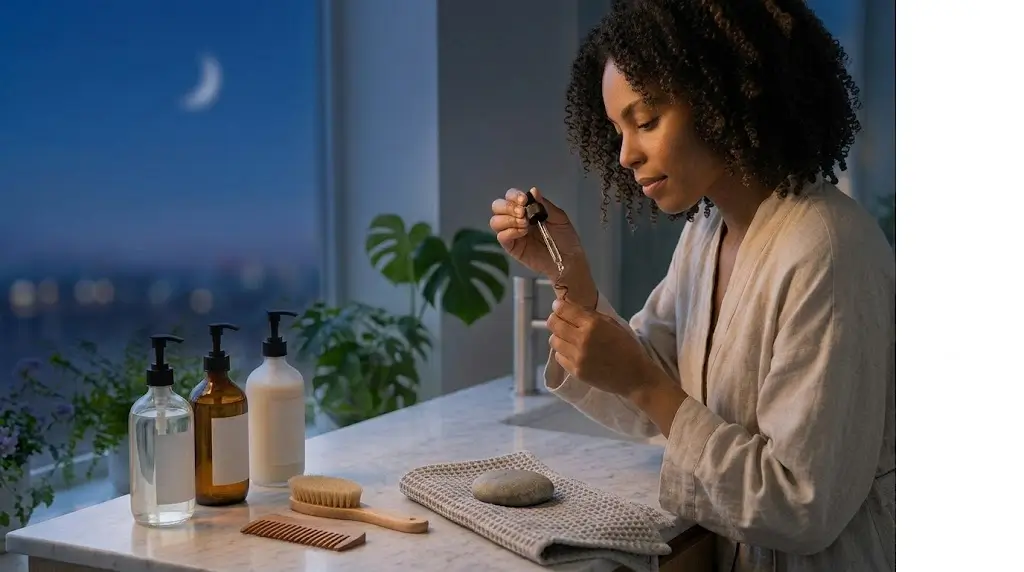
Hair Care Routine for Fine Hair: A Simple Guide
Fine hair can look full and healthy, but because individual strands are smaller in diameter, it can sometimes become weighed down by heavy products, lose volume quickly, or show signs of buildup sooner. The right hair care routine for fine hair does not need to be complicated. The goal is to keep the hair clean, conditioned, protected, and manageable without adding unnecessary weight.
A good routine starts with understanding what fine hair actually needs. Instead of choosing products simply because they promise more moisture or volume, consider how your hair responds after washing, conditioning, and styling. Small adjustments can often make a routine feel much more comfortable.
Quick answer: A simple fine-hair routine usually focuses on appropriate cleansing, lightweight conditioning, careful product use, gentle handling, and regular assessment of buildup and manageability.
Table of Contents
What Is Fine Hair?
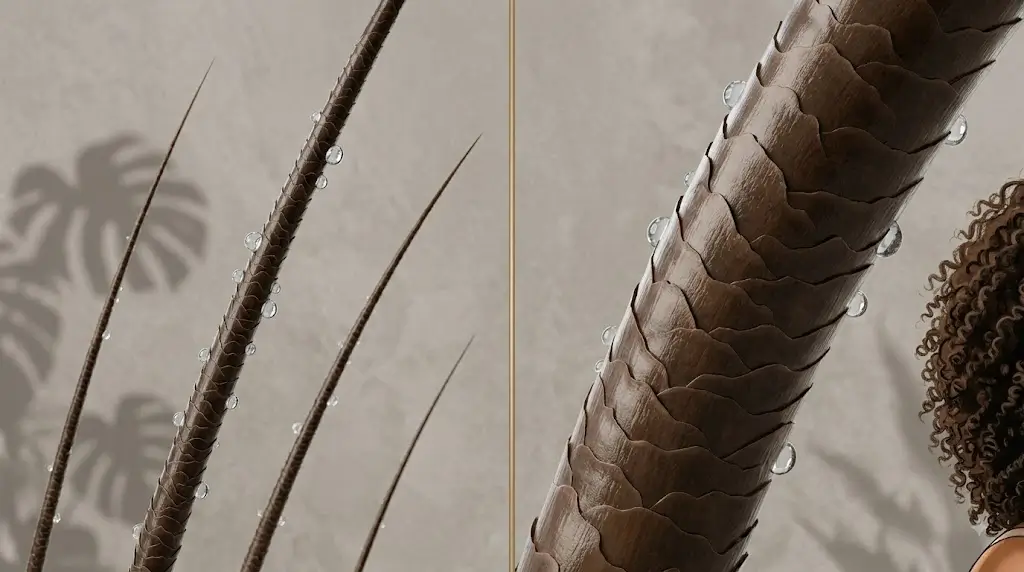
Fine hair refers primarily to the diameter of an individual hair strand. A person can have fine strands while still having a relatively full head of hair.
This distinction matters because fine hair and thin hair are not necessarily the same thing. Hair density describes how much hair grows across the scalp, while fineness describes the thickness of each individual strand.
Fine hair may be:
- straight
- wavy
- curly
- naturally dry or oily
- high, medium, or low porosity
So there is no single routine that works for everyone with fine hair. Your strand characteristics, scalp needs, styling habits, and porosity can all influence what works best.
If your fine hair behaves differently around moisture, you can also explore our high porosity hair care routine for another porosity-specific approach.
Fine Hair vs. Thin Hair: What’s the Difference?
The terms fine and thin are often used interchangeably, but they describe different characteristics.
Fine hair describes the width of an individual strand.
Thin hair can refer to lower hair density, meaning there may be fewer visible strands across the scalp.
Someone can therefore have fine but dense hair, while another person may have coarser strands but lower density.
For more information about hair and scalp concerns, you can also explore Cleveland Clinic’s hair health resources.
Understanding this difference can help you avoid choosing a routine based on the wrong problem.
If you are concerned about overall hair density rather than individual strand thickness, our guide to a hair care routine for thin hair may be more useful.
If you are trying to understand your overall hair characteristics first, our guide on how to identify your hair type can help you look at several characteristics together.
If changes in hair density are a concern, the American Academy of Dermatology’s hair loss information provides additional educational guidance.
A Simple Hair Care Routine for Fine Hair
A useful routine should be easy enough to maintain consistently. Rather than adding many products, start with the basics and adjust only when your hair gives you a reason to do so.
1. Start With a Gentle Cleanse
Choose a cleanser that leaves your scalp feeling clean without making your hair feel excessively dry or rough.
How often you wash depends on factors such as:
- scalp oiliness
- exercise and sweating
- styling-product use
- environmental conditions
- personal preference
Fine strands can sometimes appear flat when excess oil or product residue accumulates, so cleansing should be based on your actual scalp needs rather than a fixed schedule.
2. Condition Without Weighing Hair Down
Conditioner can help improve softness and manageability, but using more does not necessarily produce better results.
For fine hair, start with a modest amount and concentrate it mainly on the lengths and ends when appropriate.
If your hair repeatedly feels:
- heavy
- coated
- flat
- greasy soon after washing
your routine may contain more conditioning or styling product than your hair needs.
3. Keep Products Lightweight
Fine hair can sometimes become overwhelmed by several layers of product.
Rather than automatically adding more products for volume, moisture, or styling, consider whether each product has a specific purpose.
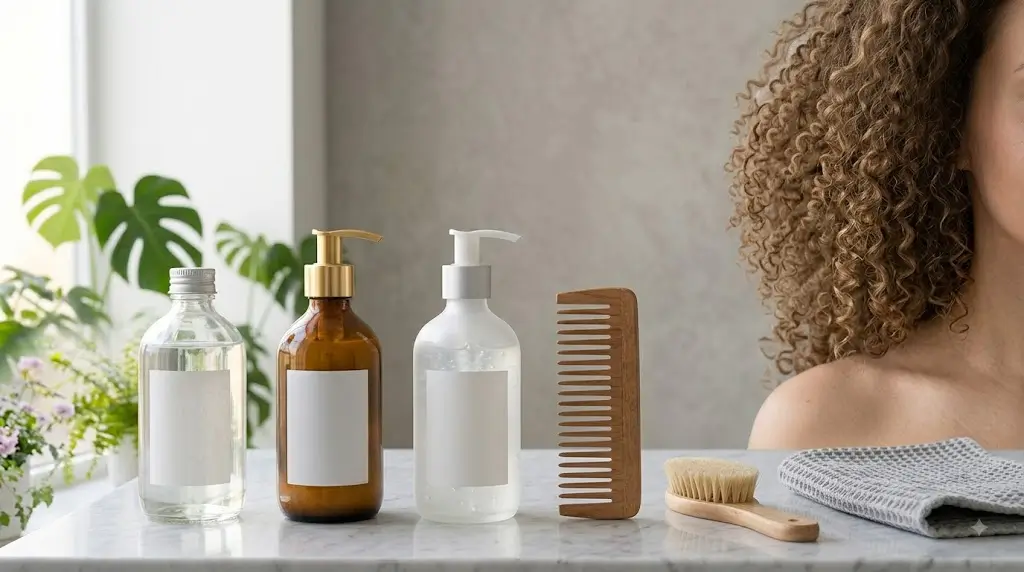
A simple routine might include:
- cleanser
- conditioner
- one lightweight leave-in or styling product when needed
- heat protection when using heat tools
The ideal number of products depends on the individual, but simpler is often easier to evaluate.
🔗 INTERNAL LINK — add later
இந்த இடத்தில் Low Porosity Hair Products link-ஐ நாம் இன்னும் இங்கே insert செய்ய வேண்டாம்; BS-0024 முழு article முடிந்த பிறகு exact placement-ஐ பார்த்து Placement + Statement + Anchor + Complete URL format-ல் தனியாக கொடுக்கிறேன்.
4. Be Careful With Product Buildup
Product buildup can make hair feel coated, heavy, or difficult to style.
If you regularly use:
- styling creams
- oils
- leave-in conditioners
- dry shampoo
- hairspray
- gels or mousses
pay attention to how your hair feels over time.
Instead of automatically adding another product when your hair becomes difficult to manage, consider whether existing residue could be contributing to the problem.
5. Handle Fine Hair Gently
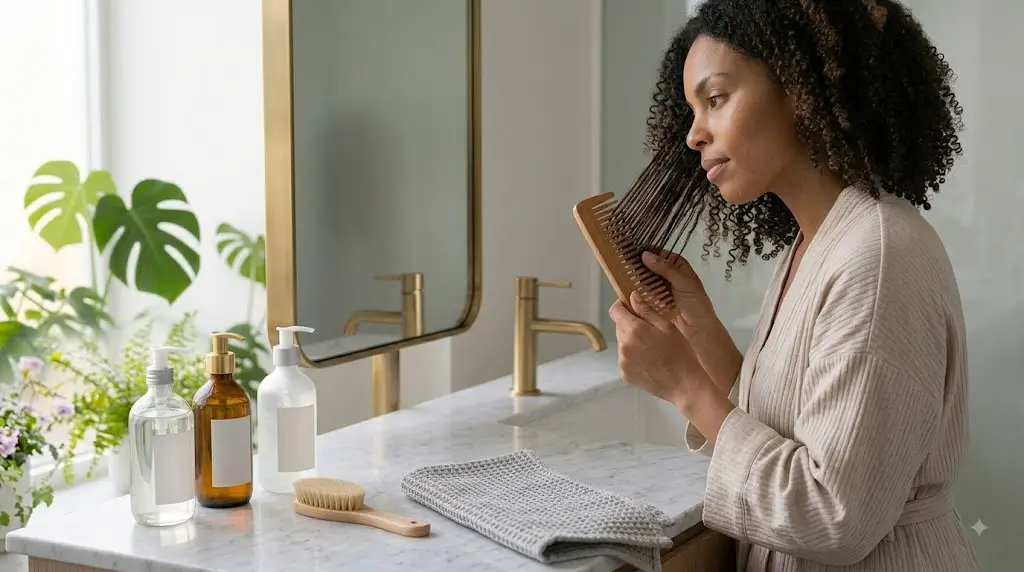
Fine strands can benefit from gentle handling, especially when wet.
For additional dermatologist-reviewed guidance on caring for your hair and scalp, see the American Academy of Dermatology’s hair care resources.
Try to avoid unnecessary pulling or rough brushing. When detangling, work gradually through the hair rather than forcing a brush or comb through stubborn knots.
After washing, gently remove excess water instead of aggressively rubbing the hair with a towel.
These simple habits can make the routine easier to maintain without requiring additional products.
Routine, Volume, Mistakes & Weekly Care
How Often Should You Wash Fine Hair?
There is no single washing schedule that works for every person with fine hair. Your scalp’s oil production, activity level, styling habits, and environment can all affect how frequently you prefer to wash.
If your scalp becomes oily quickly, washing more frequently may help your hair feel fresher and easier to style. If your scalp and hair remain comfortable for longer, you may prefer a less frequent schedule.
The most useful approach is to pay attention to how your scalp and hair actually feel, rather than following a fixed number of washing days.
If you want more guidance on choosing a washing schedule, see our guide to how often should you wash your hair.
How to Add Volume Without Overloading Fine Hair
Fine hair can lose visible volume when too much product is applied. Building volume therefore does not always mean adding more products.
Try these simple approaches:
- Keep conditioner focused on areas that need it.
- Use styling products sparingly.
- Avoid layering several heavy products at once.
- Allow the hair to dry properly before judging the final result.
- Experiment with your parting or styling direction.
- Cleanse regularly enough to prevent excessive residue.
A lightweight routine can make it easier to identify which products genuinely help your hair.
Heat Styling and Fine Hair
Heat styling can be part of a fine-hair routine, but excessive or careless heat exposure can make hair feel dry or fragile.
If you use a blow dryer, straightener, or curling tool:
- avoid unnecessarily high temperatures
- limit repeated passes over the same section
- use heat protection when appropriate
- allow hair to dry appropriately before using certain hot tools
- avoid using heat simply because it is part of your usual routine
The goal is not to eliminate styling tools completely. Instead, use them thoughtfully and avoid unnecessary exposure.
Fine Hair and Different Hair Types
Fine hair can have different textures, so your routine may need to change depending on whether your hair is straight, wavy, or curly.
Fine Straight Hair
Fine straight hair may show oil and product buildup relatively quickly. Lightweight cleansing and careful conditioning may therefore be particularly useful.
Fine Wavy Hair
Fine wavy hair may need enough conditioning to support manageability without losing its natural shape. Experiment with small amounts of styling product rather than applying several layers.
Fine Curly Hair
Fine curly hair may need conditioning and gentle handling while still being sensitive to heavy products. Focus on finding a balance between softness, definition, and weight.
Your hair texture and strand thickness should be considered together rather than separately.
If your fine hair also tends to resist moisture, our guide to low porosity hair care explains how to build a routine around its different moisture behaviour.
A Simple Weekly Routine for Fine Hair
A weekly routine does not need to involve a long list of treatments.
Regular wash days
Use a suitable cleanser according to your scalp needs, followed by a manageable amount of conditioner.
Styling days
Use only the styling products that serve a clear purpose. If your hair becomes flat or coated, reassess the amount rather than automatically adding another product.
Between wash days
Pay attention to your scalp and the condition of your lengths. If your hair feels oily, coated, or difficult to style, your current routine may need adjustment.
Weekly check
Ask yourself:
- Does my hair feel clean?
- Does it become weighed down easily?
- Is my scalp comfortable?
- Am I using more products than necessary?
- Does my current routine make styling easier?
These simple observations can help you gradually refine your routine.
Common Fine Hair Care Mistakes
Using Too Much Product
More product does not necessarily mean more moisture, definition, or volume. Start with a small amount and increase only when necessary.
Choosing Products Only for Their Marketing Claims
Words such as volumizing, repairing, or moisturizing do not automatically mean a product will suit your hair.
Consider how your own hair responds.
Skipping Conditioner Completely
Fine hair can still benefit from conditioning. The goal is to find an amount and formula that supports manageability without leaving the hair unnecessarily heavy.
Applying Multiple Heavy Products
Layering oils, creams, leave-ins, and styling products can make fine hair feel coated. Introduce products one at a time so you can understand what each one contributes.
Brushing Roughly
Aggressive brushing can make detangling more difficult. Handle fine hair gently, especially when it is wet.
Because fine strands can be easy to handle too roughly, our guide on How to detangle hair provides a simple, gradual approach to working through knots.
How to Know If Your Routine Is Working
A successful routine does not necessarily make your hair look dramatically different overnight.
Look for practical signs such as:
- your scalp feels comfortable
- your hair feels clean after washing
- your strands remain manageable
- styling takes less effort
- your hair does not become excessively coated
- you can maintain your routine consistently
If your hair repeatedly feels heavy, greasy, dry, or difficult to manage, consider changing one part of the routine at a time.
This makes it easier to identify what actually helps.
For a broader approach to building a consistent hair care routine, explore our Complete Hair Care Guide.
Final Takeaway
A good hair care routine for fine hair does not need to be complicated.
Start with the basics: cleanse according to your scalp’s needs, condition without overloading the strands, use lightweight products when they work better for you, handle the hair gently, and regularly reassess product buildup.
Most importantly, remember that fine hair describes the diameter of individual strands, not necessarily the amount of hair you have. Understanding this distinction can help you choose a routine based on your actual hair characteristics rather than assumptions.
Frequently Asked Questions
Is fine hair the same as thin hair?
No. Fine hair refers to the diameter of individual strands, while thin hair is often used to describe lower hair density. A person can have fine strands and still have relatively dense hair.
What is the best routine for fine hair?
A practical routine usually includes appropriate cleansing, lightweight conditioning, careful product use, gentle handling, and regular attention to buildup.
How often should fine hair be washed?
There is no universal schedule. Washing frequency should reflect your scalp’s oiliness, activity level, styling habits, and how comfortable your hair feels.
Should you use conditioner on fine hair?
Yes, if your hair benefits from it. The key is to use an appropriate amount and avoid unnecessarily weighing down the strands.
Are heavy oils suitable for fine hair?
Some fine-hair types may find heavy oils difficult to manage, especially when too much is used. Start cautiously and evaluate how your hair responds.
How can I make fine hair look fuller?
Keeping the hair clean, avoiding excessive product buildup, using appropriate lightweight styling products, and choosing a suitable haircut or styling approach may help create a fuller appearance.
Can fine hair be curly or wavy?
Yes. Fine hair can be straight, wavy, curly, or coily. Strand thickness and hair texture are different characteristics.