Introduction
How often should you wash your hair? It is one of the most common questions in hair care, and the answer depends on your hair type, scalp condition, lifestyle, and personal preferences.. One of the most common questions in hair care is, “How often should I wash my hair?” The answer isn’t the same for everyone.
Some people feel comfortable washing their hair every day, while others may wash it only once or twice a week. The ideal routine depends on several factors, including your hair type, scalp oil production, physical activity, styling habits, and personal preference.
Washing your hair too frequently may leave some hair types feeling dry, while washing too infrequently may lead to product buildup or an oily scalp. Finding the right balance can help keep your hair and scalp comfortable and manageable.
In this guide, we’ll explore how different hair types may benefit from different washing routines, common mistakes to avoid, and practical tips for building a routine that works for you.
If you’re building a complete hair care routine, our Complete Hair Care Guide explains the daily, weekly, and monthly habits that can help you maintain healthier-looking hair.
Table of Contents
Why Hair Washing Matters
Hair washing does more than simply clean your hair.
A suitable washing routine may help:
- Remove excess oil from the scalp
- Wash away sweat, dirt, and environmental pollutants
- Reduce product buildup
- Keep the scalp feeling fresh
- Improve overall hair manageability
However, using harsh products or washing more often than necessary may not be suitable for every hair type.
What Determines How Often You Should Wash Your Hair?
Several factors influence your ideal washing schedule.
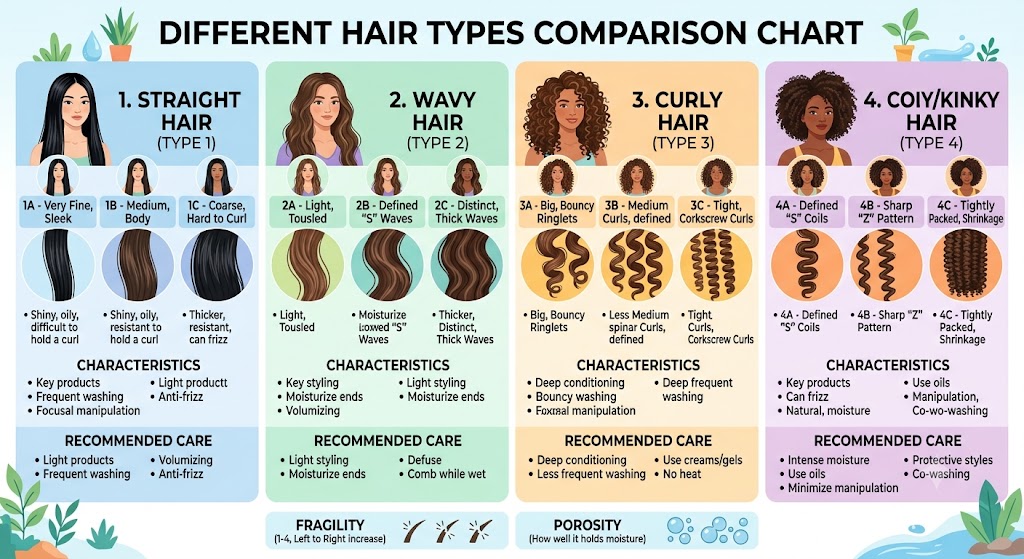
1. Hair Type
Your natural hair texture plays an important role.
For example:
- Straight hair may appear oily sooner because natural oils travel more easily from the scalp to the ends.
- Curly and coily hair often retain moisture differently and may not need washing as frequently.
Understanding your hair type is a helpful first step before creating a routine.
👉 Internal Link (after publishing):
Complete Hair Care Guide
2. Scalp Oil Production
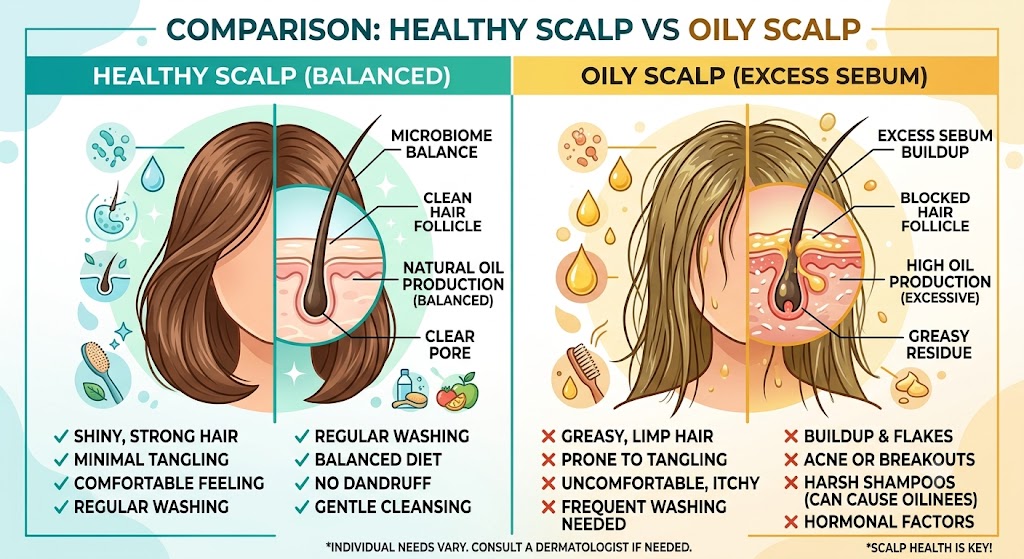
Everyone produces different amounts of natural oil (sebum).
If your scalp becomes oily quickly, you may prefer washing more frequently.
If your scalp tends to stay dry, less frequent washing may feel more comfortable.
3. Physical Activity
People who exercise regularly or work in hot environments may choose to wash their hair more often because of sweat buildup.
After heavy sweating, cleaning the scalp according to your needs may help you feel more comfortable.
4. Climate
Weather also affects your routine.
For example:
Hot and Humid Weather
Your scalp may become oily faster.
Cold and Dry Weather
Hair and scalp may feel drier than usual.
Seasonal adjustments are normal.
If you’re building a complete hair care routine, our Complete Hair Care Guide explains daily, weekly, and monthly habits that can help you maintain healthier-looking hair.
5. Hair Products
If you frequently use:
- Hair sprays
- Styling creams
- Gels
- Dry shampoo
product buildup may occur over time.
Choosing an appropriate cleansing routine may help remove excess residue.
Hair Washing Guide by Hair Type – How Often Should You Wash Your Hair
Straight Hair
Straight hair often distributes natural oils more easily.
Some people with straight hair may prefer washing more frequently than those with curly or coily hair.
General tips:
- Use a shampoo suitable for your hair type.
- Avoid applying heavy conditioner to the scalp unless directed by the product.
- Rinse thoroughly.
Wavy Hair
Wavy hair often benefits from a balance between cleansing and moisturizing.
General tips:
- Wash according to your hair’s needs.
- Use conditioner mainly on the mid-lengths and ends.
- Avoid excessive product buildup.
Curly Hair
Curly hair often requires additional moisture.
Many people with curly hair choose to wash less frequently than those with straight hair, although individual routines vary.
General tips:
- Use moisturizing products suitable for curly hair.
- Detangle gently.
- Avoid unnecessary heat styling where possible.
Coily Hair
Coily hair can be delicate and may benefit from gentle handling.
General tips:
- Follow a routine appropriate for your hair and scalp.
- Focus on keeping the scalp clean while maintaining moisture.
- Avoid excessive manipulation that may increase breakage.
Hair Washing Guide: Should You Wash Your Hair Every Day?
Whether daily hair washing is appropriate depends on your individual hair type, scalp condition, activity level, and personal preferences.
There is no universal rule that everyone should wash their hair every day.
Some people feel comfortable with daily washing, while others may find that washing less frequently works better for their hair.
If you notice excessive dryness, irritation, or discomfort after washing, consider reviewing your routine or speaking with a qualified healthcare professional if symptoms persist.
Signs That Your Hair May Need Washing
Instead of following a fixed schedule, pay attention to how your hair and scalp feel.
Some common signs include:
- Hair looks noticeably oily.
- The scalp feels greasy.
- Sweat has accumulated after exercise.
- Styling products have built up.
- Hair feels heavy or difficult to manage.
These signs may indicate that it’s time to wash your hair, although everyone’s routine is different.
Signs You May Be Washing Too Frequently
Some people may wash their hair more often than necessary.
Possible signs include:
- Hair feels unusually dry.
- Increased frizz.
- Hair feels rough after washing.
- Scalp feels tight or uncomfortable.
- Hair becomes difficult to style.
If these issues continue, you may wish to review your hair care routine.
How to Wash Your Hair Properly
A gentle washing technique may help keep both your hair and scalp comfortable.
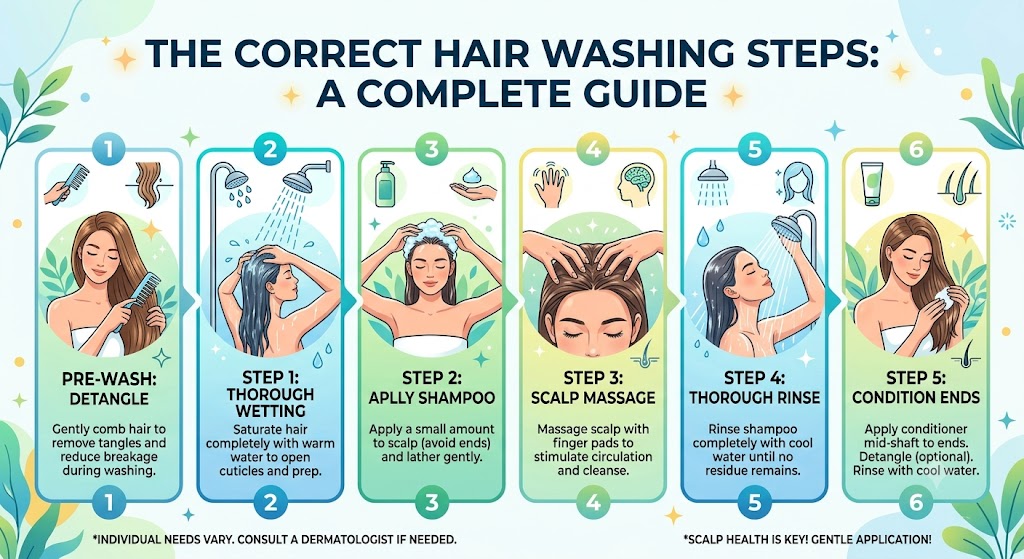
Step 1: Wet Your Hair Thoroughly
Use lukewarm water to fully wet your hair before applying shampoo.
This helps distribute the shampoo more evenly.
Step 2: Apply Shampoo to the Scalp
Focus primarily on the scalp rather than the hair lengths.
The scalp is where oil and sweat naturally collect.
Massage gently using your fingertips.
Avoid scratching with your fingernails.
Step 3: Rinse Well
Rinse thoroughly to remove shampoo residue.
Leaving shampoo behind may contribute to product buildup for some people.
Step 4: Apply Conditioner
Apply conditioner mainly to the mid-lengths and ends of your hair unless the product instructions state otherwise.
This may help improve manageability and reduce tangling.
Step 5: Dry Gently
Avoid rubbing your hair vigorously with a towel.
Instead:
- Pat hair gently.
- Allow it to air dry when practical.
- If using a hair dryer, consider using a lower heat setting according to the manufacturer’s instructions.
Shampoo Tips
Choosing a shampoo that matches your hair type may improve your overall routine.
Examples include:
Oily Hair
Some people prefer lightweight cleansing shampoos designed for oily hair.
Dry Hair
Moisturizing shampoos may be more suitable for hair that feels dry.
Color-Treated Hair
Look for products labeled for color-treated hair if you have dyed hair.
Curly Hair
Many people choose moisturizing products formulated for curly hair.
Conditioner Tips
Conditioners are designed to improve hair manageability and reduce friction during brushing.
General recommendations include:
- Use only the amount needed.
- Concentrate on the hair lengths and ends.
- Rinse according to the product instructions.
Common Hair Washing Mistakes
Avoid these habits when possible:
❌ Using extremely hot water.
❌ Applying excessive shampoo.
❌ Scratching the scalp with fingernails.
❌ Skipping conditioner when your hair benefits from it.
❌ Leaving styling products on the scalp for extended periods without cleansing.
❌ Using products that are not suitable for your hair type.
Simple adjustments may improve your overall hair care routine.
Many hair problems are linked to everyday habits beyond washing. Explore our guide on common hair care mistakes to learn which routines may contribute to dryness, breakage, and scalp discomfort.
Hair Washing After Exercise
Many people wonder whether they should wash their hair after every workout.
The answer depends on:
- How much you sweat.
- Your scalp comfort.
- Your hair type.
- Your personal routine.
If your scalp feels clean and comfortable, you may not always need a full shampoo after every workout.
Some people simply rinse with water, while others prefer washing based on their individual needs.
Hair Washing Myths and Facts
Many hair care tips shared online are based on personal experiences rather than scientific evidence. Understanding the difference between myths and facts can help you make informed decisions.
Myth 1: Washing Your Hair Every Day Always Causes Hair Loss
Fact:
There is no evidence that washing your hair every day directly causes hair loss in healthy individuals.
Some people notice more hair strands while washing, but these hairs are often part of the normal hair shedding cycle.
If you experience sudden, excessive, or persistent hair loss, consult a qualified healthcare professional for evaluation.
Myth 2: The More Shampoo You Use, the Cleaner Your Hair Will Be
Fact:
Using more shampoo than necessary does not necessarily clean your hair better.
A small amount that effectively cleanses your scalp is usually sufficient. Follow the product’s instructions for the best results.
Myth 3: Cold Water Makes Hair Grow Faster
Fact:
There is no reliable scientific evidence that rinsing with cold water increases hair growth.
Water temperature may affect personal comfort, but it has not been shown to significantly change the rate of hair growth.
Myth 4: Shampoo Should Be Applied to the Entire Hair Length
Fact:
Most shampoos are designed to cleanse the scalp, where oil and sweat naturally accumulate.
As you rinse, the shampoo will generally clean the rest of your hair.
Conditioner is usually applied mainly to the mid-lengths and ends, unless the product instructions recommend otherwise.
Myth 5: Changing Shampoo Frequently Is Necessary
Fact:
There is no general rule that shampoo must be changed regularly.
If a product suits your hair type and scalp and continues to meet your needs, there may be no reason to replace it.
However, changes in climate, hair treatments, or scalp condition may sometimes require a different product.
Frequently Asked Questions (FAQ)
Is it okay to wash my hair every day?
It depends on your hair type, scalp condition, daily activities, and personal preference.
Some people are comfortable with daily washing, while others find that washing less often works better for their hair.
Should I shampoo twice?
Some people choose to shampoo twice if they use many styling products or have significant product buildup.
For everyday washing, one gentle cleanse is often sufficient, but individual needs vary.
Can I wash my hair with only water?
Water alone may remove some sweat and loose dirt, but it may not remove excess oil or styling product residue effectively.
Your choice depends on your hair type, daily routine, and personal preference.
Should I condition my hair after every wash?
Many people use conditioner after shampooing to improve manageability and reduce tangles.
The amount and frequency depend on your hair type and the specific product instructions.
Does shampoo expire?
Yes.
Most shampoos have an expiration date or a “Period After Opening (PAO)” symbol on the packaging.
Using products within the recommended timeframe helps ensure quality and performance.
When to See a Doctor
Occasional oily hair or dryness is common.
However, consult a qualified dermatologist or healthcare professional if you experience:
- Sudden or severe hair loss.
- Persistent scalp itching that does not improve.
- Painful scalp swelling.
- Bleeding or discharge from the scalp.
- Large areas of flaking or scaling.
- Hair loss associated with fever, unexplained weight loss, or other concerning symptoms.
Professional evaluation can help identify the underlying cause and determine the most appropriate treatment.
Trusted Resources
For readers who would like to learn more from trusted health organizations, the following resources provide additional information about hair and scalp care:
Medical Disclaimer
This article is provided for educational and informational purposes only. It is not intended to diagnose, treat, cure, or prevent any medical condition. Hair care needs vary from person to person. If you have persistent scalp problems, significant hair loss, or concerns about your hair or overall health, seek advice from a qualified healthcare professional or dermatologist. Do not delay or disregard professional medical advice based on information found online.
Conclusion
There is no single hair washing routine that works for everyone. The ideal washing frequency depends on your hair type, scalp condition, lifestyle, and personal preferences.
Rather than following fixed schedules or popular trends, pay attention to how your hair and scalp respond over time. Choosing products that suit your hair type, washing when necessary, and using gentle hair care techniques may help keep your hair clean, comfortable, and manageable.
Remember that healthy hair care is built through consistency, not complexity. If you experience persistent scalp irritation, unusual hair loss, or other concerning symptoms, seek advice from a qualified healthcare professional or dermatologist.
Quick Hair Washing Checklist
✅ Before Washing
- Brush or gently detangle your hair if appropriate.
- Wet your hair thoroughly with lukewarm water.
- Choose a shampoo suitable for your hair type.
✅ During Washing
- Apply shampoo mainly to the scalp.
- Massage gently using your fingertips.
- Avoid scratching with your fingernails.
- Rinse thoroughly.
- Apply conditioner to the mid-lengths and ends if appropriate.
✅ After Washing
- Gently pat your hair dry with a soft towel.
- Avoid rubbing your hair aggressively.
- Minimize excessive heat styling whenever possible.
- Allow your hair to air dry when practical.
Key Takeaways
✔ There is no universal hair washing schedule.
✔ Hair type and scalp condition influence how often you may choose to wash your hair.
✔ Gentle cleansing may help maintain a healthy-looking scalp and hair.
✔ Avoid using excessive heat and harsh handling whenever possible.
✔ Following a simple and consistent routine is often more effective than using many products.
✔ Seek professional medical advice if you experience persistent scalp concerns or significant hair loss.