Introduction
Hair Care Routine for Dry Hair is an important part of keeping your hair soft, manageable, and comfortable. Dry hair can happen for many reasons, including environmental conditions, frequent styling, or individual hair characteristics.
Rather than relying on quick fixes, building a simple and consistent hair care routine can help you care for your hair in a practical and sustainable way. The best routine depends on your hair type, daily habits, climate, and personal preferences.
This guide explains simple daily habits and general hair care practices that may help people with dry hair maintain healthier-looking hair.
Table of Contents
Build a strong foundation by reading our Complete Hair Care Guide, which covers essential daily, weekly, and monthly hair care habits for every hair type.
What Is Dry Hair?

Dry hair occurs when the hair does not retain enough moisture to feel soft and smooth. It may appear dull, rough, or more difficult to manage.
Hair texture naturally varies from person to person, so the care routine that works well for one individual may not be suitable for another.
If your dry hair also has fine strands, our Hair care routine for fine hair provides additional guidance on keeping products lightweight.
Common Causes of Dry Hair
Several factors may contribute to dry hair, including:
- Frequent heat styling
- Sun exposure
- Dry or cold weather
- Swimming in chlorinated or salt water
- Frequent chemical treatments
- Overwashing
- Individual hair type and genetics
Understanding these factors can help you build a routine that better suits your needs.
Signs Your Hair May Be Dry
Common signs include:
- Rough texture
- Dull appearance
- Increased tangling
- Split ends
- Frizz
- Hair that feels difficult to style
These signs can vary depending on your hair type and lifestyle.
Dry hair and frizz often occur together. Our Hair Care Routine for Frizzy Hair guide explains simple habits that may help improve manageability.
Why a Consistent Hair Care Routine Matters
A consistent Hair Care Routine for Dry Hair is often more beneficial than frequently changing products.
Simple habits may help you:
- Improve hair manageability
- Reduce product buildup
- Support healthier-looking hair
- Make daily styling easier
- Keep your hair feeling more comfortable
Consistency is one of the most important parts of long-term hair care.
Daily Hair Care Routine for Dry Hair
A simple daily routine may include:
✅ Brush gently using a suitable brush or comb.
✅ Avoid excessive heat styling whenever possible.
✅ Protect your hair from harsh weather conditions.
✅ Drink enough water as part of a healthy lifestyle.
✅ Avoid unnecessary friction by using a clean, soft towel after washing.
Dry hair and damaged hair often occur together. Explore our Hair Care Routine for Damaged Hair guide for practical tips on reducing breakage and caring for fragile hair.
Common Mistakes to Avoid
Washing Too Frequently
Frequent washing may not suit every hair type. Choose a washing routine based on your hair, scalp condition, activity level, and personal preferences.
Using High Heat Every Day
Heat styling tools may affect how your hair looks and feels over time.
If you use heated tools, always follow the manufacturer’s instructions and consider using heat protection products where appropriate.
Skipping Conditioner
Many people with dry hair include conditioner as part of their routine.
The most suitable conditioner depends on your hair type and personal preferences.
Ignoring Split Ends
Split ends are common.
Regular trims, when appropriate, may help maintain a neat appearance and improve manageability.
Build Healthy Hair Habits
Healthy-looking hair often develops through consistent daily care rather than frequent product changes.
Focus on:
- Gentle handling
- Consistent routines
- Balanced lifestyle habits
- Products that suit your hair type
Small improvements made consistently can make your routine easier to maintain.
Knowing your natural hair pattern helps you choose products more effectively. Read our How to Identify Your Hair Type guide before building your dry hair routine.
Quick Tip
Weather changes may affect how dry your hair feels throughout the year. Adjust your routine gradually instead of making multiple product changes at once.
How Often Should You Wash Dry Hair?
There is no single washing schedule that works for everyone. The ideal frequency depends on your hair type, scalp condition, activity level, climate, and personal preferences.
If your hair feels dry, focus on keeping your scalp comfortable while avoiding unnecessary overwashing.
Pay attention to how your hair responds and adjust your routine gradually if needed.
Not sure how often to wash your hair? Read our How Often Should You Wash Your Hair? guide for practical advice based on different hair types and scalp conditions.
Choosing the Right Shampoo
When selecting a shampoo, consider:
- Your hair type
- Your scalp condition
- Your daily activities
- Your personal preferences
Read product labels carefully and follow the manufacturer’s instructions.
If a product causes irritation or discomfort, stop using it and consult a qualified healthcare professional if symptoms continue.
Why Conditioner Matters

Many people with dry hair include conditioner as part of their routine.
General tips include:
- Apply conditioner mainly to the mid-lengths and ends if appropriate for your hair type.
- Avoid applying excessive amounts if it makes your hair feel heavy.
- Rinse thoroughly according to the product instructions.
The best conditioner is the one that suits your individual hair needs and feels comfortable to use consistently.
Hair Masks and Deep Conditioning
Some people choose to use a hair mask or deep-conditioning treatment occasionally as part of their routine.
General guidance:
- Follow the product instructions carefully.
- Avoid using more product than recommended.
- Rinse thoroughly.
- Observe how your hair responds before adding additional treatments.
A simple routine is often easier to maintain than a complicated one.
Protecting Dry Hair While Sleeping
Nighttime care can help reduce friction and tangling.
Consider these habits:
- Gently detangle your hair before bed.
- Use a comfortable sleeping hairstyle if it suits your hair type.
- Keep pillowcases clean.
- Avoid sleeping with tight hair accessories.
These habits can make hair easier to manage in the morning.
A simple bedtime routine can help reduce tangles and friction. Read our Night Hair Care Routine guide for practical evening hair care habits.
Morning Care for Dry Hair
Your morning routine is just as important as your evening routine.
General tips:
- Detangle gently.
- Avoid excessive brushing.
- Protect your hair from harsh weather when possible.
- Style your hair comfortably without unnecessary pulling.
Start your day with gentle hair care habits by following our Morning Hair Care Routine guide.
Everyday Habits That Can Help
Simple habits may help keep dry hair easier to manage:
- Use a clean, soft towel.
- Avoid rubbing hair aggressively after washing.
- Protect hair from excessive sun exposure when appropriate.
- Keep combs and brushes clean.
- Follow a consistent routine.
Outdoor hair care should also include protecting exposed scalp areas, and our Scalp Sun Protection Guide shares simple habits you can add to your routine.
Small habits practiced consistently often have a greater long-term impact than frequently changing products.
Quick Tip
When trying a new product, introduce only one product at a time. This makes it easier to understand how your hair responds and helps you avoid unnecessary confusion.
Build a Routine That Fits Your Lifestyle
Your ideal Hair Care Routine for Dry Hair should match:
- Your hair type
- Your scalp condition
- Your climate
- Your activity level
- Your personal preferences
Choose a routine that is simple, practical, and easy to follow consistently.
If your hair has become dry after coloring, explore our Hair Care Routine for Color-Treated Hair guide for practical daily care tips.
Hair Care Routine for Straight Dry Hair
Straight hair can sometimes appear dull when it lacks moisture. A gentle routine may help keep it looking smoother and easier to manage.
General Tips
- Brush gently to reduce tangles.
- Avoid excessive heat styling whenever possible.
- Use hair care products that suit your hair type.
- Protect your hair from prolonged sun exposure when appropriate.
- Follow a consistent daily routine.
If your hair is dry but also tends to resist moisture, learning how to care for low porosity hair may help you choose a more suitable routine.
Hair Care Routine for Wavy Dry Hair
Wavy hair may benefit from gentle handling to reduce frizz and improve manageability.
General care habits include:
- Detangle gently.
- Avoid brushing aggressively after your hair has dried.
- Choose comfortable hairstyles.
- Avoid unnecessary friction while drying your hair.
Consistency is often more effective than frequently changing products.
If dryness is also making your hair difficult to manage, our Hair Care Routine for Dry Hair guide covers practical ways to build a gentler daily routine.
Hair Care Routine for Curly Dry Hair
Curly hair may naturally feel drier because natural scalp oils can take longer to travel along the hair shaft.
General suggestions include:
- Handle curls gently.
- Avoid excessive brushing.
- Follow product instructions carefully.
- Keep your scalp comfortable and clean.
Every curl pattern is different, so routines should be adjusted based on individual needs.
If your dry hair is naturally curly, our Hair Care Routine for Curly Hair guide provides additional tips for maintaining healthy-looking curls.
Hair Care Routine for Coily Dry Hair
Coily hair often benefits from gentle daily care and minimizing unnecessary friction.
General habits include:
- Detangle carefully.
- Avoid pulling through knots.
- Keep your hair protected during sleep if appropriate.
- Maintain a simple and consistent routine.
Healthy-looking hair develops through regular care rather than frequent routine changes.
Lifestyle Habits That Support Healthy Hair
Hair care is only one part of maintaining healthy-looking hair.
Healthy lifestyle habits include:
- Eating a balanced and nutritious diet.
- Drinking enough water.
- Sleeping well each night.
- Staying physically active.
- Managing everyday stress.
Overall health can influence the condition and appearance of your hair.
Frequently Asked Questions
Can dry hair become oily?
Yes. Some people may have dry hair lengths while their scalp produces more natural oil. Hair care routines should be adjusted according to individual hair and scalp needs.
Is dry hair permanent?
Not always. Dry hair can occur for many reasons, including environmental conditions, styling habits, and individual hair characteristics. If dryness continues or worsens, consult a qualified healthcare professional.
If dryness is also linked to your hair’s porosity, our guide to a High-porosity hair care routine explains how to approach moisture and conditioning more thoughtfully.
Can I use heat styling tools?
If you use heat styling tools, follow the manufacturer’s instructions and consider using appropriate heat protection products. Reducing unnecessary heat exposure may help improve hair manageability.
Does drinking water improve dry hair?
Staying hydrated supports overall health. However, hair condition is influenced by many factors, including genetics, nutrition, hair care habits, and environmental conditions.
Should I trim dry hair regularly?
Regular trims may help improve the appearance of split ends and make hair easier to manage. The appropriate trimming schedule varies from person to person.
Q: How long should I follow a Hair Care Routine for Dry Hair?
A: A Hair Care Routine for Dry Hair works best when followed consistently and adjusted according to your hair type, daily habits, and environment.
When to See a Doctor
Consult a qualified dermatologist or healthcare professional if you notice:
- Sudden or severe hair loss.
- Persistent scalp irritation.
- Pain or swelling.
- Open sores.
- Unusual scalp discharge.
- Symptoms that continue despite changing your hair care routine.
Professional evaluation can help identify the underlying cause.
Trusted Resources
For additional evidence-based information, readers may refer to these official organizations:
Medical Disclaimer
This article is intended for educational and informational purposes only. It is not a substitute for professional medical advice, diagnosis, or treatment. Hair care routines should be tailored to individual needs. If you experience persistent dryness, scalp irritation, unusual hair loss, pain, swelling, or other concerning symptoms, consult a qualified healthcare professional or dermatologist. Never delay seeking professional medical advice because of information you have read online.
If your scalp becomes oily while your hair lengths remain dry, explore our Hair Care Routine for Oily Hair guide for practical scalp care tips.
Dry hair and hair fall can sometimes occur together. Read our Hair Care Routine for Hair Fall guide for gentle daily care practices.
Conclusion
A consistent Hair Care Routine for Dry Hair can help improve manageability and keep your hair feeling more comfortable over time. Instead of relying on frequent product changes or complicated routines, focus on simple daily habits that suit your hair type, lifestyle, and environment.
Dry hair has many possible causes, and no single routine works for everyone. Gentle handling, appropriate hair care products, regular trims when needed, and a balanced lifestyle can all contribute to healthier-looking hair.
If you notice persistent scalp irritation, unusual hair loss, pain, swelling, or other concerning symptoms, seek advice from a qualified dermatologist or healthcare professional.
A simple Hair Care Routine for Dry Hair is often easier to maintain than frequently changing products.
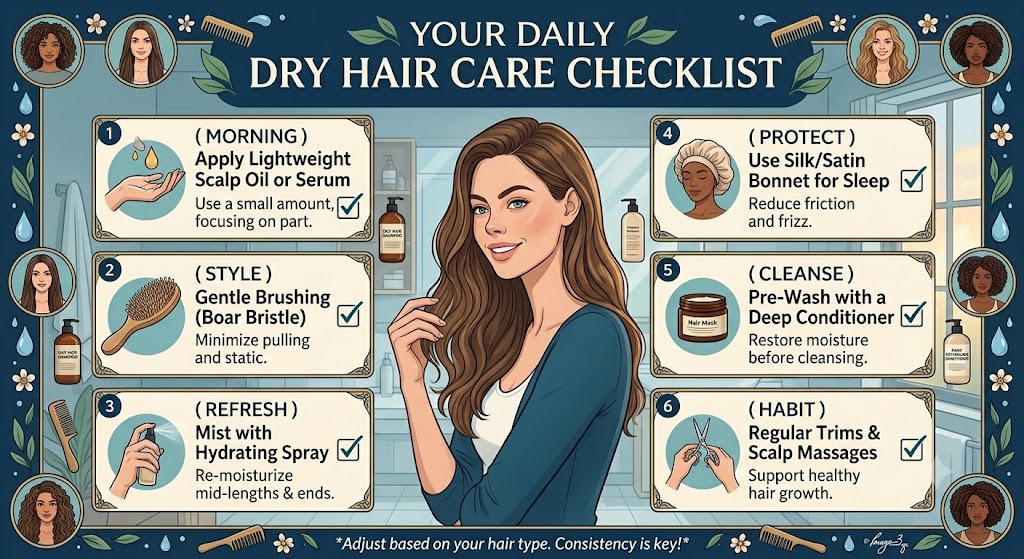
Dry Hair Care Checklist
Following a consistent Hair Care Routine for Dry Hair can make your hair easier to manage while supporting healthier-looking hair over time.
✅ Daily Habits
- Brush gently using a suitable comb or brush.
- Avoid excessive heat styling whenever possible.
- Protect your hair from harsh weather conditions.
- Use conditioner according to the product instructions.
- Avoid unnecessary friction while drying your hair.
When dry hair becomes difficult to manage, learning How to detangle hair gently can help make everyday handling more controlled.
✅ Weekly Habits
- Clean combs and brushes.
- Wash pillowcases regularly.
- Check for split ends.
- Review your hair care products.
- Replace damaged hair accessories if needed.
✅ Healthy Lifestyle Habits
- Eat a balanced diet.
- Stay hydrated.
- Sleep well.
- Stay physically active.
- Manage everyday stress.
Healthy-looking hair is supported by overall healthy lifestyle habits.
If you are also noticing increased shedding alongside dry or difficult-to-manage hair, our Hair Care Routine for Hair Fall guide covers gentle daily habits and practical hair-handling tips.
Key Takeaways
✔ A consistent Hair Care Routine for Dry Hair is easier to maintain than constantly changing products.
✔ Gentle handling may help reduce unnecessary breakage.
✔ Conditioner can be an important part of many dry hair routines.
✔ Protect your hair from excessive heat and harsh weather.
✔ Lifestyle habits contribute to overall hair health.
✔ Seek professional medical advice for persistent scalp or hair concerns.