
How to Detangle Hair Gently: A Simple Hair Care Guide
Tangled hair can make a simple brushing routine feel frustrating, especially when knots become tighter or the hair is handled too quickly. The goal of detangling is not simply to remove every knot as fast as possible. A gentler approach can make everyday hair care easier and help reduce unnecessary pulling and tugging.
The best method depends on your hair’s texture, length, condition, and how easily it forms knots. Straight, wavy, curly, and coily hair can all require slightly different approaches.
A simple hair detangling routine starts with preparation, gentle handling, and working through knots gradually rather than forcing a brush through them.
Table of Contents
What Does Detangling Hair Mean?
Detangling means carefully separating strands that have become intertwined or knotted.
Hair can become tangled because of:
- movement during sleep
- wind and everyday activity
- naturally textured hair
- friction from clothing or bedding
- long or loose hair
- styling
- insufficiently careful brushing
- strands becoming intertwined after washing
Not every tangle requires the same approach. A small knot near the ends can usually be handled differently from a large section of heavily tangled hair.
Why Gentle Detangling Matters
Brushing or combing too aggressively can make the process uncomfortable and may place unnecessary tension on the hair.
Instead of trying to remove a knot immediately with force, work through it progressively.
A useful approach is:
- Identify where the tangles are.
- Separate the hair into manageable sections.
- Start with the least tangled areas.
- Work gradually through individual knots.
- Avoid repeatedly pulling through a resistant section.
- Recheck the area before moving to the next section.
The aim is to make detangling a controlled part of your routine rather than a rushed task.
How to Detangle Hair Step by Step
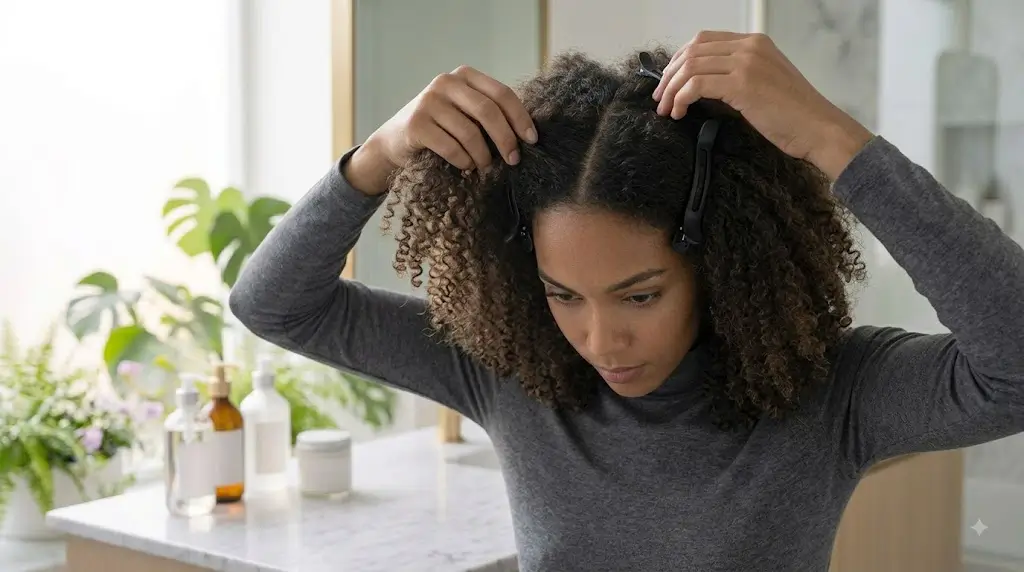
1. Start With a Manageable Section
If your hair is long or easily tangled, working on the entire head at once can make the process unnecessarily difficult.
Divide the hair into smaller sections.
If your strands are naturally fine, our guide to a hair care routine for fine hair offers additional tips for keeping everyday hair care lightweight and manageable.
This allows you to see where the knots are and prevents already-detangled hair from becoming mixed with sections that still need attention.
For additional dermatologist-reviewed guidance on gentle hair care and detangling techniques, see the American Academy of Dermatology’s healthy hair care tips.
2. Start From the Ends
One of the simplest ways to make detangling easier is to avoid immediately pulling a brush from the roots through a tangled length.
Instead, begin near the ends and gradually work upward.

For example:
Ends → middle lengths → closer to the roots
As each lower section becomes easier to comb through, move slightly higher.
This approach can help prevent a small knot from becoming a larger, tighter tangle.
3. Use Gentle, Controlled Movements
When you reach a resistant knot, slow down.
Instead of repeatedly pulling the brush through the same area, pause and work through the knot gradually.
Small, controlled movements are generally easier to manage than one forceful stroke.
If a section is particularly difficult, separate the surrounding hair so that you are working only on the tangled portion.
4. Choose a Detangling Tool That Suits Your Hair
There is no single brush or comb that is ideal for every hair type.
Depending on your hair’s texture and personal preference, you may use:
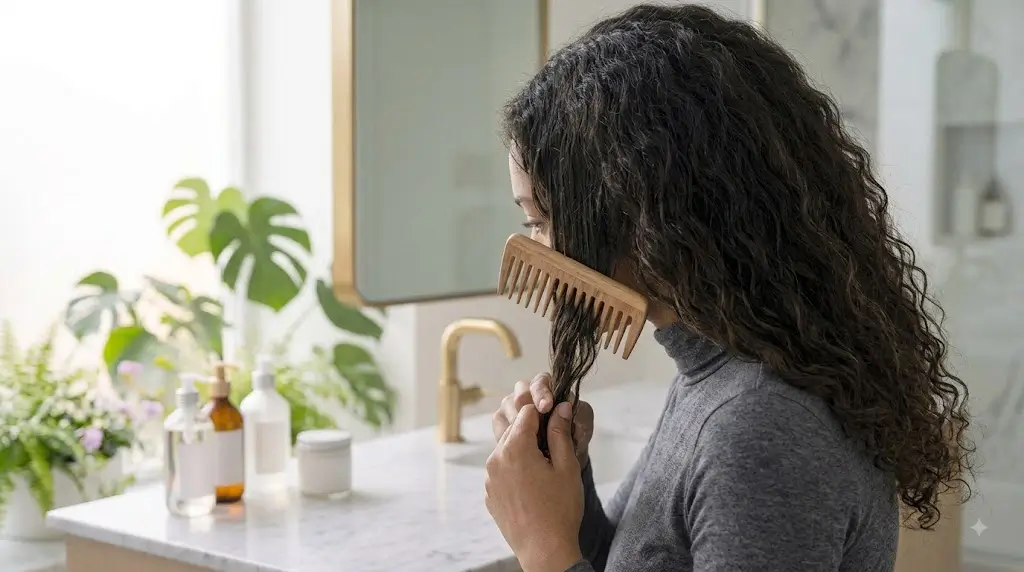
- a wide-tooth comb
- a detangling brush
- a suitable everyday brush
- your fingers for very small knots
The important factor is not simply the name of the tool. It is whether you can use it comfortably and gently without repeatedly pulling through resistant tangles.
5. Pay Extra Attention to the Ends
The ends of the hair are often where small tangles become noticeable.
When detangling, inspect the ends carefully rather than rushing through them.
Working patiently from the ends upward can make it easier to separate individual knots before they become more difficult to manage.
How to Detangle Wet Hair
If you choose to detangle hair while it is wet, work in small sections and avoid forcing a comb through resistant knots.
Wet hair can feel more difficult to manage because the strands are heavier and may clump together. Your approach should depend on your hair texture, condition, and what works comfortably for you.
If you choose to detangle while your hair is wet, avoid rushing through large tangled sections.
A gentler approach is to:
- Divide the hair into sections.
- Work from the ends upward.
- Use a suitable comb or detangling tool.
- Move slowly through resistant areas.
- Avoid repeatedly pulling on a knot.
For textured hair, some people find that detangling with conditioner present makes the process easier. The important point is to avoid forcing a tool through a section that is difficult to separate.
Should You Detangle Before or After Washing?
There is no single rule that works for everyone.
Some people prefer to gently remove obvious tangles before washing, while others prefer to detangle during or after washing when the hair is easier to separate with their chosen products and tools.
Consider your own hair texture and routine.
Before washing
A light pre-wash detangling session may help remove loose tangles before the hair becomes wet.
This can be particularly useful if your hair tends to form larger knots during washing.
During washing
Some hair types may be easier to separate while conditioner is being used.
If you choose this method, work in sections and avoid aggressive pulling.
After washing
If your hair is easier to manage after conditioning, you can gently detangle before styling.
The best option is the method that allows you to handle your hair comfortably without excessive tugging.
How to Detangle Curly and Wavy Hair
Curly and wavy hair can require a different approach from straight hair because the natural pattern of the strands can make them more prone to becoming intertwined.
Instead of repeatedly brushing through the entire length, consider working in sections.
If you have curly or tightly textured hair, you can also explore the American Academy of Dermatology’s curly hair care tips for additional guidance.
A simple approach:
Section → separate → detangle → move to the next section
For curls and waves, maintaining the natural pattern can also be important when styling.
Avoid treating textured hair as though every strand needs to be completely separated at all times.
The goal is manageable hair, not perfectly separated individual strands.
If you have curly hair and want a more complete routine beyond detangling, explore our hair care routine for curly hair.
How to Prevent Hair From Tangling
Preventing unnecessary tangles can make your overall hair care routine easier.
1. Avoid Rough Handling
Repeatedly rubbing or pulling the hair can contribute to unnecessary tangling.
Handle the hair gently when washing, drying, brushing, and styling.
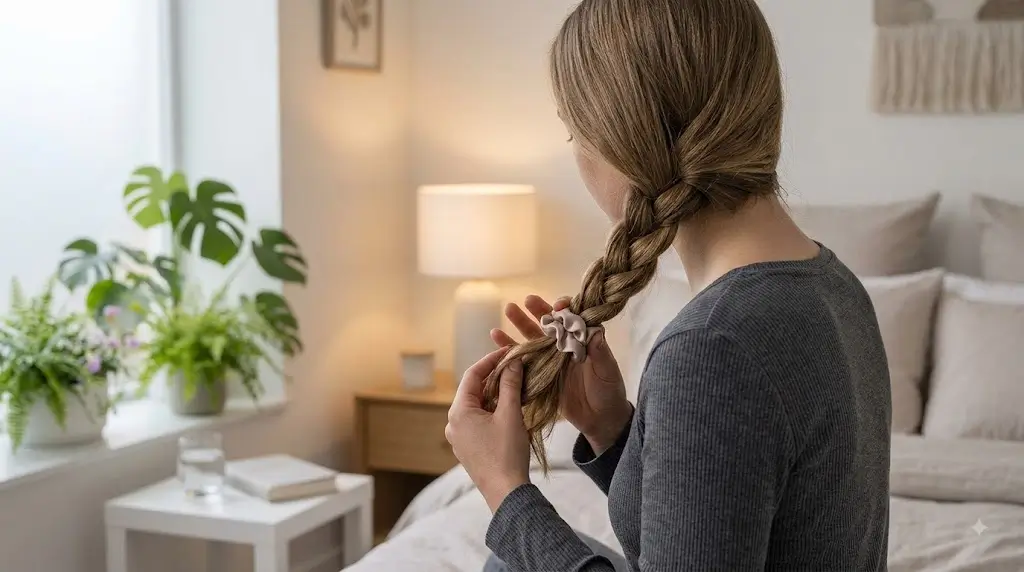
2. Protect Hair During Sleep
Hair can become tangled from movement during sleep.
Depending on your hair type, you may find it helpful to:
- loosely secure longer hair
- avoid sleeping with tightly pulled styles
- use a comfortable pillowcase
- keep the hair from becoming heavily compressed
Choose whatever method works comfortably for your hair rather than following a rigid routine.
For more ideas on building a consistent nighttime routine, see our Night hair care routine guide.
3. Keep Your Routine Consistent
Hair that is regularly cared for may be easier to manage than hair that is repeatedly exposed to rough handling and then left heavily tangled.
A consistent routine can include:
- appropriate cleansing
- conditioning
- gentle drying
- careful detangling
- suitable styling practices
The goal is consistency rather than using a large number of products.
Common Hair Detangling Mistakes
Mistake 1: Starting at the Roots
Starting at the roots and pulling a brush through a tangled length can push existing knots toward the ends.
Better approach: Start at the ends and gradually work upward.
Mistake 2: Pulling Hard on a Knot
A resistant knot should not become a competition between you and your brush.
Pause, separate the surrounding hair, and work on the knot gradually.
Mistake 3: Detangling Too Quickly
Rushing can make a simple knot more difficult to manage.
Give yourself enough time to work through sections carefully.
For more dermatologist-reviewed advice on reducing unnecessary pulling and handling during styling, see the American Academy of Dermatology’s hair styling guidance.
Mistake 4: Using the Same Method for Every Hair Type
Fine, straight hair may behave differently from thick, curly, or coily hair.
Your detangling technique should therefore be adjusted according to your hair’s texture, length, density, and condition.
For a broader look at everyday habits that can make hair care more difficult, see our guide to common hair care mistakes.
A Simple Hair Detangling Routine
Knowing how to detangle hair gently can make this simple routine easier to follow consistently. You do not need a complicated routine.
Step 1
Look for the most tangled sections.
Step 2
Separate your hair into manageable sections.
Step 3
Begin at the ends.
Step 4
Work gradually toward the middle lengths.
Step 5
Move toward the roots only after the lower section is manageable.
Step 6
Slow down when you encounter resistance.
Step 7
Finish with gentle styling appropriate for your hair type.
This simple process can make everyday detangling feel much more manageable.
When Hair Tangles More Than Usual
Occasional tangling is normal, particularly with longer or textured hair.
However, if you notice a significant or persistent change in your hair, scalp, or overall hair condition, it is better to discuss your concerns with an appropriately qualified healthcare professional rather than trying to diagnose the cause yourself.
This article focuses on everyday hair-care practices, not diagnosis or treatment.
Frequently Asked Questions
Is it better to detangle hair from the ends or roots?
For many people, starting at the ends and gradually moving upward can make detangling easier because you are not pulling through an entire tangled length at once.
Should I detangle my hair every day?
Not necessarily. Your ideal frequency depends on your hair texture, length, styling routine, and how easily it becomes tangled. Detangle when needed using a gentle approach.
Is it okay to detangle wet hair?
It can be, depending on your hair type and routine. If you detangle wet hair, work in sections and use a method that allows you to handle the strands gently.
What is the best tool for tangled hair?
There is no universal best tool. A wide-tooth comb, detangling brush, or your fingers may work depending on your hair texture and the type of tangle.
How can I reduce hair tangling while sleeping?
Keeping longer hair loosely secured and avoiding unnecessarily tight styles may help reduce overnight tangling. Your sleeping routine should be comfortable and appropriate for your hair type.
Why does my hair keep getting tangled?
Tangling can be influenced by hair length, texture, movement, friction, styling, and everyday handling. Identifying when your hair tangles most can help you adjust your routine.
For a broader approach to building a consistent routine, explore our Complete Hair Care Guide.
Final Takeaway
A good detangling routine does not need to be complicated.
The most useful habits are simple: work in sections, start at the ends, move gradually upward, use an appropriate tool, and avoid forcing a resistant knot.
Your hair texture and routine should guide the method you choose. What works well for straight hair may not be ideal for curly or highly textured hair.
With a little patience and consistent gentle handling, detangling can become a much easier part of everyday hair care.