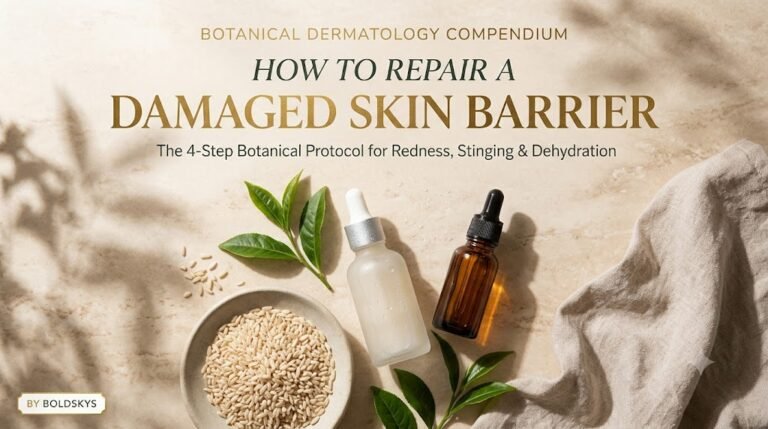
In modern dermatological practice, few cutaneous pathologies present with as much pervasive discomfort, frustration, and clinical confusion as a compromised or destroyed skin barrier. In an era dominated by viral ten-step skincare routines, aggressive chemical peels, high-percentage retinoids, and compulsive physical cleansing, millions of individuals have inadvertently stripped their stratum corneum down to its sensitized living dermis.
Quick Summary: How to Repair a Damaged Skin Barrier
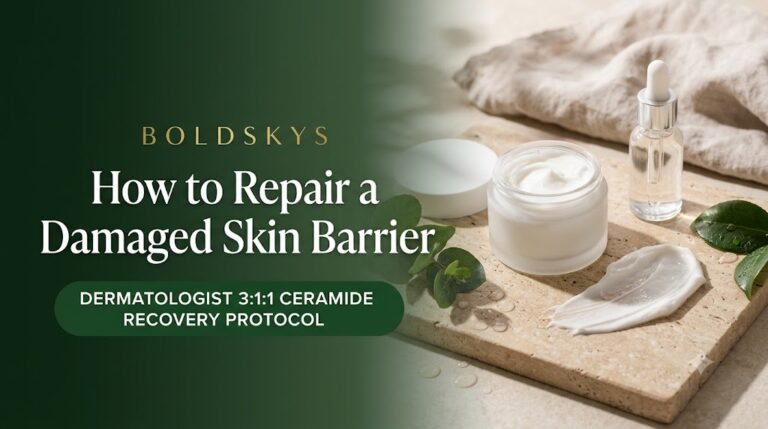
To repair a damaged skin barrier: Immediately cease all chemical exfoliants (AHAs, BHAs), retinoids, and foaming cleansers for 3 to 4 weeks. Switch to a pH 5.5 gentle cream wash, apply humectants (panthenol, hyaluronic acid) to damp skin, and seal with a physiological lipid moisturizer containing ceramides, cholesterol, and free fatty acids in a 3:1:1 bio-identical molecular ratio. Protect daily with a non-nano zinc oxide mineral sunscreen.
The resulting physiological crisis manifests as sudden stinging when applying tap water, relentless erythema, tight parchment-like skin texture, and unexpected inflammatory breakouts. When the exterior protective envelope collapses, internal moisture escapes through accelerated Transepidermal Water Loss (TEWL), while microbial pathogens, fine particulate pollutants, and allergens infiltrate unhindered.
Reversing this barrier collapse is not a matter of piling on heavier occlusive ointments indiscriminately. It requires a rigorous cellular intervention: re-establishing the skin’s acidic mantle, restoring lamellar lipid bilayer morphology, and following a biologically sound timeline. This master medical guide outlines the clinical mechanics of the stratum corneum, provides an interactive barrier recovery calculator, and reveals the dermatologist-certified 3:1:1 lipid protocol.
1. Cellular Dermatopathology: The Brick-and-Mortar Architecture
To rehabilitate a compromised skin barrier, one must appreciate its microscopic cellular structure. In 1983, Dr. Peter M. Elias introduced the groundbreaking “Brick and Mortar” model of the stratum corneum (the outermost 15 to 20 micrometers of the human epidermis):
The Cellular Bricks (Corneocytes): Anucleated, flattened keratinocyte cells packed tightly with structural keratin filaments and enclosed within an insoluble cornified envelope. Corneocytes hold natural moisturizing factors (NMF)—a blend of free amino acids, lactic acid, urea, and pyrrolidone carboxylic acid (PCA) that binds ambient moisture within the cell.
The Intercellular Mortar (Lamellar Lipid Matrix): Surrounding these corneocyte bricks is an intricate extracellular lipid bilayer composed predominantly of three critical lipids: Ceramides (~50%), Cholesterol (~25%), and Free Fatty Acids (~15%). These lipids organize into tightly packed lamellar sheets that form an impermeable barrier to water and foreign antigens.
The Acid Mantle (pH 4.5 to 5.5): The skin surface is naturally acidic, maintained by lactic acid in sweat, fatty acids in sebum, and sodium-hydrogen antiporters. This delicate acidic mantle regulates the cutaneous microbiome, halts pathogenic Staphylococcus aureus proliferation, and activates beta-glucocerebrosidase—the specific enzyme required to process pro-ceramides into mature barrier ceramides.
The Mechanism of Over-Exfoliation Collapse:
When you apply concentrated glycolic, salicylic, or high-pH alkaline soaps repeatedly, you dissolve the intercellular lipid mortar faster than your basal epidermis can synthesize new lipids. Corneocytes detach prematurely, water molecules rapidly escape into the atmosphere, and peripheral cutaneous nerve endings become exposed, firing pain signals at the lightest touch.
2. Clinical Diagnostic Hallmarks of Barrier Dysfunction
Before initiating therapy, you must distinguish between true genetic sensitivity, contact allergic reactions, and acute barrier collapse:
Clinical Symptom
Underlying Dermatological Pathology
Severe Barrier Breakdown Indicator
Actionable Warning
Stinging on Contact
Exposed free nerve endings in the upper dermis due to dissolved lamellar lipids.
Bland water, soothing aloe, or gentle lotions cause immediate burning.
Halt all products immediately; use sterile saline or plain cool water only.
Paradoxical Oily Dehydration
Sebaceous glands hyper-produce sebum to compensate for excessive TEWL.
Skin looks slick, shiny, and greasy, yet feels uncomfortably tight and taut underneath.
Do not use harsh drying foams; skin requires lipid and moisture supplementation.
Parchment Texture & Flaking
Impaired desquamation enzymes caused by insufficient cellular water levels.
Fine, crinkly lines resemble plastic wrap under indoor lighting.
Never mechanically scrub away flakes; lock them down with physiological ceramides.
Barrier-Compromised Acne
Opportunistic pathogens invade micro-cracks while acid mantle failure disrupts flora.
Sudden rash-like clusters of tiny, non-cystic inflammatory pustules.
Avoid benzoyl peroxide or strong acne acids; treating the barrier resolves the breakouts.
Select your primary skin damage trigger and current sensitivity symptoms to calculate your exact recovery window:
4. The Golden 3:1:1 Physiological Lipid Science
A frequent error among skincare consumers is purchasing any generic moisturizer labeled “contains ceramides.” Groundbreaking clinical research led by dermatological pioneer Dr. Peter Elias demonstrates that applying random proportions of barrier lipids can actually delay barrier recovery:
The Optimal 3:1:1 Equimolar Ratio: Clinical trials show that barrier recovery accelerates dramatically only when Ceramides, Cholesterol, and Free Fatty Acids are delivered in an equimolar ratio of precisely 3:1:1 (or 1:1:1). In this specific proportion, the lipids immediately self-assemble into coherent lamellar liquid crystals within the intercellular spaces, mimicking human sebum biology.
The Danger of Imbalanced Lipid Monotherapy: Applying pure cholesterol alone, pure free fatty acids alone, or pure plant oils lacking ceramides disrupts the delicate lipid equilibrium. The stratum corneum perceives this imbalance as foreign stress, triggering compensatory hyperkeratosis and inflammation.
Ceramide Subtypes That Matter: Look for multi-ceramide formulas combining Ceramide NP (hydration binding), Ceramide AP (barrier elasticity), and Ceramide EOP (cross-linking lamellar structures together).
Barrier Lipid Component
Physiological Percentage
Molecular Function in the Stratum Corneum
Top Sourcing for Formulations
Bio-Identical Ceramides (NP, AP, EOP)
50% of lipid matrix
Forms the dense hydrophobic backbone that prevents moisture evaporation.
Yeast-fermented phytosphingosine precursors.
Cholesterol
25% of lipid matrix
Regulates fluidity of the lipid bilayer; prevents ceramides from crystallizing into rigid, brittle plates.
Plant-derived phytosterols or pure medical-grade cholesterol.
Free Fatty Acids
15% of lipid matrix
Maintains the acidic pH of the lipid matrix; provides antimicrobial defense against bacterial pathogens.
Linoleic acid, stearic acid, palmitic acid.
5. The 5-Step Clinical Barrier Rehabilitation Protocol
Follow this exact 5-stage clinical sequence daily until stinging resolves and your skin barrier demonstrates restored elasticity:
Step 1: Institute an Immediate Active Elimination (The “Skin Fast”)
You cannot extinguish a fire while pouring fuel onto the flames. For a minimum of 21 consecutive days, eliminate all chemical exfoliants (glycolic acid, salicylic acid, lactic acid, mandelic acid), vitamin C (L-ascorbic acid), prescription retinoids, and granular face scrubs. Your routine must shrink to four essential pillars: gentle cleansing, hydration, lipid repair, and mineral sun defense.
Step 2: Low-pH, Non-Stripping Cleansing Only
Alkaline tap water and sodium lauryl sulfate strip delicate intercellular lipids. Wash your face only once daily in the evening using lukewarm water and a soap-free syndet cream cleanser formulated at pH 5.0 to 5.5. In the morning, do not wash with cleansers; simply splash your face with cool filtered water to preserve the endogenous lipids produced overnight. Pat dry gently with a clean microfiber towel without rubbing.
Step 3: Flood with Physiological Humectants on Damp Skin
Within 60 seconds of cleansing—while your skin remains damp—apply a soothing humectant essence. Look for formulas featuring Panthenol (Pro-Vitamin B5 at 3% to 5%), Madecassoside (Centella Asiatica), and Multi-Molecular Hyaluronic Acid. Panthenol accelerates fibroblast proliferation and soothes cutaneous erythema. Never allow humectants to air-dry unsealed, as this accelerates evaporation.
Step 4: Lock Down with a 3:1:1 Physiological Barrier Cream
While the humectant layer is fresh, smooth a nickel-sized amount of your 3:1:1 lipid barrier cream over your face and neck. Press the product flatly into your skin using warm palms rather than rubbing vigorously. If your skin is severely raw and stinging, cap this step with a micro-thin layer of 100% pure plant squalane oil to create a breathable, non-comedogenic shield.
Step 5: Mineral UV Protection (Non-Nano Zinc Oxide)
UV radiation generates reactive oxygen species (ROS) that oxidize fragile newly formed ceramides. Chemical sunscreens (avobenzone, oxybenzone) often cause severe stinging on a raw stratum corneum. Shield your face daily using a pure mineral sunscreen containing Non-Nano Zinc Oxide (15% to 20%). Zinc oxide possesses innate anti-inflammatory properties that calm cutaneous erythema while physically reflecting UV radiation.
Critical Warnings: Skincare Pitfalls That Prolong Barrier Breakdown
Avoid these widespread errors that sabotage cellular repair:
The “Slugging” Trap on Clogged Skin: While pure petrolatum (Vaseline) is an exceptional occlusive that lowers TEWL by 98%, sealing petrolatum over unwashed skin or active acne traps sebum and bacterial flora, inducing folliculitis. Only slug over clean, bland, water-based humectants on non-acne-prone skin.
High-Percentage Niacinamide: Formulas with 10% or 15% niacinamide cause significant cutaneous flushing and vascular dilation on raw skin. Limit niacinamide to soothing 2% to 4% concentrations during recovery.
Hot Water Shower Steaming: Washing your face under a hot shower stream liquefies the delicate lamellar lipids of the stratum corneum, immediately worsening barrier collapse. Always wash with tepid water at the sink.
Topical application accounts for only 50% of the barrier recovery process; your body must synthesize new lamellar lipids internally from dietary building blocks:
Essential Fatty Acids (Omega-3 & Omega-6): The human body cannot synthesize linoleic acid (an essential precursor for Ceramide 1/EOS). Supplement your diet with cold-water wild fatty fish (salmon, sardines), freshly ground flaxseeds, walnuts, and evening primrose oil to nourish your sebaceous lipids from within.
Microbiome Diversity: The billions of symbiotic bacteria residing on your skin synthesize free fatty acids that preserve the acid mantle. Avoid antibacterial facial soaps. For systemic resilience, consume fermented kefir, kimchi, and prebiotic fiber to optimize the gut-skin axis.
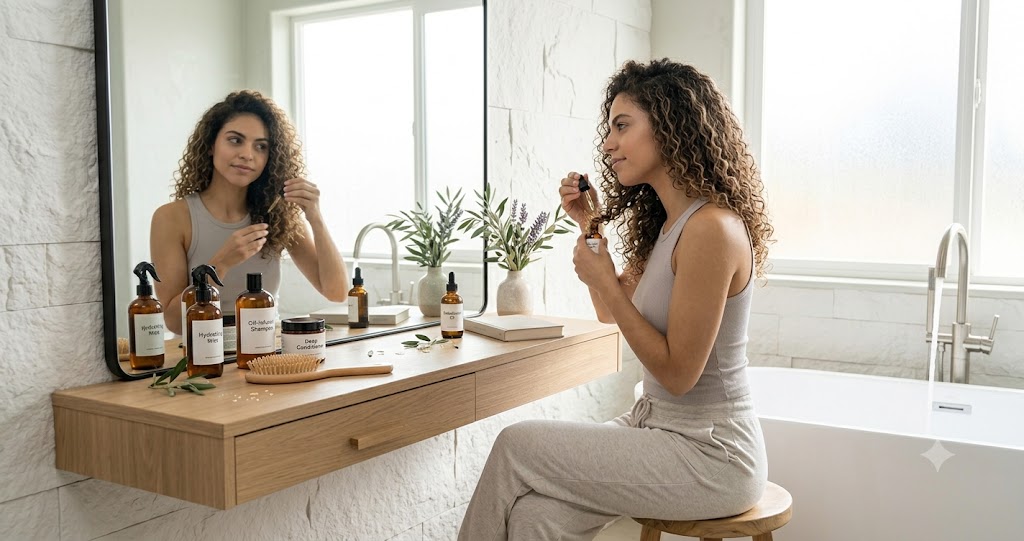
Holistic Hair & Scalp Synergy: Remember that your scalp skin is a direct anatomical extension of your facial dermis. If your facial skin barrier is compromised, your scalp barrier often shares the same lipid deficiency. Balance your overall regimen by reviewing our trichologist protocols on how to apply hair serum correctly to prevent length dehydration without suffocating sensitive roots.
7. Frequently Asked Questions
How do I know if my skin barrier is damaged?
Classic clinical hallmarks of a damaged skin barrier include a burning or stinging sensation when applying gentle bland moisturizers, sudden persistent redness, tight parchment-like texture, rough flaking patches, and unexpected inflammatory breakouts known as barrier-compromised acne.
How long does it take to repair a damaged skin barrier?
For mild irritation from over-washing, skin barrier recovery typically takes 14 to 21 days. For severe barrier collapse induced by aggressive chemical peels, over-exfoliation, or retinoid burns, cellular stratum corneum turnover requires 4 to 8 weeks of strict, active-free barrier rehabilitation.
Can I use Hyaluronic Acid on a damaged skin barrier?
Yes, but strictly on damp skin and immediately sealed with an occlusive lipid moisturizer. If applied to dry skin in an arid environment, hyaluronic acid molecules will pull water out of deeper dermis layers to the surface where it evaporates, worsening transepidermal water loss (TEWL).
Can I use Niacinamide while repairing my barrier?
Only in low concentrations between 2% and 4%. While niacinamide stimulates endogenous ceramide synthesis, high-strength 10% formulas frequently trigger severe cutaneous vasodilation, flushing, and heightened stinging on an already compromised stratum corneum.