Listen to the 48-hour chemical cooling protocol, physiological lipid rules, and neurogenic stinging relief.
Among all active dermatological molecules hailed for anti-aging and acne clearance, topical retinoids—ranging from over-the-counter retinol and retinaldehyde to prescription-strength tretinoin and tazarotene—remain the clinical gold standard. However, introducing these potent vitamin A derivatives without careful lipid buffering frequently induces a traumatic acute chemical injury: retinoid dermatitis, colloquially known as a “retinol burn”.
When a retinol burn strikes, your face feels like it is on fire. Simple tap water stings like acid, basic moisturizers cause intense throbbing, and the skin turns into a crimson, sandpaper-like texture that peels in painful sheets. This is not a normal “purging” phase; it is a critical breakdown of your skin’s protective lipid envelope. Treating this acute dermatological crisis requires immediate chemical triage to halt transepidermal water loss and rebuild the stratum corneum.
Emergency Triage: How to Heal Skin Barrier from Retinol Burn Fast
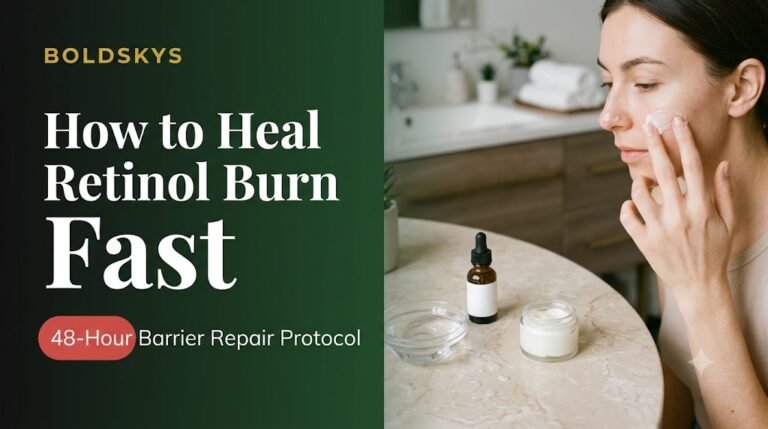
To heal a retinol burn immediately: Stop all retinoids, acids, vitamin C, and foaming cleansers instantly! Splash your face strictly with cool distilled water and press chilled isotonic thermal water compresses onto burning areas for 5 minutes. While skin is damp, apply a soothing madecassoside (Cica) balm, follow with a 3:1:1:1 physiological ceramide-cholesterol cream, and seal with a micro-thin layer of 100% plant squalane or pure petroleum jelly. Avoid all physical peeling or scrubbing for at least 14 days.
The cardinal error home skincare enthusiasts make during a retinol burn is treating the flaking skin as dryness that needs to be scrubbed away. Reaching for konjac sponges, glycolic toners, or heavy scrubbing brushes tears away the fragile basal layer of the epidermis, turning superficial redness into open micro-ulcerations that leave post-inflammatory hyperpigmentation (PIH) lasting for months.
True recovery demands biochemical intervention: understanding cellular turnover rates, halting neurogenic inflammation, and replacing lost intercellular lipids. This master guide delivers the clinical science of retinoid dermatitis, provides our custom recovery calculator, and presents the emergency protocol.
1. Dermal Biomechanics: Retinoid Dermatitis vs. Normal Retinization Purge
To safely reverse a chemical retinol burn, you must first distinguish between normal physiological cellular adaptation (the “retinization” phase) and true acute barrier failure:
Normal Retinization (Mild Cellular Renewal): When you first introduce vitamin A, your retinoic acid receptors (RARs) are upregulated. This speeds up epidermal cell division, causing minor, non-painful flaking around the mouth and mild dryness that resolves easily with your standard daily moisturizer.
Retinoid Dermatitis (Acute Barrier Dissolution): A retinol burn occurs when high concentrations of retinoic acid overwhelm the stratum corneum’s capacity to synthesize protective lipids. Retinoic acid dissolves desmosomes (the protein rivets holding dead skin cells together) faster than new corneocytes can be manufactured. The intercellular “mortar” of ceramides, cholesterol, and free fatty acids is washed out completely.
Neurogenic Stinging (Unshielded C-Fibers): Without a protective lipid mantle, your transepidermal water loss (TEWL) skyrockets by more than 300%. Unmyelinated sensory nerve fibers (type-C nociceptors) in the upper papillary dermis become exposed directly to atmospheric air, temperature shifts, and water molecules, causing severe burning sensations whenever anything touches your face.
“A retinol burn is not ‘dry skin’; it is an open cuticular wound where intercellular lipids have vanished, exposing raw sensory nerves to the air.”
2. Visualizing Erythema Recovery: Compromised Lipids vs. Restored Matrix
Cutaneous Erythema & Barrier Healing: Drag Slider to Compare
Slide left and right to inspect epidermal healing before and after 72 hours of physiological lipid barrier resuscitation:
Before: Acute Retinoid Burn
Severe cutaneous erythema, exposed sensory nerves, 300% TEWL spike, painful flaking, and acute stinging on water contact.
After: 72-Hour Lipid Cocoon
Calmed vascular flushing, sealed intercellular corneocyte fissures, zero neurogenic pain, and supple moisture retention.
Retinoid Chemical Burn Triage & Recovery Timeline Calculator
Select your retinoid active, application frequency, and current sensory pain level to calculate your barrier recovery timeline and compounding regimen:
4. The 48-Hour Emergency Stabilization Protocol
When dealing with acute facial erythema and stinging, executing this clinical 5-stage triage within the first 48 hours halts further dermal damage:
Phase 1: The Zero-Actives Moratorium (Immediate Cold-Turkey Stop)
The moment your skin stings upon applying basic water or lotion, you must stop all retinoids immediately. Do not attempt to “push through” the burn. Put away all AHA (glycolic, lactic), BHA (salicylic), L-ascorbic acid (vitamin C), benzoyl peroxide, niacinamide serums over 5%, and foaming cleansers. Your routine for the next 14 days must consist strictly of water, restorative lipids, and mineral sunblock.
Phase 2: Chilled Isotonic Thermal Compressing
Never scrub your face with cleansing gels or washcloths. In the morning and evening, splash your face with cold distilled or thermal spring water. To extinguish the acute vascular heat and throbbing, soak sterile cotton gauze pads in chilled thermal water and lay them flatly across your cheeks and forehead for 5 minutes. The coolness constricts dilated capillary blood vessels, immediately muting neurogenic inflammation.
Phase 3: Cica & Panthenol Hydration Quenching
Do not let your skin air-dry after compressing! Leaving inflamed skin bare to the air accelerates evaporative water loss, pulling hydration out of the deeper dermis. While the skin is cool and damp, gently press a dime-sized amount of a therapeutic balm containing Madecassoside (Centella Asiatica) and 5% Panthenol (Pro-Vitamin B5). Madecassoside stimulates collagen synthesis, while panthenol accelerates cellular re-epithelialization.
Phase 4: Physiological Lipid Infill (The 3:1:1:1 Matrix)
Layer a thick barrier repair cream rich in skin-identical ceramides, plant cholesterol, and free fatty acids. Warm the cream between your clean palms for 3 seconds to match body temperature, then gently press your flat palms against your face. Avoid circular rubbing motions—shearing friction displaces loose, healing corneocyte layers.
Phase 5: Semi-Occlusive Overnight Slugging
At night, apply a micro-thin film of 100% pure white petroleum jelly (Vaseline) or pure plant squalane over your barrier cream. As published in peer-reviewed dermatology literature indexed on PubMed, petrolatum creates an inert, semi-permeable hydrophobic membrane that decreases transepidermal water loss by more than 98% while allowing oxygen exchange, providing an optimal micro-environment for rapid basal layer healing.
5. Dermatological Myth vs. Fact: Hyaluronic Acid, Slugging & Peeling
Tap each card below on your mobile screen to flip and reveal the peer-reviewed clinical truth:
MYTH: Exfoliate the Peeling Skin
“A gentle face scrub removes dry flakes so moisturizers absorb better.”
(Tap to Reveal Truth)
FACT: Causes Deep Ulcerations & Scars
Peeling flakes are biological shields protecting brand-new skin cells. Scrubbing them off exposes raw tissue, triggering post-inflammatory hyperpigmentation.
MYTH: Douse Skin in Hyaluronic Acid
“Hyaluronic acid is pure hydration, so it will soothe the chemical burn.”
(Tap to Reveal Truth)
FACT: Often Worsens Dermal Stinging
Without surface lipids in dry air, low-molecular hyaluronic acid pulls water OUT from the dermis and penetrates too deeply, triggering intense stinging.
MYTH: Slugging Traps Retinol & Acne
“Slugging with Vaseline will clog pores and make breakouts worse.”
(Tap to Reveal Truth)
FACT: Pure Petrolatum is Non-Comedogenic
Petrolatum molecules are too large to enter pores. Since you have stopped applying retinol, slugging seals in barrier moisture without trapping actives.
“Never scrub flaking skin from a retinol burn. Those peeling flakes are nature’s temporary biological bandage.”
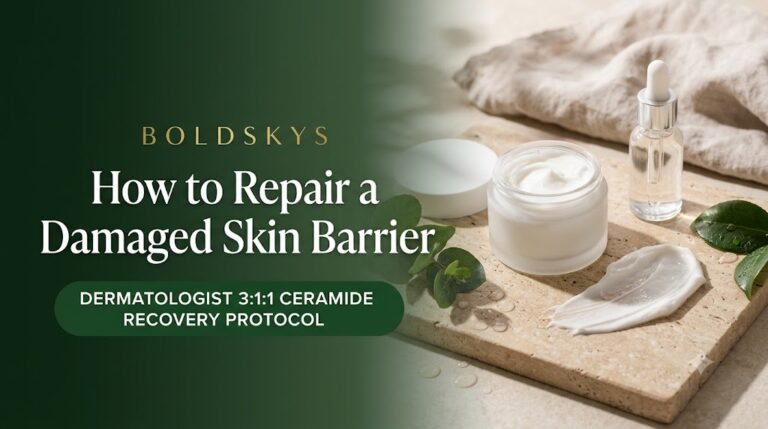
6. The 3:1:1:1 Golden Ratio: Ceramides, Cholesterol & Free Fatty Acids
A damaged stratum corneum cannot repair itself with water alone; it requires specific lipid building blocks. According to landmark clinical trials published in the Journal of Clinical and Aesthetic Dermatology, barrier restoration accelerates significantly when lipids are provided in an equimolar physiological ratio:
Lipid Component
Physiological Equimolar Ratio
Biological Function in Stratum Corneum
Recommended Formulations
Ceramides (NP, AP, EOP)
3 Parts (Dominant Phase)
Forms structured lamellar liquid crystal sheets that prevent water evaporation.
Halts transepidermal water loss by up to 98%, creating an artificial healing chamber.
Medical-grade white petrolatum (Vaseline), 100% sugarcane squalane.
Once your facial skin barrier has stabilized and stinging has ceased, you can safely reintroduce holistic botanical care. Support systemic follicle and skin lipid synthesis with our companion guide on how to use squalane oil for face and skin, and nurture delicate hairline edges using our pure rosemary water hair growth mist.
Immediate Moratorium: Stop ALL retinoids, vitamin C, AHA/BHA exfoliants, and foaming face washes for 14 days.
Step 1: Cleanse: Splash with cool distilled water only. No washcloths, no friction.
Step 2: Compress: Press cold isotonic thermal water compresses onto burning areas for 5 minutes.
Step 3: Soothe: Press a Madecassoside (Centella Cica) balm gently into damp skin.
Step 4: Rebuild: Apply a rich ceramide-cholesterol barrier repair cream.
Step 5: Lock: Seal with pure petroleum jelly (slugging) at night, and 100% mineral zinc oxide sunscreen during the day.
8. The Boldskys Clinical Barrier Silo (Master Internal Link Hub)
Master Barrier Restoration Roadmap: Track Your Healing Journey
Restoring a chemically damaged barrier requires synchronized cellular care across your entire routine. Track your recovery through our evidence-based pillars:
9. Frequently Asked Questions
How long does it take for a retinol burn to heal completely?
Mild retinol irritation (slight flaking and tightness) heals within 3 to 5 days under a strict barrier-repair routine. Severe chemical retinoid burns—characterized by intense stinging on water contact, raw red patches, and active peeling—typically take 10 to 14 days for the stratum corneum to fully regenerate new corneocyte layers.
Why does water and gentle moisturizer burn my face after using retinol?
Water and gentle creams burn because the stratum corneum’s intercellular lipid matrix has been stripped away, exposing bare sensory nerve endings (C-fibers) in the papillary dermis. The osmolarity difference between plain water and your inflamed skin cells triggers intense neurogenic stinging until a physical lipid barrier is restored.
Should you exfoliate peeling skin caused by retinol burn?
No! Never pick, peel, scrub, or chemically exfoliate shedding skin caused by a retinol burn. Those peeling sheets of dead skin are acting as a temporary biological bandage protecting fragile, immature keratinocytes underneath. Scrubbing them off causes post-inflammatory hyperpigmentation (PIH) and scar tissue.
Is Vaseline or Aquaphor good for a retinol burn?
Pure white petroleum jelly (Vaseline) is exceptional for a retinol burn because it is 100% chemically inert, allergy-tested, and halts 98% of transepidermal water loss without penetrating inflamed cells. Aquaphor is also effective, but contains lanolin and mineral waxes, which can occasionally provoke contact allergies on raw, broken skin.
Can I use hyaluronic acid on a damaged retinol skin barrier?
Only if applied to damp skin in high-humidity environments and immediately sealed with a heavy lipid cream. In dry climates, or when formulated with low-molecular-weight fragments that penetrate too deeply, hyaluronic acid can pull water outward from the dehydrated dermis, intensifying burning sensations.
When can I safely restart retinol after healing my barrier?
You must wait at least 2 to 3 weeks after all redness, tightness, and stinging have completely vanished. When restarting, use the ‘Sandwich Method’ (Moisturizer ➔ Pea-sized Retinol ➔ Moisturizer), lower your retinoid concentration, and limit application to only once or twice per week.
Editorial & Medical Disclaimer: The barrier restoration protocols and clinical skincare evaluations published on Boldskys are for educational, cosmetic, and informational purposes only. This content is backed by peer-reviewed dermatological literature but does not constitute personal medical diagnosis or individualized dermatological treatment. If acute swelling, blistering, oozing, or persistent chemical burns develop, discontinue all topical products immediately and consult a board-certified dermatologist.
×
Before You Touch Your Face!
Save your step-by-step 48-Hour Retinol Burn Emergency Protocol directly to your phone so you remember the exact soothing steps in your bathroom.