Swimming is one of the easiest ways to stay active, cool off and enjoy time in the water. But if you swim regularly, you may notice that your hair feels different afterward—drier, rougher, more tangled or harder to manage.
A good hair care routine for swimmers does not need to be complicated. The most useful approach is to protect your hair before you enter the water, reduce unnecessary exposure while swimming, and rinse and care for your hair soon afterward.
Table of Contents
Quick Answer: What Is the Best Hair Care Routine for Swimmers?
Before swimming: rinse with fresh water; use a leave-in conditioner if needed; wear a well-fitting swim cap when practical; arrange longer hair gently.
After swimming: rinse with fresh water as soon as practical; cleanse gently when needed; condition after shampooing; use clarifying shampoo occasionally if buildup develops; deep-condition regularly if you swim often; reduce unnecessary heat and chemical stress.
Why Does Swimming Affect Your Hair?
Repeated exposure to chlorinated water can remove some of the natural oils that help protect hair. Frequent exposure may contribute to dryness, rough texture, dull-looking hair, tangling and breakage. Pool-water metals such as copper can also contribute to a greenish tint in lighter or chemically treated hair.
Swimming is another form of environmental exposure that can affect your hair, so our complete hair care guide covers the broader habits that support healthier-looking hair.
Your Complete Hair Care Routine for Swimmers
The routine is simple: PREP → SWIM → RINSE → CLEANSE → CONDITION → RECOVER.
1. Wet Your Hair Before Swimming
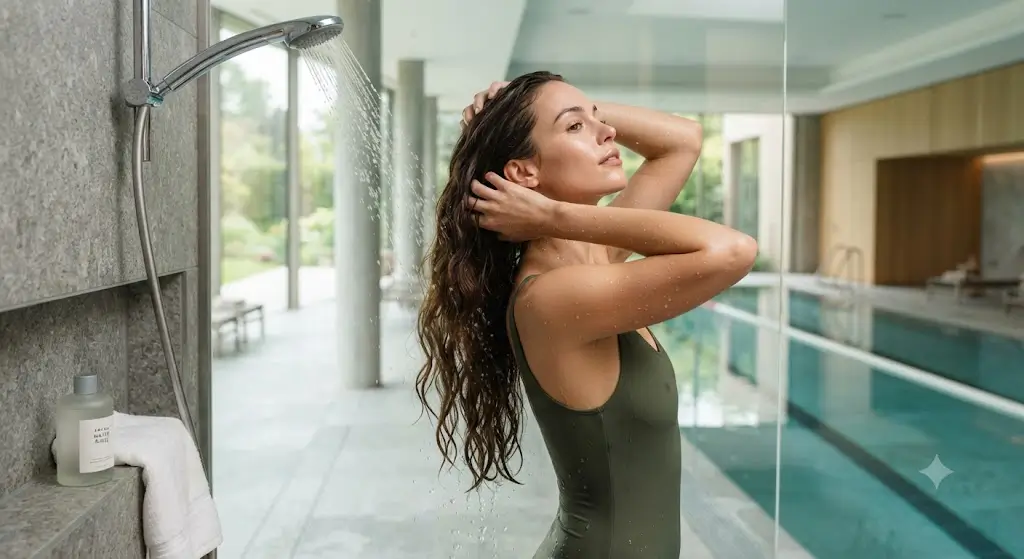
Thoroughly rinse your hair with fresh water before entering a chlorinated pool. Hair already saturated with clean water may take up less chlorinated water than completely dry hair.
2. Use a Leave-In Conditioner if Your Hair Needs It
A suitable leave-in conditioner can provide conditioning and a protective layer, particularly for dry, curly, coily, color-treated or damaged hair. It is not a waterproof shield, so do not treat it as complete protection.
3. Wear a Swim Cap
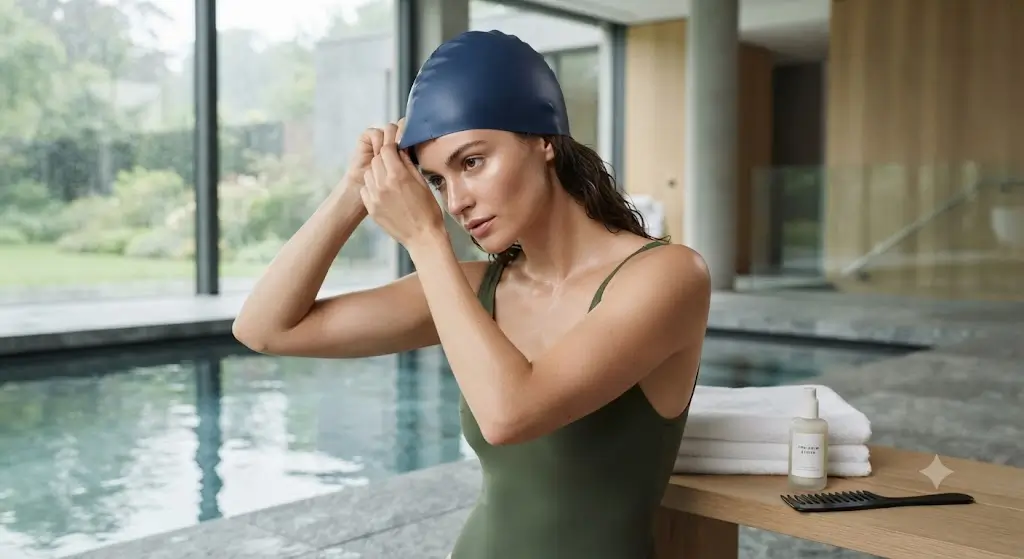
A swim cap can reduce direct exposure to pool water, although it is not completely waterproof. For long hair, gather it gently and avoid overly tight elastics or pulling.
The American Academy of Dermatology also recommends practical swimmer hair-care measures such as wearing a swim cap, rinsing immediately after swimming and conditioning afterward.
4. What Should You Do While Swimming?
Keep hair contained where possible, avoid unnecessarily tight hairstyles and keep your swim cap clean according to its care instructions. For outdoor swimming, also consider protection from sun exposure.
5. Rinse Your Hair Immediately After Swimming
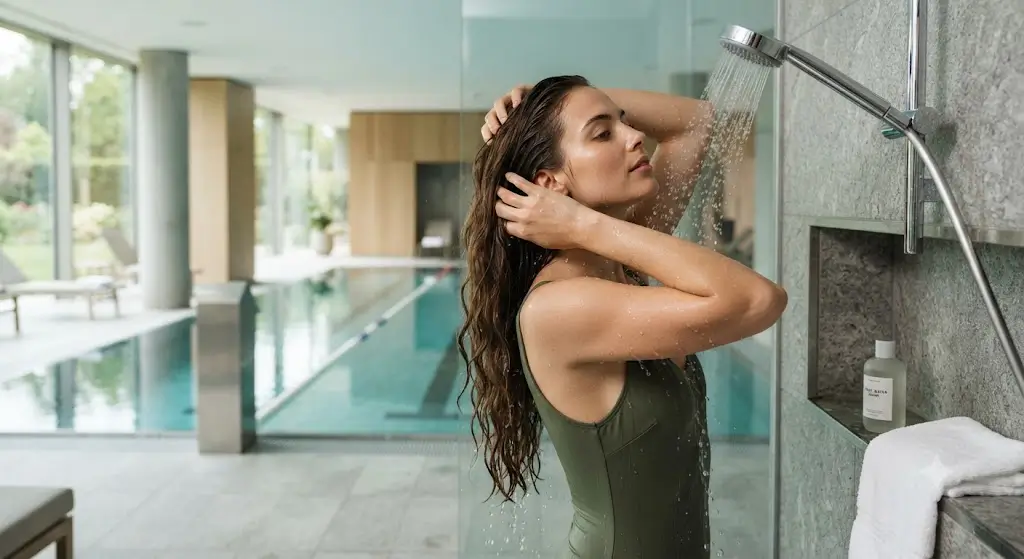
Rinse thoroughly with fresh water as soon as practical. If a full wash is not possible immediately, rinse well and complete your normal cleansing routine later.
Dermatologist-reviewed guidance from Cleveland Clinic also recommends fresh-water rinsing before and after swimming, along with appropriate cleansing and conditioning.
6. Should Swimmers Shampoo After Every Swim?
There is no single schedule for everyone. Consider swimming frequency, scalp oiliness, hair texture, product buildup, color treatment and existing dryness. Rinse after every swim, then shampoo when your hair and scalp need cleansing.
Your ideal washing schedule depends on your scalp and hair needs, so our guide on how often you should wash your hair can help you build a routine that fits your hair type.
7. Use Clarifying Shampoo Carefully
Clarifying shampoo can help when hair feels coated or heavy, but frequent use can be drying. Treat it as an occasional buildup-management step rather than an automatic post-swim treatment.
8. Always Condition After Shampooing
Condition the lengths and ends after shampooing, especially if they tend to become dry. Conditioning can improve manageability and detangling.
9. Deep Condition Regularly if You Swim Often
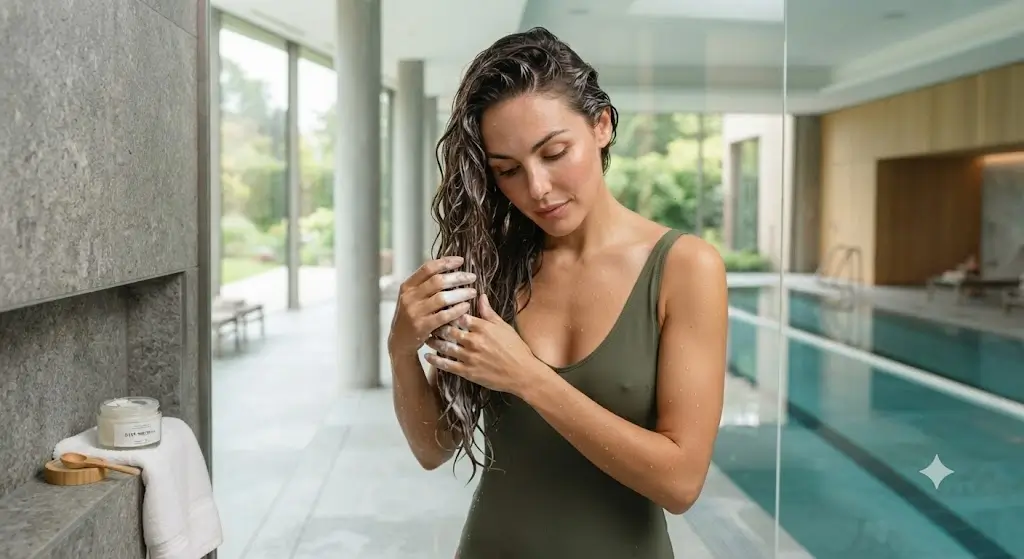
Frequent swimmers may benefit from a deeper conditioning treatment about once a week, adjusted to how their hair responds.
10. Give Your Hair a Break From Extra Damage
If hair becomes dry or brittle, reduce unnecessary high heat, repeated bleaching, aggressive brushing, rough towel drying and other avoidable stress.
Hair Care Routine for Swimmers With Dry Hair
Before swimming, saturate hair with fresh water, use suitable leave-in protection if needed and wear a swim cap when practical. After swimming, rinse immediately, cleanse gently when needed, condition and use deeper conditioning regularly. Minimize unnecessary heat.
If your hair is already dry, our hair care routine for dry hair provides additional guidance for building a moisture-focused routine.
Hair Care Routine for Curly or Coily Hair
Rinse thoroughly, cleanse gently according to your normal schedule, condition well, detangle carefully and minimize unnecessary heat and manipulation.
If you have curly hair, our hair care routine for curly hair can provide additional guidance for maintaining your texture between swimming sessions.
Hair Care Routine for Color-Treated Hair
Frequent swimming can add dryness and may affect color appearance. Before swimming, wet hair with fresh water, use suitable leave-in protection and wear a swim cap. After swimming, rinse immediately, cleanse appropriately and condition.
If your hair is color-treated, combine your swimming routine with our hair care routine for color-treated hair for additional everyday maintenance guidance.
Why Can Blonde Hair Turn Green After Swimming?
A greenish tint is not simply chlorine turning hair green. Minerals such as copper in pool water can contribute to discoloration, particularly in lighter or chemically treated hair. If discoloration persists, a professional colorist can recommend an appropriate corrective approach.
Pool Swimming vs Ocean Swimming
Pool swimming mainly involves treated water, while ocean swimming can leave hair feeling dry from saltwater. Outdoor swimming also adds sun and wind exposure, so rinsing and conditioning remain useful.
If you regularly swim outdoors, remember that exposed scalp skin also needs attention, so see our scalp sun protection guide for practical outdoor protection tips.
For additional information about protecting hair from sun exposure, see Cleveland Clinic’s guidance on hair sun damage.
A 5-Minute Post-Swim Routine
Minute 1: fresh-water rinse. Minute 2: gentle cleanse if needed. Minute 3: condition. Minute 4: gentle detangling. Minute 5: suitable leave-in protection if needed. Consistency matters more than a complicated routine.
Weekly Routine for Frequent Swimmers
Before every swim: fresh-water rinse, leave-in protection if needed and swim cap when practical. After every swim: fresh-water rinse, shampoo when needed and conditioner. Occasionally: clarify if buildup develops. Weekly: deep conditioning. Throughout the week: minimize unnecessary heat and chemical stress.
Your swimming routine can also fit into a broader weekly schedule, and our weekly hair care routine guide can help you organize your regular care steps.
Common Swimmer Hair-Care Mistakes
Swimming with completely dry hair; never rinsing after swimming; clarifying after every swim; skipping conditioner; excessive heat after swimming; tight hairstyles on wet hair; assuming a swim cap is completely waterproof; using too many products.
Swimming can make some everyday hair-care mistakes more noticeable, so our guide to common hair care mistakes can help you avoid other habits that may contribute to unnecessary hair damage.
What If Your Hair Already Feels Damaged?
If hair is extremely dry, unusually brittle, breaking easily, severely tangled, persistently discolored or accompanied by significant scalp irritation, simplify the routine rather than adding stronger products blindly. Persistent or significant problems should be assessed by a dermatologist or qualified hair professional.
Swimmer Hair-Care Checklist
Before swimming: rinse with fresh water; use suitable leave-in protection if needed; wear a comfortable swim cap; avoid overly tight hairstyles.

After swimming: rinse immediately; shampoo when needed; condition after shampooing; clarify only when appropriate; deep-condition regularly if you swim frequently; minimize excessive heat styling.
For outdoor swimming: consider sun protection; rinse after swimming; watch for dryness and tangling.
Frequently Asked Questions
How often should swimmers wash their hair? There is no single schedule for everyone. Rinse after swimming and adjust shampoo frequency to your scalp, hair type, swimming frequency and buildup.
Should I wet my hair before swimming? Yes. A fresh-water rinse before entering a chlorinated pool is a simple protective step.
Is a swim cap enough to protect hair from chlorine? It can reduce direct exposure but is not a completely waterproof barrier.
Should I use conditioner before swimming? A leave-in conditioner can provide a conditioning layer, especially for dry, curly or chemically treated hair, but it does not completely prevent chlorine exposure.
Should I use clarifying shampoo after every swim? Not necessarily. Occasional clarifying can help with buildup, while frequent use may be drying.
Why does my blonde hair turn green after swimming? Pool-water minerals such as copper can contribute to green discoloration, especially in lighter or chemically treated hair.
Can swimming cause hair loss? Swimming and chlorine exposure can contribute to dryness and breakage, but that is not the same as establishing swimming as a cause of medical hair loss. Persistent or significant hair loss should be assessed by a healthcare professional.
Is ocean water better for your hair than pool water? Not necessarily. Ocean water can also leave hair feeling dry, and outdoor swimming adds sun and wind exposure.
Final Takeaway
A good hair care routine for swimmers does not have to be complicated. Wet your hair before swimming, protect it when practical, use a swim cap when appropriate, rinse immediately afterward, cleanse gently when needed, condition consistently, deep-condition regularly if you swim often, and reduce unnecessary heat and chemical stress. The goal is to reduce unnecessary exposure and care for your hair consistently before and after swimming.