Hair Care Routine for Thin Hair: Where to Start
Having thin or fine-looking hair can make everyday hair care feel a little different.
Hair may appear flatter, become oily more quickly, lose volume after styling, or seem more fragile when handled roughly. But thin-looking hair does not automatically mean unhealthy hair.
The goal of a good hair care routine for thin hair is not to promise instant thickness. Instead, focus on gentle handling, suitable cleansing, lightweight conditioning, and habits that help minimize unnecessary breakage.
The best routine is also one you can comfortably maintain.
Table of Contents
🌿 Thin Hair vs. Fine Hair: Are They the Same?
Not necessarily.
Fine hair generally refers to the diameter of an individual hair strand.
Thin-looking hair can refer to how much hair appears to be present overall.
This distinction matters because two people can have fine strands but very different-looking hair density.
For that reason, a hair care routine should focus on your actual hair characteristics rather than simply choosing products marketed for “thickening.”
If your strands are naturally fine or your hair appears low in volume, our Hair Care Routine for Thin Hair guide offers practical tips for gentle daily care, styling, and product selection.
⭐ Start With Your Hair’s Needs
Before changing your entire routine, observe your hair for a few days.
Ask yourself:
- Does your scalp become oily quickly?
- Does your hair lose volume soon after washing?
- Are the ends dry or tangled?
- Does brushing cause a lot of pulling?
- Do you regularly use heat styling?
- Are you using heavy oils, creams, or styling products?
These answers can help you decide which parts of your routine actually need changing.
Fine hair and thin hair are not necessarily the same, so if you are specifically looking at strand thickness, our guide to a hair care routine for fine hair may be more relevant.
🌅 A Simple Morning Routine for Thin Hair
A good morning routine does not need to involve many products.
For many people, less can be more when hair becomes easily weighed down.
Step 1 — Detangle Gently
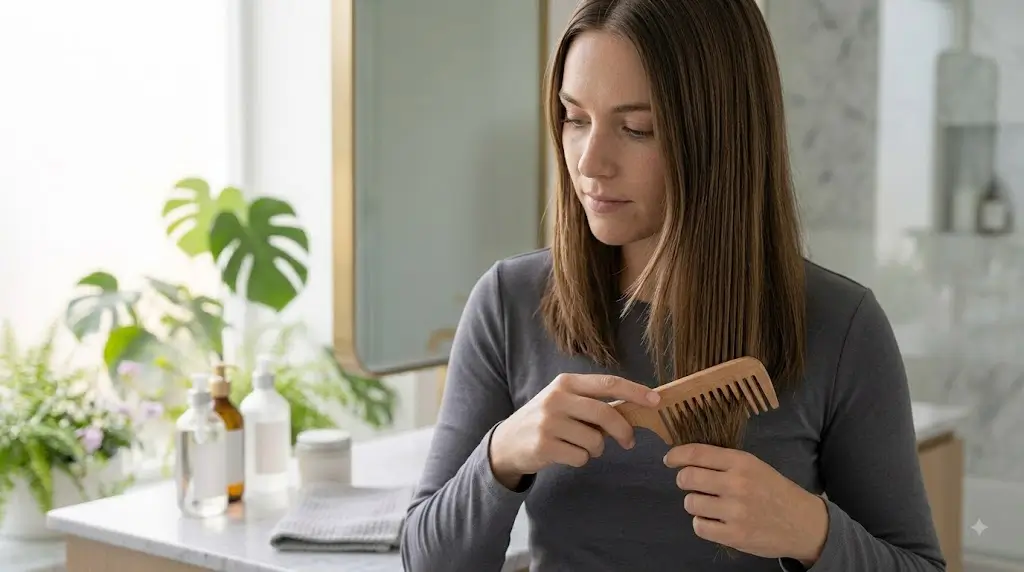
Start at the ends and slowly work upward.
Avoid pulling a comb or brush forcefully through knots.
If your hair tangles easily, separate it into manageable sections and work through each section gently.
This is particularly useful when your goal is hair breakage prevention, because aggressive brushing can put unnecessary mechanical stress on the strands.
Step 2 — Avoid Excessive Product
Thin or fine-looking hair can sometimes appear flatter when too much styling product is applied.
Instead of layering several products, start with a small amount and add more only if necessary.
This can help your hair maintain a lighter, more natural appearance.
💡 QUICK TIP
Want More Natural-Looking Volume?
Instead of applying multiple heavy products, try:
Clean scalp → lightweight care → gentle drying → minimal styling product
The goal isn’t to make hair look dramatically different.
It’s to help it look clean, comfortable and naturally fuller-looking without unnecessary buildup.
If you are also looking for a simple morning routine, see our guide to the Morning Hair Care Routine for practical daily care ideas.

🌿 One Important Reminder
Thin-looking hair does not always mean that you need more products.
Sometimes the better approach is to simplify your routine:
gentle care + appropriate washing + lightweight products + less unnecessary manipulation.
If you notice sudden or significant changes in hair density or persistent hair loss, routine changes alone may not explain the cause. In that situation, a qualified healthcare professional can help assess what may be happening.
🚿 Washing, Conditioning & Detangling Thin Hair
A good hair care routine for thin hair does not need to be complicated. The main goal is to keep the scalp comfortable, cleanse appropriately, and handle the strands gently.
If your hair is fine or easily weighed down, using large amounts of heavy products may make it appear flatter. A lighter routine can often be easier to manage.
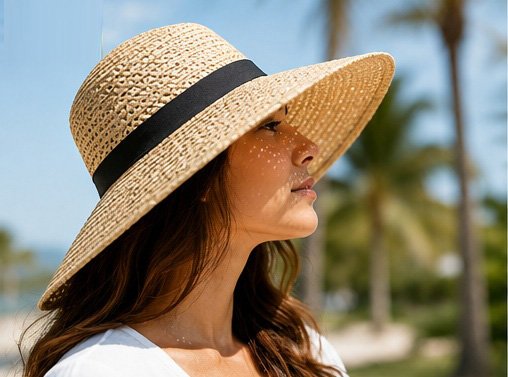
Because thinner hair may leave more of the scalp exposed, our Scalp Sun Protection Guide explains practical ways to reduce direct sun exposure during outdoor activities.
Step 1 — Choose a Washing Routine That Fits You
There is no universal number of washes that works for everyone.
Your ideal routine can depend on:
- Scalp oiliness
- Hair texture
- Exercise and sweating
- Product buildup
- Climate
- Personal comfort
If your scalp becomes oily quickly, you may prefer more frequent cleansing. If your hair and scalp are dry, washing too frequently may feel uncomfortable.
The goal is not to follow a fixed schedule simply because someone else does.
✍️ If your fine hair also feels dry or difficult to manage, see our Hair Care Routine for Thin Hair guide for practical tips on gentle conditioning and detangling.
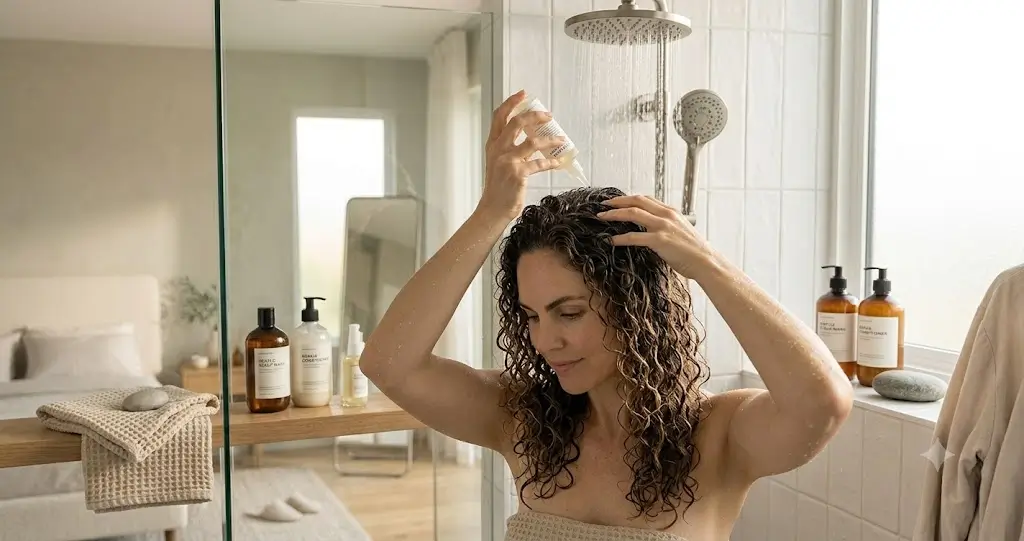
🧴 Step 2 — Shampoo the Scalp Gently
When shampooing:
- Thoroughly wet your hair.
- Apply shampoo primarily to the scalp.
- Massage gently using your fingertips.
- Avoid scratching with your nails.
- Rinse thoroughly.
- Allow the rinse water to flow through the lengths without aggressively rubbing them.
The scalp is where oil, sweat, dead skin cells, and styling-product residue can accumulate, so gentle cleansing is an important part of a healthy scalp routine.
⚠️ Avoid This Common Mistake
Don’t Scrub Your Hair Like Laundry
Thin or fine strands don’t need aggressive rubbing.
Avoid:
❌ Scrubbing the lengths vigorously
❌ Scratching your scalp with fingernails
❌ Twisting wet hair tightly
❌ Rubbing wet hair aggressively with a towel
Instead, treat wet hair gently and allow excess water to drain naturally.
💧 Step 3 — Conditioner Still Matters
Some people with thin-looking hair avoid conditioner because they are worried about losing volume.
But skipping conditioner completely isn’t necessarily the answer.
Conditioner can make hair easier to detangle and manage.
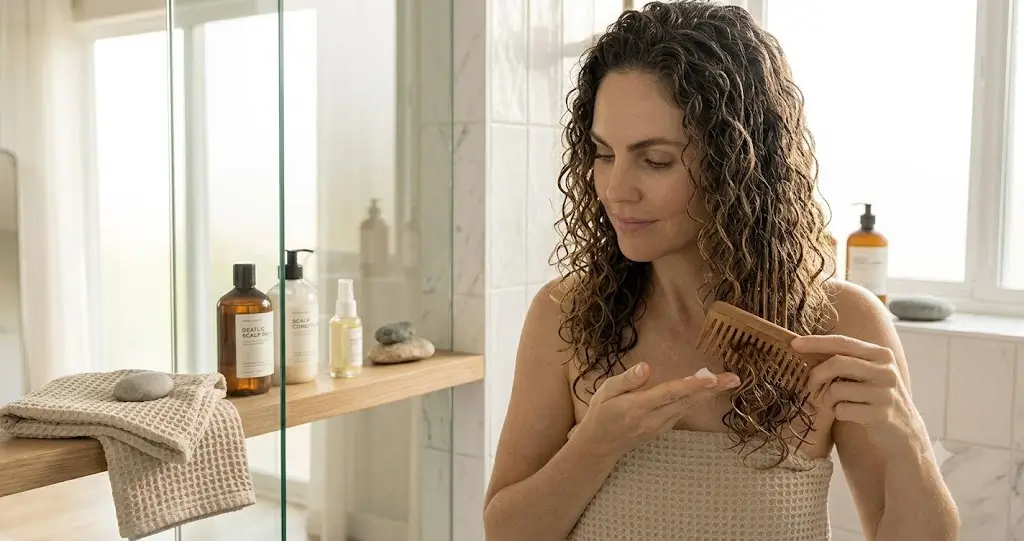
A simple approach:
Apply mainly to the mid-lengths and ends → leave according to the product directions → rinse thoroughly.
If your roots become flat easily, avoid applying a large amount directly to the scalp unless the product is specifically intended for that use.
📊 Conditioner Placement Guide
| Hair Area | General Approach |
|---|---|
| Scalp | Usually use sparingly |
| Roots | Keep lightweight if volume is a concern |
| Mid-lengths | Apply as needed |
| Ends | Often benefit most from conditioning |
Remember: your own hair type and the product instructions should guide the final choice.
🪮 Step 4 — Detangle Without Pulling
Detangling is an important part of hair breakage prevention.
Instead of starting at the roots, begin at the ends.
Try this method:
Ends → Middle → Roots
- Separate the hair into smaller sections if needed.
- Remove the loose knots at the ends.
- Gradually work upward.
- Hold the hair gently near the roots if you encounter resistance.
- Never force the comb through a stubborn knot.
This can make the process more comfortable and reduce unnecessary pulling.
🌿 QUICK READER TIP
What If Your Hair Gets Tangled Easily?
Try changing how you brush before buying another product.
A wide-tooth comb or suitable detangling brush can be useful, and working in small sections may make the process easier.
Gentle technique first. More products second.
If dryness is also making your hair difficult to manage, our Hair Care Routine for Dry Hair guide covers practical ways to build a gentler daily routine.
🌡️ Step 5 — Be Careful With Water Temperature
Very hot water can leave some people’s hair and scalp feeling dry or uncomfortable.
A practical approach is to use lukewarm water and avoid excessively hot showers.
You don’t need an extreme temperature routine.
Comfortable + gentle + consistent is the goal.
🧺 Step 6 — Dry Your Hair Gently
Wet hair requires careful handling.
After washing:
- Don’t aggressively rub your hair with a towel.
- Gently squeeze out excess water.
- Pat or wrap hair softly.
- Allow it to dry naturally when practical.
- If using a hair dryer, avoid unnecessarily high heat.
The objective is simple:
Reduce unnecessary friction and pulling.
🌟 EXPERT-STYLE INSIGHT
Thin-Looking Hair Doesn’t Automatically Mean Damaged Hair
This is important for readers to understand.
Hair can naturally be:
- Fine
- Lightweight
- Low-density in appearance
- Straight and flat
- Naturally low in volume
That doesn’t automatically mean the hair is unhealthy.
Instead of chasing products that promise dramatic transformation, build a routine around gentle care, appropriate cleansing, and realistic expectations.
🛑 When Your Routine Isn’t the Main Issue
A hair-care routine can support everyday hair handling, but it cannot determine the underlying cause of every hair-loss concern.
If someone notices:
- Sudden hair loss
- Noticeable patchy loss
- Persistent or worsening shedding
- Scalp pain or significant irritation
- Other concerning symptoms
it is better to seek advice from a qualified healthcare professional rather than relying only on cosmetic hair-care products.
This is particularly important for reader safety and keeps our health content responsible.
Scalp Care, Heat Styling & Lightweight Product Selection
Founder, இப்போது நம்முடைய BS-0015 Premium Edition-ன் அடுத்த முக்கியமான பகுதியை தொடர்கிறோம்.
Thin or fine-looking hair can be easier to weigh down, so the focus should be on gentle scalp care, sensible styling, and avoiding unnecessary product buildup.
💆 Step 1 — Keep Scalp Care Simple
A healthy-looking scalp is an important part of a practical hair-care routine.
You don’t need to use several scalp products simply because your hair looks thin.
Instead:
- Keep your scalp clean according to your individual needs.
- Avoid aggressive scratching.
- Be gentle when massaging.
- Pay attention to persistent itching, redness, or discomfort.
- Avoid introducing several new products at once.
🌿 Simple Rule
Clean + Gentle + Consistent
That’s a better starting point than constantly changing products.
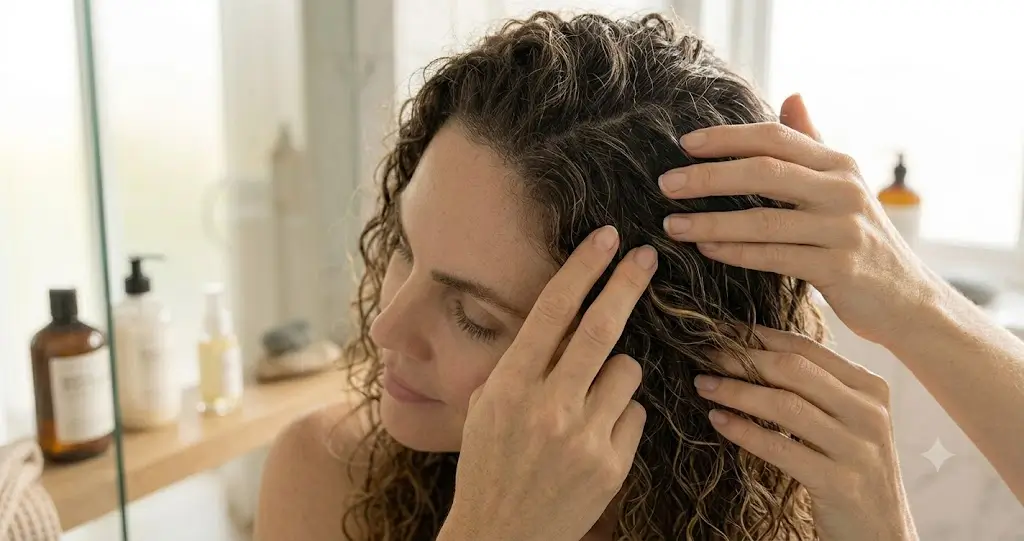
💆 Gentle Scalp Massage
A gentle massage can be a relaxing part of your routine.
How to do it:
- Use clean fingertips.
- Place them gently on the scalp.
- Use small circular movements.
- Avoid scratching with your nails.
- Stop if you experience pain or irritation.
A scalp massage should be presented as a self-care habit, not as a guaranteed method for increasing hair density.
That distinction is important for responsible, reader-safe content.
🔥 Step 2 — Reduce Unnecessary Heat
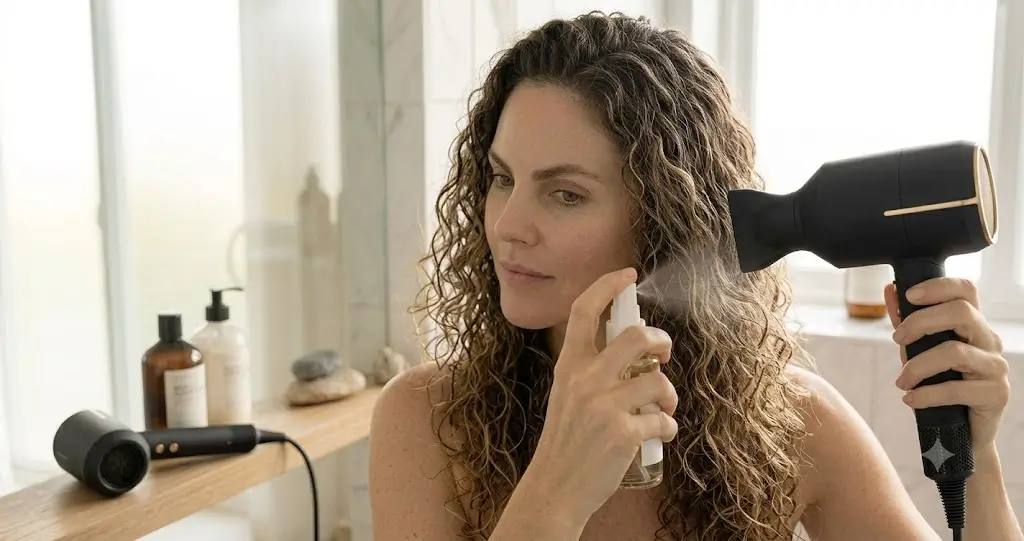
Hair dryers, straighteners, and curling tools can be useful, but frequent high-heat styling may contribute to dryness and damage.
If you regularly style your hair:
Try this approach:
Lower effective temperature → shorter exposure → fewer repeated passes
You don’t necessarily have to stop using heat completely.
Instead, use it more thoughtfully.
📊 Heat Styling Guide
| Situation | Better Approach |
|---|---|
| Blow-drying | Use a moderate temperature where practical |
| Straightening | Avoid repeated passes |
| Curling | Minimize prolonged heat exposure |
| Wet hair | Handle gently before styling |
| Frequent styling | Include heat-free days |
🛡️ Heat Protectant: Where Does It Fit?
If you use heat styling tools, a suitable heat-protection product can be part of your routine.
Follow the product’s directions and apply the recommended amount.
But remember:
Heat protectant doesn’t make unlimited high-heat styling harmless.
The best strategy is still to reduce unnecessary heat exposure.
If your hair already feels rough or fragile from styling, our Hair Care Routine for Damaged Hair guide offers additional ideas for gentler everyday hair care.
🧴 Step 3 — Choose Lightweight Hair Products
One of the most common concerns with fine or thin-looking hair is:
“Why does my hair look flat after I use products?”
Sometimes the issue isn’t that the product is bad.
It may simply be too heavy for that person’s hair.
What Does “Lightweight” Mean?
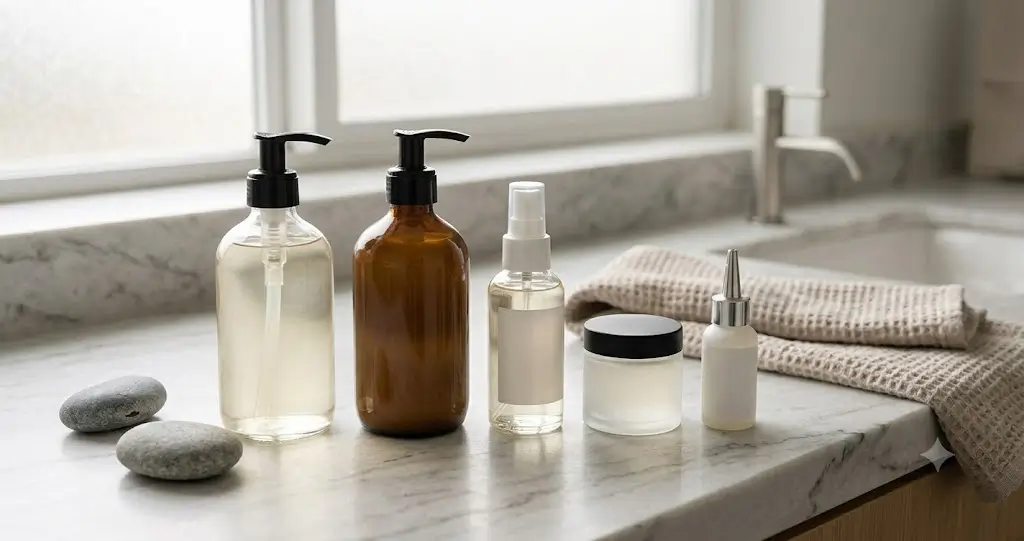
A lightweight product generally feels less heavy on the hair and may be easier to use when you want to maintain movement or volume.
However, there’s no single product that is ideal for everyone.
Your hair texture, scalp condition, styling habits, and personal preference all matter.
🧴 Start With Less
Instead of applying a large amount immediately:
Try this:
Small amount → distribute evenly → assess → add only if necessary
This approach can prevent unnecessary buildup and helps you learn how much your hair actually needs.
⚠️ Don’t Buy Products Based Only on “Thickening” Claims
Marketing terms can sound impressive:
- “Instant volume”
- “Thicker-looking hair”
- “Hair growth”
- “Maximum density”
- “Miracle results”
But a product’s marketing claim should not automatically be treated as a guarantee.
Look at:
- Ingredients
- Directions
- Intended hair type
- How your hair actually responds
And give yourself realistic expectations.
📊 Product Selection Guide
| Product Type | What to Consider |
|---|---|
| Shampoo | Choose according to scalp and hair needs |
| Conditioner | Focus on manageable, non-heavy conditioning |
| Leave-in product | Start with a small amount |
| Styling product | Avoid unnecessary buildup |
| Heat protectant | Useful if you regularly use heat |
| Hair oil | Use sparingly if your hair becomes easily weighed down |
💡 QUICK TIP
“More Product” Does Not Mean “Better Hair”
If your hair is fine or easily flattened, adding several products can sometimes make it look less voluminous.
Before buying another product, ask:
“Do I actually need this, or am I trying to solve a problem caused by using too much product?”
That simple question can save both money and unnecessary product buildup.
🪮 Step 4 — Choose Hairstyles Carefully
Some hairstyles can create a fuller-looking appearance without requiring excessive styling products.
For example:
- A natural side part
- Loose layers
- Soft waves
- A slightly lifted root
- Simple styles with minimal tension
But avoid consistently wearing very tight hairstyles if they cause discomfort or pulling.
⚠️ Tight Hairstyles Need Attention
Repeated tension can be hard on hair.
Try to avoid keeping hair tightly pulled back for long periods if you notice:
- Scalp discomfort
- Pulling
- Tenderness
- Increased breakage around the hairline
A comfortable hairstyle is often a better everyday choice than one that requires constant tension.
🌍 READER-SAFETY NOTE
If someone is concerned about actual hair loss rather than naturally fine hair, cosmetic changes alone may not address the underlying reason.
Hair shedding can have different causes.
If the change is sudden, persistent, patchy, or concerning, a qualified healthcare professional can help determine whether further evaluation is appropriate.
We will not promise that a shampoo, oil, hairstyle, or home routine can treat every type of hair loss.
⭐ READER SELF-CHECK
Before changing your entire routine, ask:
1. Is my hair naturally fine?
2. Is my scalp becoming oily quickly?
3. Am I using too many styling products?
4. Am I frequently using high heat?
5. Am I pulling or brushing my hair aggressively?
6. Am I actually experiencing hair shedding or mainly noticing low volume?
These questions can help you make more thoughtful changes instead of buying products at random.
🌙 A Simple Night Routine for Thin Hair
Nighttime is a good opportunity to reduce unnecessary friction and tension.
You don’t need a complicated bedtime routine. A few simple habits can make hair easier to manage the following morning.

Step 1 — Detangle Gently
If your hair has become tangled during the day:
- Start at the ends.
- Work upward slowly.
- Don’t force the comb through knots.
- Use smaller sections when necessary.
Gentle handling before bed can help reduce unnecessary pulling.
Step 2 — Avoid Sleeping With Very Wet Hair
If possible, allow your hair to dry before going to bed.
Wet hair can be more vulnerable to mechanical damage, so rough handling or friction while sleeping isn’t ideal.
You don’t need to use intense heat to dry it.
Gentle drying + less friction is the better approach.
🛏️ Step 3 — Reduce Nighttime Friction
Your hair spends several hours in contact with your pillow while you sleep.
If you frequently wake up with tangled hair, consider:
- Keeping hair loosely arranged.
- Avoiding very tight hairstyles.
- Using a comfortable, smooth pillowcase if you prefer.
- Keeping your hair and scalp clean.
- Avoiding excessive product before bedtime.
These are simple hair care for thin hair habits that focus on reducing unnecessary handling.
For a more complete bedtime routine, explore our Night Hair Care Routine guide for practical tips on preparing your hair before sleep.
🥗 Lifestyle Habits That Support Healthy-Looking Hair
Hair care doesn’t happen only in the bathroom.
Your overall lifestyle also matters to general health.
A practical routine can include:
💧 Stay Hydrated
Drink fluids regularly according to your individual needs.
There is no need to follow extreme “hair hydration” claims.
🥗 Eat a Balanced Diet
A varied diet containing adequate protein and a range of nutrient-rich foods supports overall health.
Instead of relying on one “hair growth food,” focus on dietary variety.
Useful food groups can include:
- Eggs
- Fish
- Beans
- Lentils
- Vegetables
- Fruits
- Nuts and seeds
- Whole grains
If you suspect that you have a nutritional deficiency, don’t automatically begin supplements based on internet advice. A qualified healthcare professional can help determine whether testing or treatment is appropriate.
😴 Sleep & Everyday Well-Being
Sleep and general well-being are part of a healthy lifestyle.
Try to maintain:
- A consistent sleep schedule where possible.
- Regular physical activity appropriate for you.
- A balanced diet.
- Reasonable stress-management habits.
These aren’t quick “hair thickening tricks.”
They are simply healthy habits that support your overall well-being.
📅 Your Simple Weekly Hair-Care Planner
You don’t need a different treatment every day.
Here’s a simple framework you can adapt.
| Day | Suggested Focus |
|---|---|
| Monday | Gentle wash + conditioner if needed |
| Tuesday | Gentle brushing + low-tension styling |
| Wednesday | Scalp and hair check |
| Thursday | Minimize heat styling |
| Friday | Wash according to your scalp needs |
| Saturday | Gentle detangling + simple styling |
| Sunday | Clean brushes and review your routine |
Important:
This is not a medical prescription or fixed schedule.
Your washing frequency and product choices should depend on your scalp, hair type, lifestyle, and personal needs.
⚠️ Common Thin-Hair Care Mistakes
Sometimes improving your routine means doing less, not more.
❌ Mistake 1 — Using Too Many Products
Layering shampoo, conditioner, oil, serum, cream, spray, mousse, and multiple styling products can leave hair feeling heavy.
Better approach:
Start simple.
Add a product only when you have a specific reason to use it.
❌ Mistake 2 — Aggressive Brushing
Pulling through knots quickly may increase unnecessary mechanical stress.
Better approach:
Ends → Middle → Roots
Take your time.
❌ Mistake 3 — Too Much Heat
Frequent high-heat styling can contribute to damage.
Better approach:
Use heat only when useful and choose the lowest effective setting where practical.
❌ Mistake 4 — Tight Hairstyles Every Day
Constant tension isn’t ideal for hair.
Better approach:
Rotate comfortable, low-tension hairstyles.
❌ Mistake 5 — Chasing Instant Results
This is one of the biggest mistakes.
If a product promises dramatic results in a few days, be cautious.
Healthy-looking hair care is generally about consistent habits, not overnight transformation.
💡 QUICK READER CHECK
Before buying another hair product, ask:
“What problem am I actually trying to solve?”
If the answer is:
Tangles → improve detangling technique.
Flatness → review product quantity and styling.
Dry ends → consider appropriate conditioning.
Breakage → reduce pulling and excessive heat.
Sudden shedding → consider professional evaluation rather than simply buying another cosmetic product.
This approach can make your routine simpler, more practical, and less expensive.
🌿 A Minimal Routine for Busy Days
Not everyone has 30 minutes for hair care.
For busy mornings, a simple routine may be enough:
1️⃣ Gently detangle
↓
2️⃣ Use only the products you actually need
↓
3️⃣ Choose a low-tension hairstyle
↓
4️⃣ Avoid unnecessary heat
↓
5️⃣ Go
That’s it.
A routine you can consistently follow is often more practical than an elaborate routine you abandon after a week.
❤️ When to Get Professional Advice
A cosmetic hair-care routine is not designed to diagnose or treat medical causes of hair loss.
Consider speaking with a qualified healthcare professional if you notice:
- Sudden or substantial hair loss
- Clearly defined bald or thinning patches
- Persistent scalp pain
- Significant redness or inflammation
- Ongoing or worsening shedding
- Other unexplained symptoms
Don’t assume every change in hair density is caused by shampoo, conditioner, or styling.
Getting the right assessment is more useful than repeatedly changing products.
🌟 What to Remember About Thin Hair Care
A good hair care routine for thin hair does not have to be complicated.
The most useful approach is usually to understand what your hair and scalp actually need and then build a routine that you can maintain consistently.
Focus on:
- Gentle washing
- Appropriate conditioning
- Careful detangling
- Less unnecessary heat
- Lightweight product use
- Low-tension hairstyles
- Simple nighttime care
- A balanced lifestyle
Most importantly, don’t judge your hair only by how much volume it has.
Fine or naturally thin-looking hair can still be healthy hair.
Recommended source types
- American Academy of Dermatology (AAD)
- NHS (National Health Service)
- MedlinePlus / U.S. National Library of Medicine
📅 A Simple Routine to Save
If you prefer a quick reference, use this:
🌅 Morning
Detangle gently → use minimal products → choose a comfortable style
🚿 Wash Day
Cleanse scalp gently → condition appropriately → dry without aggressive rubbing
☀️ During the Day
Minimize unnecessary heat → avoid excessive pulling → watch for product buildup
🌙 Night
Detangle if necessary → avoid tight hairstyles → reduce unnecessary friction
📆 Weekly
Review your routine → clean brushes → notice changes in your scalp and hair
❓ Frequently Asked Questions
1. What is a good hair care routine for thin hair?
A practical routine can include gentle cleansing, appropriate conditioning, careful detangling, limited unnecessary heat, lightweight product use, and low-tension hairstyles.
The best routine depends on your hair texture, scalp condition, lifestyle, and personal preferences.
2. How often should I wash thin hair?
There isn’t one universal schedule.
If your scalp becomes oily quickly, you may prefer more frequent washing. If your scalp and hair are dry, you may prefer a different frequency.
Choose a routine that keeps your scalp comfortable without unnecessarily drying or irritating it.
3. Is conditioner good for thin hair?
Conditioner can help improve softness and manageability.
If your hair becomes flat easily, try using an appropriate amount mainly on the mid-lengths and ends, following the product’s directions.
4. How can I prevent breakage in thin hair?
Focus on gentle handling.
Avoid aggressive brushing, excessive heat, tight hairstyles, and rough towel drying. Detangle gradually from the ends toward the roots.
5. Are oils good for thin hair?
Some people use hair oils as part of their grooming routine, but the right choice and amount depend on the individual’s hair and scalp.
If your hair becomes weighed down easily, start with a small amount—or avoid products that don’t suit you.
Don’t assume an oil will treat a medical cause of hair loss.
6. Can thin hair become thicker with a hair-care routine?
A hair-care routine can help improve manageability and reduce avoidable breakage, but it should not be presented as a guaranteed way to increase natural hair density.
If you’re experiencing significant or persistent hair loss, consider speaking with a qualified healthcare professional.
7. Is heat styling bad for thin hair?
Frequent or excessive heat can contribute to hair damage.
If you use heat tools, consider reducing unnecessary exposure, avoiding repeated passes, and using an appropriate heat-protection product according to its directions.
8. What hairstyles are suitable for thin hair?
Comfortable, low-tension styles can be a practical choice.
Loose styles, natural parts, soft waves, and other styles that don’t constantly pull on the hair may be easier to maintain.
The important point is to avoid hairstyles that cause persistent pulling or discomfort.
9. Should I use many products to make thin hair look fuller?
Not necessarily.
Too many products can sometimes weigh hair down or create buildup.
Start with the smallest amount you need and add products only when they solve a specific problem.
10. When should I see a healthcare professional about hair loss?
If hair loss is sudden, substantial, patchy, persistent, worsening, or accompanied by scalp pain, significant irritation, or other concerning symptoms, professional evaluation is appropriate.
A cosmetic hair-care routine cannot identify every possible cause of hair loss.
🌿 Final Thoughts
Having thin or fine-looking hair doesn’t mean you need a complicated routine.
Start with the basics: cleanse appropriately, condition where needed, detangle gently, reduce unnecessary heat, and avoid excessive tension.
Then pay attention to how your own hair responds.
The most useful routine isn’t necessarily the one with the most products. It’s the one that fits your hair, your lifestyle, and your everyday habits well enough to maintain consistently.
And if you’re noticing a significant or unexplained change in hair density or shedding, don’t rely solely on cosmetic solutions. A qualified healthcare professional can help determine whether there is an underlying reason that needs attention.
Healthy-looking hair care is about consistency, realistic expectations, and gentle treatment—not overnight promises.