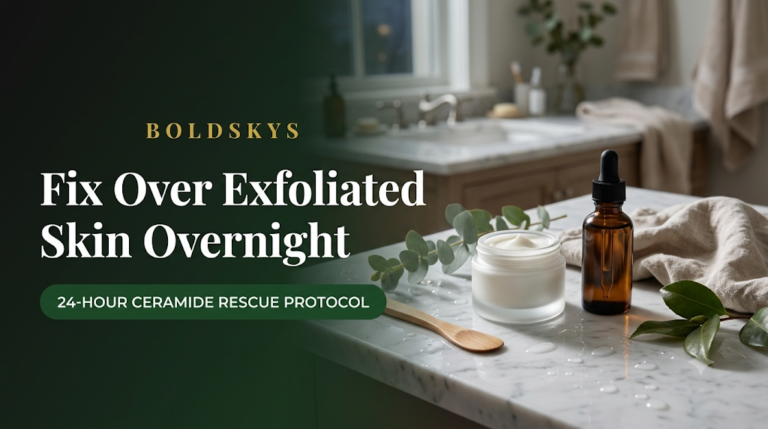
How do you fix an over-exfoliated skin barrier overnight?
Stop all AHA/BHA acids, retinoids, and foaming cleansers immediately. Rinse strictly with cool distilled water, press a 5% panthenol and madecassoside (Cica) balm onto damp skin, layer a 3:1:1 physiological ceramide-cholesterol cream, and seal with a thin film of pure white petrolatum (slugging) before sleep to halt transepidermal water loss by 98%.
What does an over-exfoliated skin barrier look and feel like?
An over-exfoliated barrier exhibits a tight, unnaturally shiny or “waxy” plastic-like sheen rather than a healthy glow. Key symptoms include acute erythema (redness), stinging upon contact with plain water, rough sandpaper texture, micro-peeling, and sudden clusters of tiny inflammatory bumps.
Should I put hyaluronic acid on over-exfoliated skin?
Avoid standalone hyaluronic acid serums on acutely over-exfoliated skin, especially in dry indoor air. Without an intact surface lipid mantle, low-molecular hyaluronic acid pulls moisture outward from deeper dermal layers and irritates exposed nerve endings, worsening neurogenic stinging.
Should I wash my face in the morning after over-exfoliating?
No. Skip all morning cleansers—even hydrating gels—for 48 hours so surfactants do not strip away your overnight ceramide repair layer. Splash solely with cool distilled water, pat lightly, apply barrier cream, and wear 100% mineral zinc oxide sunscreen.
Why am I breaking out in tiny bumps after over-exfoliating?
Sudden clusters of tiny red or white bumps after heavy acid use are signs of irritant contact dermatitis rather than true clogged-pore acne. When the acidic skin barrier is stripped, opportunistic bacteria trigger localized inflammation that resolves within 5 to 7 days once ceramides are restored.
Listen to why over-exfoliated skin turns shiny/waxy, why hyaluronic acid can sting, and the 5-step nighttime ceramide seal.
In the modern era of high-potency chemical peels, 30% AHA/BHA blood masks, and daily glycolic acid toners, acute over-exfoliation has become the single leading cause of self-inflicted epidermal injury. When you dissolve too many layers of the stratum corneum in a single session, your face loses its natural matte texture and takes on an alarming, tight, plastic-like waxy shine. Within hours, simple tap water stings like vinegar, gentle lotions burn, and angry red patches erupt across your cheeks.
While complete biological regeneration of stripped skin cells takes a full two-week keratinocyte cycle, you can extinguish acute neurogenic burning, halt moisture evaporation, and dramatically calm redness overnight using targeted lipid-occlusion biochemistry.
Emergency Nighttime Triage: How to Fix Over Exfoliated Skin Barrier Overnight
To calm an over-exfoliated skin barrier before sleep: Wash away residual acids with cool distilled water only—skip foaming cleansers and washcloths. While your face is cool and damp, press a soothing 5% panthenol and Centella Asiatica (madecassoside) balm into the skin, layer a thick ceramide-cholesterol barrier cream, and lock everything underneath a micro-thin layer of 100% pure white petrolatum or sugarcane squalane. Keep your bedroom humidifier running and sleep on a clean silk pillowcase.
The biggest mistake people make after over-exfoliating is applying ten different “hydrating” serums in a panic. When your barrier is stripped, penetration enhancers, preservatives, and low-molecular humectants inside standard serums flood directly onto exposed dermal nerve endings, triggering intense stinging and contact dermatitis.
Overnight relief requires ruthless simplicity: cooling vascular inflammation, replacing missing physiological lipids, and sealing micro-fissures with an inert occlusive shield. This master guide breaks down the cellular science, features two interactive diagnostic tools, and delivers the clinical nighttime recovery routine.
Understanding why your skin feels tight, raw, and unnaturally reflective after excessive acid or scrub use requires looking at the microscopic architecture of the stratum corneum:
Dissolution of Corneodesmosomes: Healthy skin resembles a brick wall: flat, keratin-filled dead cells (corneocytes) act as the bricks, held together by protein rivets called corneodesmosomes and surrounded by a lipid mortar of ceramides, cholesterol, and free fatty acids. Alpha-hydroxy acids (glycolic, lactic) and beta-hydroxy acids (salicylic) work by dissolving those protein rivets so dead cells shed evenly.
The “Plastic Shine” Warning Sign: When you over-exfoliate, acids dissolve too many corneocyte layers at once, stripping away the natural microscopic texture of the skin’s surface. What remains is an unnaturally flat, inflamed, lipid-depleted layer of immature cells that reflects light like stretched plastic wrap. That tight shine is never a “glass skin glow”—it is an urgent distress signal of barrier collapse.
Transepidermal Water Loss (TEWL) Spike: As documented in clinical dermatology trials indexed on PubMed, stripping the stratum corneum lipids causes water inside your dermis to evaporate into the air at more than triple the normal rate, shrinking skin cells and exposing type-C sensory nerve fibers to painful stinging.
“If your face feels tight and looks unnaturally shiny like plastic wrap after using acids, stop immediately. That is not glass skin—that is an over-exfoliated barrier.”
2. Visualizing Overnight Relief: Stripped Erythema vs. Lipid Cocoon
Overnight Lipid Occlusion: Drag Slider to Compare Epidermal Calm
Slide left and right to inspect skin inflammation before and after 12 hours of ceramide-petrolatum overnight sealing:
Before Sleep: Raw & Waxy Erythema
Stripped intercellular mortar, tight shiny plastic sheen, 300% moisture evaporation, and acute stinging on water contact.
Morning After: Calmed Lipid Cocoon
Muted vascular redness, halted water loss, cushioned corneocyte fissures, and zero neurogenic pain.
Bathroom Cabinet Compatibility Checker: Safe vs. Dangerous Tonight
Check the products sitting on your bathroom counter right now to see which ones are safe to apply tonight and which ones will burn your stripped barrier:
5. The 5-Stage Overnight Ceramide & Slugging Rescue Protocol
Follow this exact clinical nighttime sequence before going to sleep to wake up with dramatically calmer, less reactive skin:
Put away every active treatment in your routine—including exfoliating acids, retinoids, benzoyl peroxide, clay masks, and foaming facial cleansers. Even gentle sulfate-free gel cleansers contain surfactants that emulsify the tiny amount of natural lipids left on your face. For the next 48 hours, water alone is your cleanser.
Phase 2: Cool Distilled Water Vascular Cooling
Splash your face gently with cool distilled water or spray sterile thermal spring water for 60 seconds. Tap water in many regions contains alkaline calcium carbonates and chlorine that irritate stripped skin. Cool water constricts dilated facial capillaries, immediately reducing heat and throbbing.
Phase 3: Damp Panthenol & Madecassoside Quenching
Do not rub your face dry with a towel! While your skin is still cool and damp, warm a pea-sized amount of a fragrance-free barrier balm containing 5% Panthenol (Pro-Vitamin B5) and Madecassoside (Centella Asiatica) between your clean fingertips. Gently press your flat palms against your cheeks and forehead. These compounds soothe neurogenic C-fiber pain and accelerate epidermal repair.
According to landmark dermatological research published in the Journal of Clinical and Aesthetic Dermatology, replacing stripped stratum corneum lipids requires a balanced physiological ratio of 3 parts ceramides, 1 part cholesterol, and 1 part free fatty acids. Apply a generous layer of a fragrance-free ceramide cream over your Cica balm using gentle pressing motions.
Phase 5: Overnight Semi-Occlusive Slugging Cocoon
Finally, take a rice-grain to pea-sized amount of 100% pure white petroleum jelly (Vaseline) or pure sugarcane squalane oil, rub it between your palms until warm and sheer, and press a micro-thin layer over your entire face. This semi-occlusive shield stops 98% of nighttime moisture evaporation while you sleep, creating a moist wound-healing environment where basal skin cells regenerate rapidly. Run a cool-mist humidifier beside your bed and sleep on a clean silk pillowcase.
6. Barrier Myth vs. Fact: Hyaluronic Acid, Niacinamide & Cold Water
Tap each card below on your mobile screen to flip and reveal the peer-reviewed dermatological truth:
MYTH: Layer Hyaluronic Acid Serums
“Hyaluronic acid is the best way to hydrate an over-exfoliated face.”
(Tap to Reveal Truth)
FACT: Can Pull Water Out & Sting
In dry air without a lipid seal, low-molecular HA pulls water outward from deeper skin layers and penetrates exposed nerves, causing burning.
While 2-4% niacinamide builds ceramides, 10% serums provoke histamine flushing and stinging on stripped barriers. Stick to bland ceramide creams.
MYTH: Put Ice Cubes Directly on Face
“Rubbing bare ice cubes cools down chemical acid burns instantly.”
(Tap to Reveal Truth)
FACT: Causes Cold Thermal Shock
Direct ice causes extreme vasoconstriction followed by rebound capillary flushing and micro-frostbite on fragile skin. Use cool distilled water instead.
“Overnight barrier rescue is about subtraction, not addition. Strip your routine down to cool water, ceramides, and petrolatum—and let your skin heal itself.”
Tonight Step 4 (Slug): Seal with a rice-grain layer of pure white petrolatum (Vaseline) before sleep.
Tomorrow Morning: Rinse with cool water only, reapply ceramide cream + squalane, and wear 100% mineral zinc oxide SPF 50.
8. The Boldskys Clinical Skin & Scalp Silo (Master Internal Link Hub)
Master Barrier & Epidermal Health Roadmap: Track Your Recovery
Healing an over-exfoliated skin barrier requires synchronized lipid replenishment across your entire skincare and haircare routine. Track your recovery steps below:
How do you fix an over-exfoliated skin barrier overnight?
To calm an over-exfoliated skin barrier overnight, immediately stop all AHA/BHA acids, retinoids, and foaming cleansers. Rinse skin strictly with cool distilled water, press a 5% panthenol and madecassoside (Cica) balm onto damp skin, layer a 3:1:1 physiological ceramide-cholesterol cream, and seal with a micro-thin layer of pure white petrolatum (slugging) before sleep to halt transepidermal water loss by 98%.
What does an over-exfoliated skin barrier look and feel like?
An over-exfoliated skin barrier exhibits a tight, unnaturally shiny or ‘waxy’ plastic-like sheen rather than a healthy hydrated glow. Common clinical signs include sudden redness (erythema), stinging when applying plain water or bland moisturizer, rough sandpaper texture, micro-peeling, and sudden clusters of tiny inflammatory bumps.
Should I put hyaluronic acid on over-exfoliated skin?
Avoid standalone hyaluronic acid serums on acutely over-exfoliated skin, especially in dry indoor air. Without an intact lipid mantle, low-molecular-weight hyaluronic acid pulls moisture outward from deeper dermal layers and penetrates exposed nerve endings, intensifying neurogenic stinging. Use glycerin, panthenol, or colloidal oatmeal instead.
How long does it take for over-exfoliated skin to heal completely?
Acute stinging and redness subside within 24 to 48 hours of occlusive lipid sealing, while full regeneration of the stratum corneum’s corneocyte layers requires 7 to 14 days. All chemical exfoliants and vitamin A derivatives must be paused for a full two-week cellular turnover cycle.
Why does my skin look shiny and tight after using glycolic or salicylic acid?
That tight, plastic-like shine occurs because excessive acid has completely stripped away the outermost textured corneocyte cells and natural surface lipids, leaving behind an unnaturally flat, inflamed, and dehydrated epidermal surface that reflects light harshly.
Can I use niacinamide when my skin barrier is damaged from over-exfoliation?
Low-dose niacinamide (2% to 4%) stimulates natural ceramide synthesis and is beneficial. However, high-concentration 10% niacinamide serums frequently cause flushing, warmth, and severe stinging on an over-exfoliated barrier due to niacin conversion and penetration enhancers. Stick to bland ceramide creams until stinging stops.
Should I wash my face in the morning if my skin barrier is over-exfoliated?
No, do not use any facial cleanser—even a gentle hydrating gel—the morning after over-exfoliating. Surfactants emulsify the fragile overnight lipid repair matrix. Simply splash your face with cool distilled water, pat lightly with a clean soft towel, apply ceramide cream, and finish with a 100% mineral zinc oxide sunscreen.
Can I wear makeup over an over-exfoliated skin barrier?
Avoid foundation, concealer, and powder makeup for at least 72 hours. Makeup pigments cling painfully to peeling micro-scales, and removing cosmetics at night requires micellar water or cleansing balms whose friction and surfactants tear away newly forming keratinocytes. Stick to tinted mineral zinc sunscreen if coverage is needed.
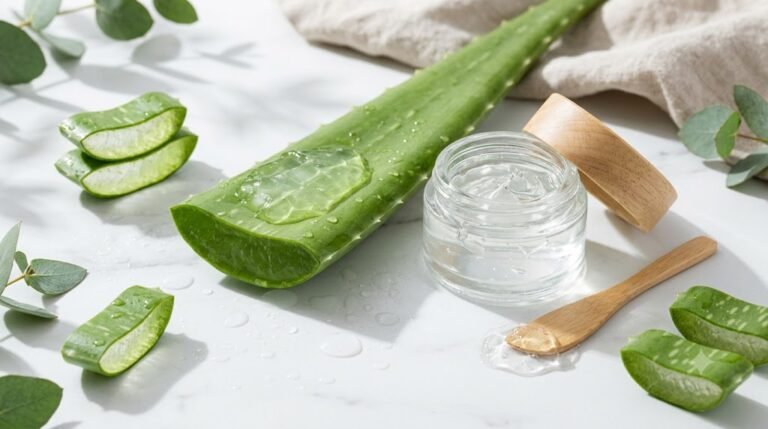
Is aloe vera gel safe to put on over-exfoliated skin?
Only 100% pure, alcohol-free, and fragrance-free Aloe Barbadensis leaf juice is safe. Most commercial green aloe gels contain denatured alcohol, triethanolamine, and synthetic dyes that inflict severe chemical stinging on stripped skin. Always layer a rich ceramide cream over pure aloe so it does not dry tight.
Why am I breaking out in tiny bumps after over-exfoliating?
Sudden clusters of tiny red or white bumps after heavy acid use are rarely true acne; they are signs of irritant contact dermatitis and barrier disruption. When the protective acid mantle is destroyed, opportunistic skin bacteria trigger localized follicular inflammation. Stopping acids and restoring ceramides clears these bumps within 5 to 7 days.
Editorial & Dermatological Disclaimer: The overnight barrier rescue protocols and ingredient compatibility tools published on Boldskys are for educational, cosmetic, and informational purposes only. This content is backed by peer-reviewed dermatological literature but does not constitute personal medical diagnosis or individualized clinical treatment. If open blistering, oozing fluid, severe facial swelling, or signs of secondary infection develop, discontinue all topical products immediately and consult a board-certified dermatologist.
×
Before You Turn Off the Lights!
Save your 4-Step Overnight Ceramide & Slugging Rescue Protocol directly to your phone so you wake up with calm, sting-free skin.