
High Porosity Hair Care Routine: A Simple Guide to Moisture, Strength & Less Frizz
Introduction
High-porosity hair can absorb moisture quickly, but it may also lose that moisture just as easily. As a result, hair can sometimes feel dry, rough, frizzy, or more prone to tangling and breakage.
The good news is that a high porosity hair care routine does not need to be complicated. The key is to build consistent habits that help your hair retain moisture, reduce unnecessary damage, and stay manageable between wash days.
Rather than following every trend or buying a large number of products, it is more useful to understand how your hair behaves and adjust your routine accordingly.
In this guide, we’ll look at the common signs of high-porosity hair, how to build a practical routine, how moisture and conditioning fit into it, and which everyday habits can help reduce dryness and frizz.
Table of Contents
What Is High-Porosity Hair?
Hair porosity describes how easily moisture can enter and leave the hair strand. High-porosity hair generally has a cuticle structure that allows moisture to enter relatively easily, while retaining that moisture can be more challenging.
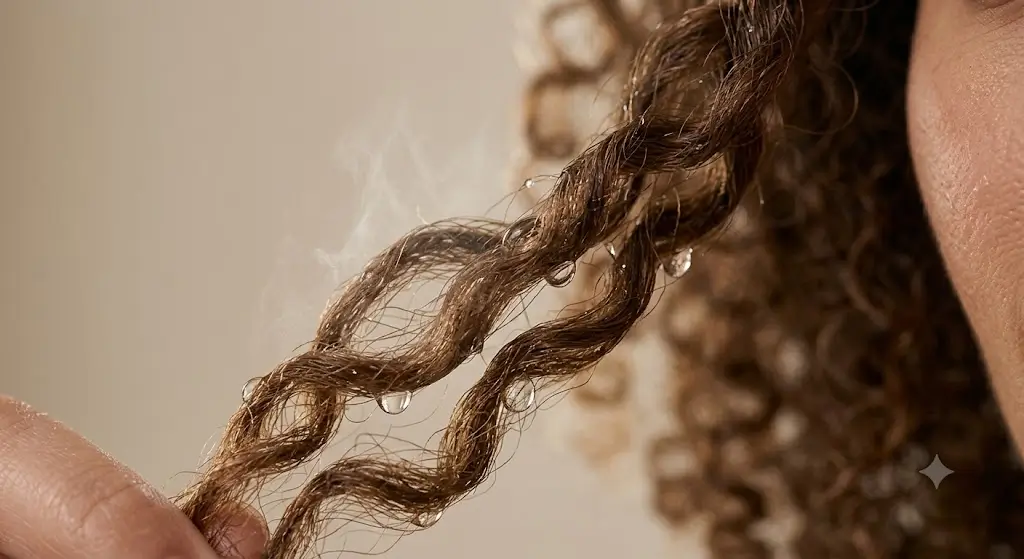
High porosity can be influenced by your natural hair characteristics, but repeated chemical processing, heat styling, and other forms of hair damage may also affect the hair cuticle.
It is important to remember that porosity is not a diagnosis or a permanent label. Hair can behave differently depending on its condition, styling history, environment, and the products being used.
If you are still figuring out your overall hair characteristics, our guide to choosing a routine for your hair type can help you build a more personalised starting point.
Common Signs of High-Porosity Hair
Some people with high-porosity hair may notice:
- Hair becomes dry again relatively quickly after conditioning.
- Strands feel rough or less smooth.
- Hair tends to tangle easily.
- Frizz appears readily, particularly in humid conditions.
- Ends may look or feel dry.
- Hair may be more vulnerable to breakage when it has been chemically or mechanically damaged.
- Hair absorbs water and products quickly but does not always seem to stay moisturised for long.
These signs alone cannot confirm your hair’s porosity. They are simply useful observations when you are trying to understand how your hair responds to moisture and care.
Not sure whether your hair is actually high porosity? Start with our guide to Understanding your hair porosity before building a routine around it.
Why Does Hair Porosity Matter?
Understanding porosity can help you make more sensible choices about your routine.
For example, if your hair loses moisture quickly, repeatedly applying more and more products may not solve the underlying problem. A better approach is to look at the whole routine:
gentle cleansing → conditioning → moisture retention → reduced damage → consistent maintenance
Your routine should also reflect your hair’s actual needs rather than a fixed formula.
Someone with fine, high-porosity hair may need a different product balance from someone with thick, coarse, tightly textured hair.
How to Build a High Porosity Hair Care Routine
A good routine for high-porosity hair should focus on gentle care, regular conditioning, moisture retention, and reducing unnecessary damage. You do not need a complicated schedule or a large collection of products.
Start with a few consistent habits and adjust them based on how your hair responds.
If you have low porosity hair instead, our guide on how to care for low porosity hair explains how to build a simpler routine around its different moisture behaviour.
1. Keep Your Daily Routine Gentle
Everyday handling can make a difference, especially when hair is already dry or prone to tangling.
Try to:
- Avoid unnecessary brushing or combing.
- Detangle gently rather than pulling through knots.
- Use a wide-tooth comb or another suitable detangling method when appropriate.
- Avoid repeatedly stretching, twisting, or manipulating the same sections of hair.
- Protect the ends from excessive friction where practical.
The goal is not to avoid touching your hair completely. It is to reduce unnecessary mechanical stress.
If you’re also wondering how high porosity hair differs from Low porosity hair, our guide to Low porosity vs High porosity hair explains the key differences in moisture absorption and retention.
2. Start Wash Day With Gentle Cleansing
Cleansing removes accumulated oil, sweat, styling products, and environmental residue.
How frequently you wash depends on factors such as:
- scalp oiliness,
- exercise and sweating,
- product use,
- hair texture,
- personal preference, and
- how comfortable your scalp feels between washes.
There is no universal number of washes that works for everyone.
For high-porosity hair that feels dry, avoid assuming that washing less frequently is always the answer. A clean, comfortable scalp still matters.
Choose a shampoo that suits your scalp and hair needs, and concentrate cleansing primarily on the scalp rather than aggressively scrubbing the lengths.
3. Make Conditioning a Regular Part of Your Routine
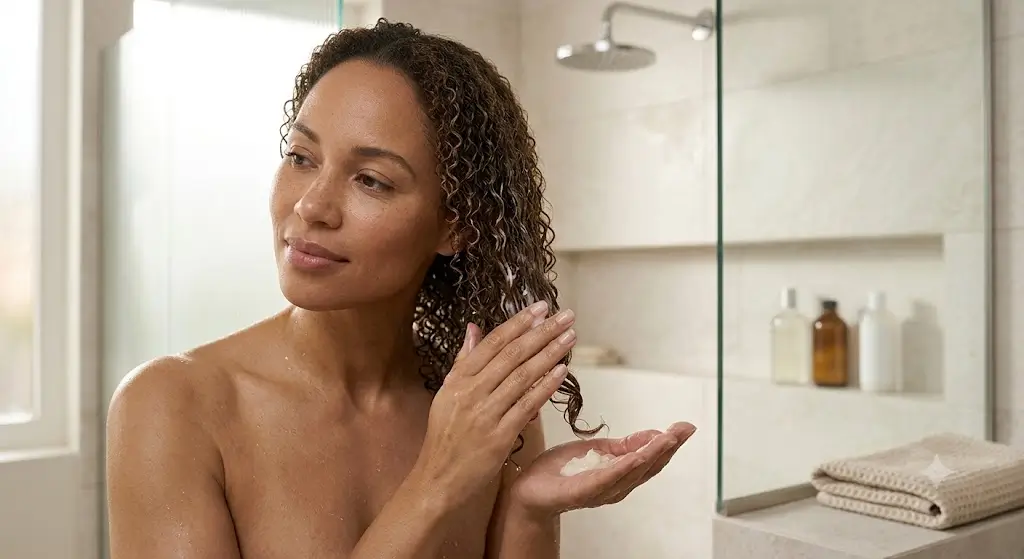
Conditioning is particularly useful when your hair tends to feel dry, rough, or difficult to detangle.
After shampooing:
- Apply conditioner mainly through the lengths and ends.
- Distribute it gently through the hair.
- Allow it to sit according to the product directions.
- Rinse thoroughly.
If your hair feels smoother and easier to manage after conditioning, that is useful feedback that the routine is working for you.
More conditioner is not automatically better. Start with an appropriate amount and adjust according to your hair’s length, density, and response.
4. Use Deep Conditioning When Your Hair Benefits From It
Some people with dry or damaged hair find occasional deep conditioning useful as part of their routine.
A deep conditioner can be incorporated into a wash day when your hair needs additional conditioning.
However, you do not need to deep-condition every day.
A practical approach is to:
Cleanse → condition → assess how your hair feels → adjust your routine.
If your hair feels weighed down, coated, or difficult to style after using a particular product, you may be using too much or using it too frequently.
5. Focus on Moisture Retention
For high-porosity hair, retaining moisture can be as important as adding moisture.
After washing and conditioning, handle your hair gently and avoid unnecessary friction.
Depending on your hair type and styling preferences, you may use a leave-in conditioner or another suitable conditioning product.
The right amount varies considerably.
A useful rule is:
If dryness is one of your main concerns, you can also explore our guide to a Hair care routine for dry hair for additional everyday care ideas.
Start small and add only what your hair actually needs.
This can help prevent the routine from becoming unnecessarily heavy or product-heavy.
6. Be Careful With Heat and Chemical Processing
Repeated heat styling and chemical processing can contribute to hair damage.
If you use heated tools:
- Keep the temperature appropriate for your hair.
- Avoid unnecessary repeated passes.
- Use heat protection where appropriate.
- Give your hair breaks from frequent high-heat styling.
For additional dermatologist-backed guidance on reducing hair damage from heat and handling, see the
American Academy of Dermatology’s tips for healthy hair.
If you colour, straighten, relax, or otherwise chemically process your hair, pay attention to changes in dryness, texture, and breakage.
High-porosity hair does not automatically mean you must stop all styling. The goal is to manage cumulative damage and choose habits that your hair tolerates well.
If your hair has been affected by repeated heat or chemical processing, our Hair care routine for damaged hair offers additional gentle-care ideas.
Finding the Right Balance Between Moisture and Protein
High-porosity hair can sometimes benefit from a routine that includes both conditioning and strengthening care. However, there is no universal protein schedule that works for everyone.
Instead of automatically adding protein treatments, pay attention to how your hair behaves.
If your hair feels dry, rough, stiff, or unusually difficult to manage after a particular strengthening product, consider reducing how often you use it.
If your hair feels overly soft, weak, or difficult to style, you may want to review the balance of conditioning and strengthening products in your routine.
The important point is observation rather than following a rigid schedule.
How to Reduce Frizz in High-Porosity Hair
Frizz can be influenced by several factors, including moisture, humidity, friction, hair condition, and styling technique.
A few simple habits may help:
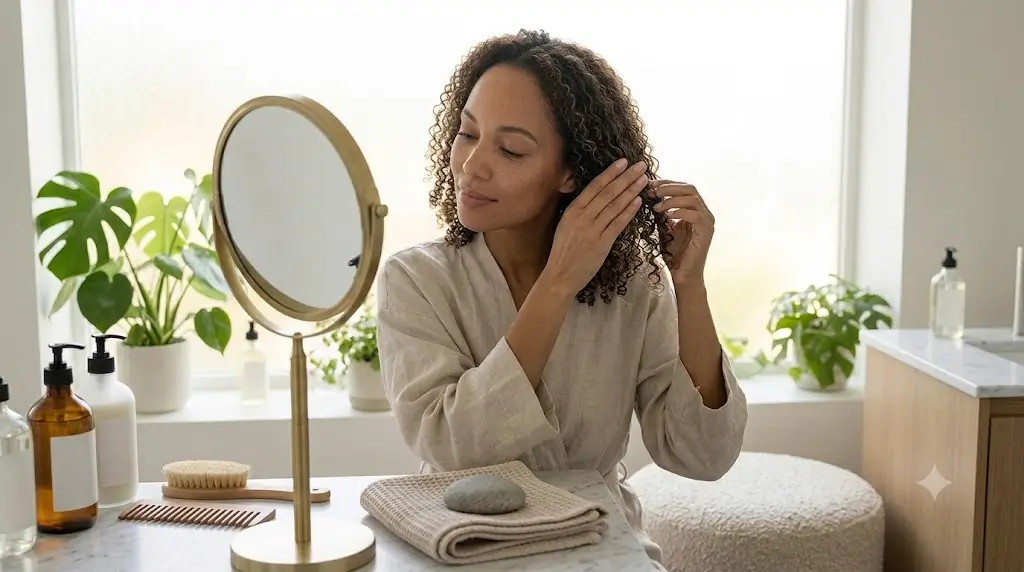
Be Gentle When Drying
Avoid aggressively rubbing wet hair with a rough towel.
Instead, gently squeeze or blot excess water and handle the strands carefully.
Reduce Friction
Repeated friction from towels, clothing, pillows, or rough handling can make already-frizzy hair more difficult to manage.
A smoother sleep surface or a suitable hair-protection method may help reduce unnecessary friction.
Avoid Over-Manipulation
Constantly brushing, restyling, or touching the hair can increase mechanical stress.
Once your hair is styled, try to leave it alone as much as practical.
For more practical ideas, see our guide to a Hair care routine for frizzy hair.
Detangling High-Porosity Hair
If your hair tangles easily, detangling technique matters.
Rather than starting at the roots and pulling a comb through the entire length, work through smaller sections and gradually loosen tangles.
A simple approach is:
Separate → Start at the ends → Work upward → Move gently toward the roots
Use enough slip from an appropriate conditioner or detangling product to make the process comfortable.
Never force a stubborn knot. If necessary, pause and work through it gradually.
A Simple Night Routine
Your nighttime routine does not need to be complicated.
Before bed:
- Gently detangle if needed.
- Avoid going to sleep with hair heavily tangled.
- Choose a comfortable protective style if it suits your hair.
- Reduce unnecessary friction against your pillow.
- Avoid tightly securing the hair if it causes pulling or discomfort.
The aim is simply to protect your hair while you sleep, not to add another long list of products.
Common High-Porosity Hair Care Mistakes
Even a well-planned routine can become less effective if you overdo certain habits.
Mistake 1: Using Too Many Products
More products do not necessarily mean more moisture.
Layering several conditioners, creams, oils, and styling products can leave hair coated or weighed down.
Start with fewer products and add only when there is a clear reason.
Mistake 2: Washing Based on a Fixed Rule
There is no universal “correct” number of wash days.
Your scalp and lifestyle should guide your washing frequency.
Mistake 3: Overusing Heat
Frequent high-heat styling can contribute to damage.
Use heat thoughtfully and give your hair periods of lower manipulation when possible.
Mistake 4: Ignoring the Scalp
Hair care is not only about the lengths and ends.
If your scalp becomes persistently itchy, painful, inflamed, or unusually flaky, consider seeking advice from a qualified healthcare professional rather than trying to solve the issue with increasingly complex hair products.
Mistake 5: Changing Products Too Quickly
If you change several products at once, it becomes difficult to understand what is actually helping or causing problems.
When practical, introduce changes gradually and observe your hair’s response.
The Key Principle
A successful high porosity hair care routine is not about finding one magical product.
It is about building a repeatable routine around:
Moisture + conditioning + gentle handling + reduced damage + consistency
Your hair’s response should guide the adjustments.
A Simple Weekly High Porosity Hair Care Routine
A weekly routine can help you stay consistent without turning hair care into a complicated schedule.
Your exact routine should depend on your scalp, hair texture, styling habits, and how your hair responds to products.

Example Weekly Routine
Wash Day
- Gently cleanse the scalp.
- Condition the lengths and ends.
- Detangle carefully.
- Use a leave-in conditioner if your hair benefits from one.
- Allow the hair to dry with minimal friction and unnecessary manipulation.
Between Wash Days
- Avoid excessive brushing and restyling.
- Refresh the hair only when needed.
- Pay attention to dryness, tangling, and frizz rather than automatically adding more products.
Once in a While
- Consider deep conditioning if your hair feels particularly dry or difficult to manage.
- Review whether your current products are still working well.
- Trim or seek professional advice when damaged ends or persistent problems become difficult to manage.
The goal is consistency, not perfection.
You can also compare this routine with our broader Weekly hair care routine for a simple maintenance framework.
Product Types to Consider
You do not need a long shopping list to create a useful routine.
Depending on your hair’s needs, you might consider:
Gentle Shampoo
Choose a shampoo that cleans your scalp effectively without leaving your hair feeling unnecessarily stripped or uncomfortable.
Rinse-Out Conditioner
A conditioner can help improve manageability and make detangling easier.
Leave-In Conditioner
If your hair tends to feel dry between wash days, a suitable leave-in conditioner may help with manageability and moisture.
Deep Conditioner
This can be useful occasionally when your hair needs additional conditioning.
Heat Protectant
If you regularly use heated styling tools, a suitable heat-protection product can be part of your routine.
Remember: product performance varies from person to person. A product being marketed for “high porosity hair” does not automatically mean it is the right choice for you.
How to Know When Your Routine Needs Adjusting
Your hair can give you useful feedback.
If Hair Feels Dry
Review:
- how often you cleanse,
- whether you condition consistently,
- whether you are using enough conditioning support,
- and whether heat or chemical processing may be contributing to dryness.
If Hair Feels Heavy or Coated
You may be using too many products or applying them too frequently.
Try simplifying your routine rather than automatically adding another product.
If Hair Becomes More Tangled
Look at your detangling method, conditioning routine, and the amount of friction your hair experiences.
If Breakage Keeps Increasing
Review heat styling, chemical processing, tight hairstyles, and mechanical handling.
If you notice persistent or significant hair or scalp concerns, a qualified professional can help determine whether there is an underlying issue.
Do You Need a Special High Porosity Hair Product?
Not necessarily.
There is no requirement to buy a product simply because the label says “for high porosity hair.”
Instead, look at:
- how the product feels on your hair,
- whether it improves manageability,
- whether it leaves your hair excessively heavy,
- how your hair behaves after repeated use,
- and whether the product fits your overall routine.
A simple routine that works consistently is often more useful than a large collection of products.
Frequently Asked Questions
What is a good routine for high porosity hair?
A practical routine can include gentle cleansing, regular conditioning, careful detangling, moisture-focused care, and reducing unnecessary heat and mechanical damage.
How often should you wash high porosity hair?
There is no universal schedule. Wash according to your scalp’s needs, activity level, product buildup, hair type, and personal preference.
Is high porosity hair always damaged?
No. Hair porosity can vary naturally, and hair condition can also influence how it behaves. High porosity should not automatically be treated as proof of damage.
Does high porosity hair need protein?
Not necessarily on a fixed schedule. Some hair may benefit from strengthening products, while too much or too frequent use may not suit everyone. Pay attention to how your hair responds.
Should you use oil on high porosity hair?
Oil is optional, not mandatory. Some people use oils as part of their styling or moisture-retention routine, while others prefer lighter conditioning products. Choose based on how your hair responds.
How can you reduce frizz in high porosity hair?
Gentle handling, regular conditioning, reducing friction, limiting unnecessary heat, and choosing products that improve manageability may help reduce the appearance of frizz.
When to Get Professional Advice
Hair-care routines can help with everyday maintenance, but they are not a substitute for professional evaluation.
If you experience persistent scalp discomfort, significant irritation, unusual shedding, sudden changes in hair density, or ongoing breakage that does not improve with gentler care, consider speaking with a qualified healthcare professional or dermatologist.
For a broader approach to building healthy hair-care habits, explore our Complete Hair Care Guide.
Conclusion
A high porosity hair care routine does not have to involve dozens of products or complicated steps.
Focus on the basics:
Gentle cleansing → regular conditioning → careful detangling → moisture retention → reduced heat and friction → consistent care
Most importantly, pay attention to how your hair responds. Your routine may need to change as your hair condition, styling habits, environment, or product choices change.
With a simple and consistent approach, you can make high-porosity hair easier to manage while supporting a healthier-looking appearance.
Readers Safe
Hair porosity can be difficult to judge from one sign alone. Consider how your hair absorbs moisture, responds to conditioning, and behaves after styling and washing.