⏱ 12 Min Read •
📚 Peer-Reviewed Research Backed •
🌿 Fact-Checked Editorial Protocol
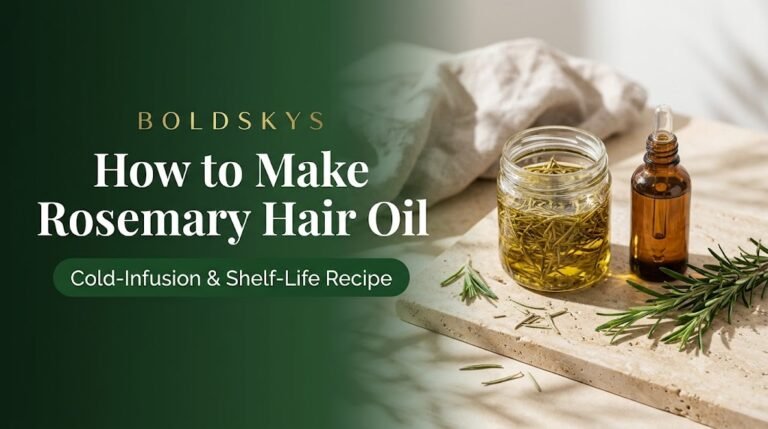
In the expansive realm of holistic haircare and clean botanical DIY, few homemade preparations hold as much demonstrated potency for follicular vitality as properly infused rosemary hair oil (Rosmarinus officinalis). Backed by published dermatology trials comparing botanical extracts directly against standard commercial hair density solutions, rosemary’s fame is well deserved. However, a significant gap exists between laboratory-grade herbal maceration and common home practices.
Quick Summary: How to Make Rosemary Hair Oil at Home
To make rosemary hair oil safely at home: Thoroughly dehydrate fresh rosemary sprigs for 48 to 72 hours until 100% bone-dry; never use water-filled fresh herbs, which cause bacterial contamination and mold. Submerge dried herbs in a cold-pressed carrier oil (like jojoba or pumpkin seed oil) inside a sterilized glass mason jar. Execute a 4-week cold maceration in a dark cupboard without heat, filter through fine cheesecloth, and fortify with 1% Vitamin E oil to guarantee a 6 to 12-month shelf life.
Millions of well-intentioned beauty enthusiasts unknowingly endanger their scalp health by following viral social media tutorials that advocate boiling fresh, water-rich rosemary sprigs in cooking oil on an open stovetop. This destructive method accomplishes two detrimental outcomes: it degrades the heat-sensitive polyphenolic antioxidants responsible for stimulating hair follicles, and introduces unbound water into an anaerobic lipid environment—creating the ideal breeding ground for toxic microbial spores, rancid oxidation, and contact dermatitis.
Reaping the true botanical benefits of rosemary at home requires aligning with traditional herbal compounding: understanding non-thermal cold maceration, guaranteeing strict botanical dehydration, calculating lipid rancidity indices, and stabilizing formulas with botanical antioxidants. This master guide delivers the exact science of cold-infusion, a precision shelf-life calculator, and an evidence-backed clean recipe.
The remarkable efficacy of Rosmarinus officinalis stems from distinct diterpene and polyphenolic molecules documented in medical literature:
Carnosic Acid: The primary bio-active diterpene in rosemary foliage. Published studies confirm carnosic acid supports tissue vitality in cutaneous layers and counters oxidative stress around hair follicles. However, carnosic acid possesses an unstable chemical bond that rapidly breaks down when exposed to temperatures exceeding 140°F (60°C).
Rosmarinic Acid & 1,8-Cineole: Potent antioxidants and terpene carriers that facilitate cuticular absorption. They shield scalp lipids from lipid peroxidation triggered by UV radiation and environmental pollutants.
Thermal Degradation Thresholds: When fresh herbs are simmered in oil on a stove, temperatures exceed 212°F (100°C). This extreme heat hydrolyzes volatile terpenes, scorches plant pigments into bitter carbon sludge, and leaves the oil depleted of active phytochemicals.
The Extraction Principle: True Infusion Demands Patience
Extraction is a mass-transfer phenomenon where plant secondary metabolites migrate across cellular membranes into an external solvent. Cold-pressed carrier lipids act as gentle, non-polar lipophilic solvents. Allowing this exchange to take place passively over 4 weeks preserves 100% of the active molecular structure, matching the principles outlined in our comprehensive guide on how to apply rosemary oil for hair growth.
2. The Thermal Trap: Cold-Infusion vs. Stovetop Boiling
Before gathering your supplies, compare the profound biochemical differences between fast stovetop boiling and disciplined cold maceration:
Compounding Parameter
Stovetop Boiling (Common Social Mistake)
Cold Maceration (Laboratory Standard)
Impact on Hair & Scalp
Operating Temperature
High Heat (200°F to 300°F / 95°C to 150°C)
Ambient Room Temperature (65°F to 75°F / 18°C to 24°C)
High heat degrades polyphenols; cold preserves delicate carnosic acid.
Residual Moisture Level
High (Traps steam and plant juices inside oil)
Zero (Botanicals are 100% pre-dehydrated)
Unbound moisture breeds bacteria and mold; dry herbs guarantee stability.
Pour carrier oil over herbs, fully submerging them beneath 1 inch of oil.
Seal tightly, place in a dark cupboard, and swirl every 2 days for 4 weeks.
Strain through cheesecloth, stir in Vitamin E, and decant into amber dropper bottles.
Usage: Massage 1 dropperful into scalp 3x weekly; leave on 45 mins before washing.
5. Microbiological Safety: Moisture, Mold, and Contamination Prevention
The single greatest hazard in homemade botanical compounding is moisture contamination. Unbound water in an oil matrix is a biological liability:
The Anaerobic Environment: Oil is hydrophobic and seals off oxygen. When fresh plant matter containing water is trapped in an oxygen-deprived environment at room temperature, it creates the precise ecological niche required for anaerobic bacteria and fungal pathogens to proliferate.
Fungal Mycelium Proliferation: Moisture allows ambient mold and yeast spores to proliferate within days. If applied to your hair roots, contaminated oil induces acute microbial folliculitis, severe irritation, and accelerated hair shedding.
The Dehydration Mandate: Never infuse fresh, supple rosemary straight from the grocery store or garden. As validated in published food safety literature indexed on PubMed, complete moisture elimination is required to prevent microbial activity in lipid media. Air-dry your rosemary on clean paper towels in a shaded, ventilated room for 48 to 72 hours until the needles crack cleanly between your fingers with zero pliable bend.
Safety Warning: Never Add Water, Fresh Garlic, or Fresh Aloe
Avoid internet trends that suggest blending fresh aloe vera, fresh garlic, or fresh ginger into oil infusions. Fresh ingredients contain upwards of 90% water content. Without broad-spectrum chemical preservatives (such as Phenoxyethanol), fresh water-oil emulsions spoil within 72 hours, harboring pathogenic microorganisms.
6. Step-by-Step 4-Week Cold-Infusion Protocol
Follow this rigorous 5-stage herbal compounding protocol to ensure maximum extraction potency and total sterile stability:
Wash your fresh organic rosemary in cool filtered water to remove soil residue. Spread the sprigs in a single layer over clean unbleached towels. Allow them to air-dry away from direct sunlight for 3 full days. Sterilize your 16-ounce glass mason jar by boiling it in water for 10 minutes, then ensure the jar is 100% bone-dry before beginning. Even a single water droplet will ruin the batch.
Phase 2: Submersion with Zero Plant Exposure
Strip the brittle, dried rosemary needles from their woody stems. Place the dried needles into your sterile jar until it is approximately 1/2 full. Pour your chosen cold-pressed carrier oil slowly over the herbs. The oil level must rise at least 1 to 1.5 inches above the herbs. Any plant matter exposed to the air space at the top of the jar can oxidize and attract surface mold.
Phase 3: The 4-Week Ambient Maceration Window
Screw the jar lid on tightly. Slip the glass jar inside a dark paper bag or wrap it in opaque cloth to block ambient visible light. Place the jar in a warm, dark cupboard (ideal temperature: 68°F to 75°F). Every 2 to 3 days, pick up the jar and gently swirl it for 30 seconds. This physical movement agitates the solvent boundary layer, driving steady diffusion of carnosic acid into the lipid base.
Phase 4: Multi-Layer Micro-Filtration
At the 4-week mark, place a fine-mesh stainless steel strainer lined with 4 layers of unbleached cheesecloth over a sterile glass measuring bowl. Slowly decant the infused oil through the cloth. Allow gravity to drain the liquid. Gently fold the cheesecloth and press lightly to harvest the remaining infused oil. Never squeeze aggressively, as this forces microscopic plant fibers through the weave, which can cloud the oil.
Stir 1 teaspoon of pure Vitamin E oil (mixed tocopherols) into the strained golden-green infusion. Vitamin E functions as a sacrificial antioxidant, capturing free radicals before they degrade the carrier lipids. Funnel the finished oil into dark amber glass dropper bottles. Dark glass blocks harmful UV wavelengths that trigger photo-oxidation.
7. Interactive In-Kitchen Compounding Checklist
Track Your In-Kitchen Oil Compounding Execution
Check off each phase on your smartphone before setting your infusion to rest:
8. Selecting the Ideal Carrier Base: Jojoba vs. Pumpkin vs. Olive
Your carrier oil is not merely a passive delivery vehicle; its fatty acid profile dictates cellular absorption through the follicular infundibulum:
Carrier Lipid
Fatty Acid Profile
Comedogenic Rating (0-5)
Herbal Synergy with Rosemary
Ideal Hair & Scalp Profile
Golden Jojoba (Simmondsia chinensis)
Eicosenoic acid wax esters (~97%)
2 (Non-comedogenic)
Chemically identical to sebum; dissolves hardened follicular sebum plugs.
Oily, balanced, or buildup-prone scalps; fine strands.
Virgin Pumpkin Seed (Cucurbita pepo)
Linoleic acid, delta-7-sterols
2 (Low comedogenicity)
Rich in phytosterols and fatty acids that nourish miniaturized follicles.
High molecular weight; forms a protective conditioning envelope over cuticles.
Dry, coarse, high-porosity textured curls and waves.
According to dermatological literature in the International Journal of Trichology, plant-based lipid matrices must match cuticular porosity to prevent protein loss. For those managing low-porosity strands or styling buildup, periodic detoxification using our protocol on how to clarify hair ensures maximum absorption of your infused botanical oils.
9. Frequently Asked Questions
Can I use fresh rosemary to make hair oil at home?
Using fresh rosemary containing internal cellular water is extremely hazardous. Water trapped inside an anaerobic oil environment creates the perfect breeding ground for mold, yeast, and anaerobic bacteria. Fresh rosemary will turn cloudy, smell sour, and mold within 5 to 7 days. Always thoroughly dry rosemary until brittle before infusing.
Is boiling rosemary in oil better than cold infusion?
No. While boiling rosemary in oil on a stovetop produces an infused oil in 30 minutes, high thermal stress destroys heat-labile polyphenols—specifically carnosic acid and rosmarinic acid—which are the primary bioactives responsible for hair growth stimulation. Cold infusion takes 4 weeks, but preserves 100% of the active botanical profile.
How long does homemade rosemary hair oil last?
When prepared with completely dried herbs, fortified with 1% Vitamin E oil, and stored in dark amber glass bottles away from sunlight, homemade rosemary oil remains fresh and stable for 6 to 12 months, governed by the natural shelf-life of your chosen carrier lipid.
What is the best carrier oil for making rosemary hair oil?
Cold-pressed Golden Jojoba oil is the gold standard because it is chemically a liquid wax ester identical to human scalp sebum, offering non-comedogenic absorption and exceptional oxidative stability. For genetic thinning, pumpkin seed oil or virgin olive oil provide synergistic fatty acid nourishment.
How often should I apply homemade infused rosemary oil?
Apply 1 to 2 dropperfuls directly to the scalp 3 to 4 times weekly. Massage firmly with fingertips for 5 minutes, leave on for at least 45 minutes (or overnight under a silk bonnet), and wash out thoroughly with a gentle sulfate-free cleanser.
Is homemade rosemary infused oil as strong as pure rosemary essential oil?
No. Commercial rosemary essential oil is produced through steam distillation, creating an ultra-concentrated volatile terpene extract that must be diluted to 1-2%. Homemade infused oil is a whole-herb whole-lipid maceration. It is naturally diluted, gentler on sensitive skin, and safe for direct application without requiring additional base carriers.
Editorial & Medical Disclaimer: The botanical compounding protocols and scientific information published on Boldskys are intended strictly for educational, cosmetic, and informational purposes. This content is backed by peer-reviewed literature but does not constitute personal medical diagnosis or individualized dermatological treatment. Always execute a 24-hour cutaneous patch test before applying new botanicals, and consult a board-certified physician or dermatologist for chronic scalp conditions or acute alopecia.