1. Introduction: The Modern Epidemic of Scalp Stress and Shedding
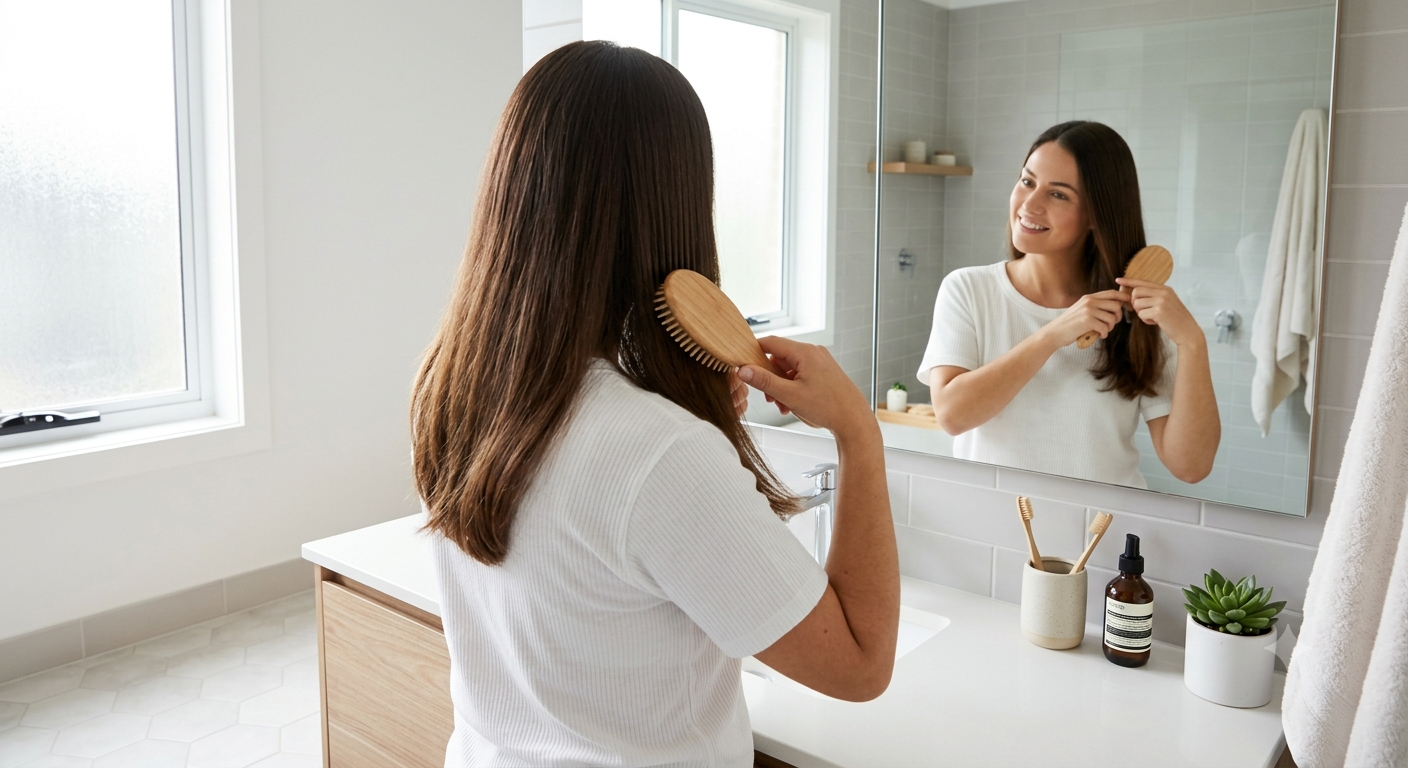
In modern haircare regimens across North America, the United Kingdom, and Europe, excessive hair shedding (telogen effluvium) and chronic scalp pruritus (relentless itching) have reached unprecedented prevalence. While consumers routinely invest in luxury peptide ampoules and commercial bond builders, these high-cost interventions rarely address the root underlying biological pathology: micro-vascular stagnation, elevated local dihydrotestosterone (DHT) accumulation, and chronic oxidative inflammation of the follicular infundibulum. When the scalp environment becomes hostile, hair follicles prematurely abort their active anagen growth phase and regress into catagen involution.
Furthermore, standard over-the-counter anti-shedding shampoos often contain aggressive synthetic sulfates and heavy conditioning agents that coat the scalp with silicone residues. This occlusive buildup destabilizes the acid mantle, suffocates active pores, and exacerbates fungal dysbiosis. To restore equilibrium, holistic dermatologists and aesthetic trichologists are shifting away from petrochemical formulations and returning to an ancient botanical powerhouse: Camellia sinensis, specifically unfermented green tea.
While our green tea facial toner rebalances facial sebum and clears pores, preparing a specialized DIY green tea hair rinse delivers bioavailable polyphenols, natural caffeine, and soothing organic acids directly to your hair roots. This comprehensive guide outlines the scientific blueprint to halt excessive hair shedding, calm irritated scalps, and promote dense, vibrant hair growth.
2. Trichological Biochemistry: How Camellia Sinensis Protects the Hair Matrix
The capacity of unfermented green tea leaves to halt shedding and soothe scalp irritation is grounded in rigorous pharmacological mechanisms:
A. Epigallocatechin Gallate (EGCG) and 5-Alpha Reductase Inhibition
The primary driver of pattern thinning in both men and women is androgenetic alopecia, driven by the enzyme 5-alpha reductase converting systemic testosterone into dihydrotestosterone (DHT). DHT binds to androgen receptors in genetically susceptible dermal papillae, initiating follicular miniaturization. A landmark study published by the National Institutes of Health (NCBI PubMed) revealed that Epigallocatechin Gallate (EGCG)—the preeminent catechin in green tea—actively inhibits 5-alpha reductase activity. Furthermore, EGCG stimulates human hair follicle elongation and prevents apoptosis in dermal papilla cells, keeping follicles firmly anchored in their anagen growth phase.
B. Transfollicular Caffeine and Microvascular Vasodilation
Unfermented green tea naturally contains bioavailable caffeine (1,3,7-Trimethylxanthine). When massaged into the scalp, caffeine penetrates follicular canals within minutes, inhibiting intracellular phosphodiesterase enzymes. This elevates cyclic adenosine monophosphate (cAMP) levels, stimulating cellular metabolism within the hair bulb while promoting nitric-oxide-driven capillary vasodilation. This increased blood flow delivers vital amino acids, zinc, and oxygen directly to sluggish roots.
C. Condensed Tannins and Cuticular Acid Mantle Alignment
Hard chlorinated tap water typically carries an alkaline pH of 7.5 to 8.5, which forces the protective cuticle shingles of hair shafts to swell open and flare outward, creating mechanical friction, tangles, and dullness. Freshly steeped green tea exhibits an ideal acidic pH between 4.8 and 5.2. Paired with natural astringent tannins, a green tea rinse contracts lifted cuticle shingles, locking in cortex moisture and giving hair a smooth, light-reflective shine.
D. L-Theanine and Neurogenic Scalp Pruritus Relief
Scalp itching is often driven by localized neurogenic inflammation, where micro-stressors prompt the release of substance P and histamine. Green tea contains the rare non-protein amino acid L-theanine. Topically, L-theanine calms hypersensitive epidermal nerve endings, mitigating persistent itching without relying on drying pharmaceutical alcohols.
3. Quantitative Phytochemical Inventory of Green Tea Biomass
To understand why pure green tea performs as an all-in-one botanical hair treatment, examine its dense biochemical profile per 100 grams of dry organic leaf material:
Immediate mechanical shedding reduction, color deepening.
High (deposits rich brown pigments).
5. Master Formulation Card: Step-by-Step DIY Green Tea Rinse Recipe
Extracting heat-labile polyphenols requires careful temperature regulation. Steeping green tea in violently boiling water (100°C / 212°F) oxidizes delicate catechins, destroying their antioxidant potency. Adhere strictly to this controlled extraction protocol:
Master DIY Green Tea Scalp & Follicle Rinse
Batch Yield: 500 ml | Prep Time: 15 Mins | Difficulty: Easy
Physiologically Buffered ~pH 4.8
Raw Ingredients & Formulation Tools:
Certified Organic Loose Green Tea: 3 tablespoons (approx. 15 grams). Opt for Japanese Sencha or Chinese Longjing, which boast higher EGCG levels than heavily processed tea bags.
Steam-Distilled or RO Water: 2.5 metric cups (600 ml). Avoid hard tap water; dissolved chlorine, carbonates, and calcium oxidize delicate catechins.
Pure Raw Apple Cider Vinegar (with the Mother): 1 teaspoon (buffers rinse pH to ~4.5, assisting cuticle closure).
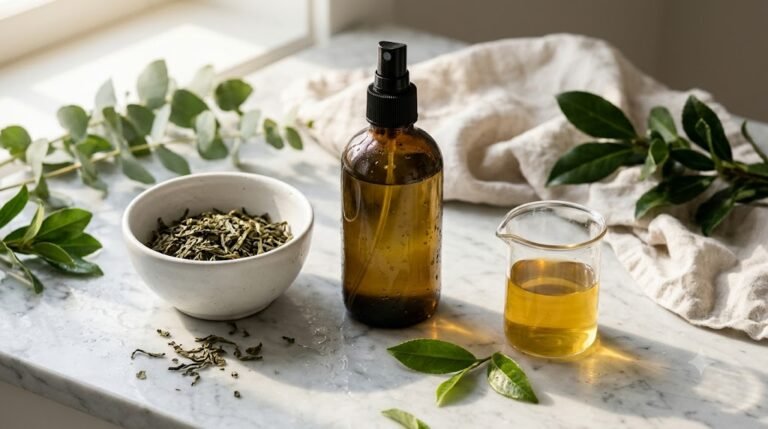
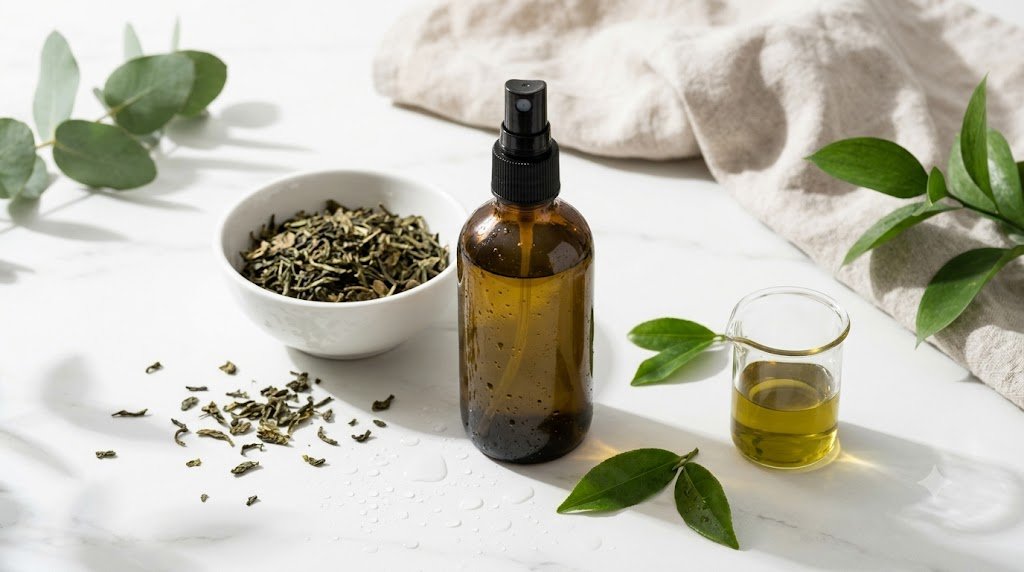
Equipment: Stainless steel saucepan, digital kitchen thermometer, fine mesh strainer, and a 16-ounce amber glass spray bottle.
Step-by-Step Brewing Protocol:
Water Temperature Regulation: Heat distilled water in a stainless steel saucepan until small bubbles form around the base. Remove from heat just before boiling, around 80°C – 85°C (176°F – 185°F). Let rest uncovered for 60 seconds.
Controlled Polyphenol Steeping: Add green tea leaves into the warm water. Cover the pot with a tight-fitting lid to trap volatile aromatic compounds. Steep for exactly 10 to 12 minutes. Avoid steeping past 15 minutes, which pulls heavy tannins that dry the skin.
Precision Straining: Pour the infusion through a sterilized stainless steel mesh strainer into a clean glass pitcher, separating all plant matter.
pH Balancing: Whisk in 1 teaspoon of raw apple cider vinegar and 2 drops of peppermint essential oil into the lukewarm liquid.
Cooling & Decanting: Allow the rinse to cool completely to room temperature (~20°C / 68°F). Funnel into your sanitized amber glass spray bottle and store immediately in the refrigerator.
6. Targeted Rinse Enhancements for Specific Scalp Conditions
Pure green tea infusion is an adaptable base. Tailor your rinse to address specific scalp and fiber challenges with these targeted additions:
A. For Severe Dandruff & Flaking Itch (Malassezia Control)
The Modification: Add 1 drop of Pure Tea Tree Essential Oil and steep 1 tablespoon of dried Rosemary needles alongside the green tea leaves.
The Mechanism: Terpinen-4-ol from tea tree oil disrupts fungal cell membranes, while carnosic acid from rosemary acts synergistically with EGCG to clear flakes and soothe irritation.
B. For Parched, High-Porosity Curls (Moisture Retention)
The Modification: Whisk in 2 tablespoons of pure fresh aloe vera gel and 1/2 teaspoon of vegetable glycerin.
The Mechanism: Acemannan polysaccharides and glycerin bind water molecules directly to the hair shaft, preventing the astringent tannins from drying out fragile curl ends.
C. For Thinning Hair & Diffuse Telogen Shedding
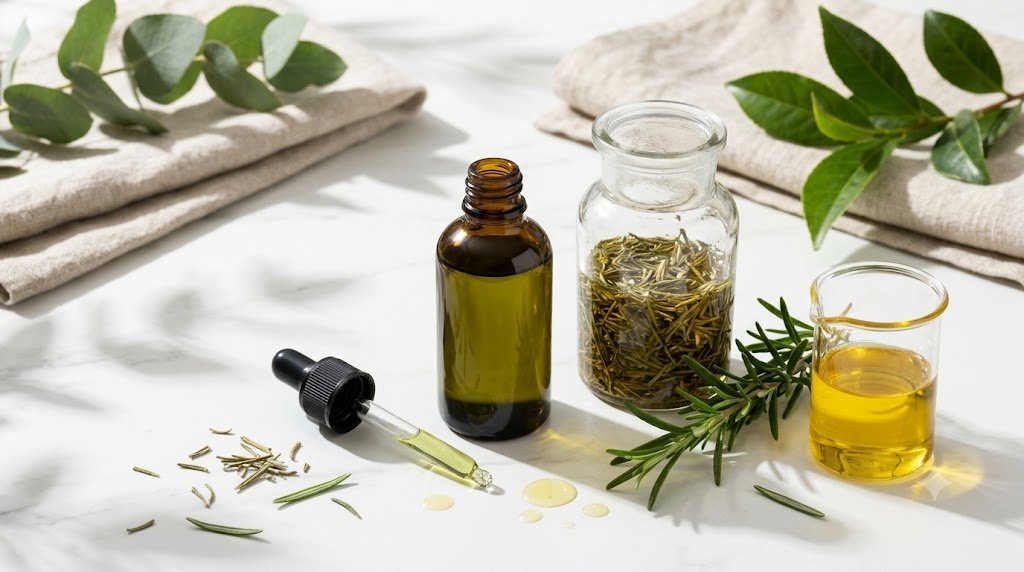
The Modification: Prepare a 50/50 blend using equal parts freshly brewed green tea and our DIY rosemary water spray.
The Mechanism: This combines the 5-alpha reductase inhibiting capacity of green tea catechins with the microvascular stimulatory power of rosemary, creating a potent anti-thinning tonic.
7. Clinical Application Techniques: The Scalp Basin Soak and Leave-In Mist
To maximize polyphenol absorption without drying your ends, execute one of these two salon application techniques:
Technique 1: The Post-Wash Basin Drench (Wash-Day Ritual)
Cleanse and condition your hair normally with gentle, sulfate-free products. Rinse thoroughly with warm water.
Squeeze out excess dripping water. Lean your head back over a clean plastic basin or bathroom sink.
Slowly pour 2 cups of chilled green tea rinse directly across your scalp, letting the liquid cascade down your hair lengths into the basin.
Scoop the collected rinse from the basin and pour it over your scalp a second time to ensure complete saturation.
Massage your scalp with your fingertips for 3 minutes. Do not rinse out with tap water. Gently blot with a microfiber towel and style as usual.
Technique 2: The Daily Anti-Shedding Scalp Mist (Leave-In)
Part dry or slightly damp hair into 4 quadrants.
Hold your amber spray bottle 2 inches away from your scalp. Dispense 2 to 3 targeted mists along each exposed part line.
Massage your scalp gently for 2 minutes to encourage microvascular circulation. Because green tea contains zero heavy lipids or waxes, it absorbs cleanly without leaving roots greasy or stringy.
8. Chemical Stability, Storage Rules, and Oxidation Prevention
Fresh green tea contains active polyphenols without synthetic chemical biocides, making it vulnerable to atmospheric oxidation and microbial spoilage.
Storage Parameters & Shelf-Life Expectations
Room Temperature: 24 hours maximum. Atmospheric oxygen quickly degrades active EGCG, causing the liquid to turn muddy brown.
Refrigerated (4°C / 39°F): 7 to 10 days in a tightly capped amber glass bottle. Dark glass prevents ultraviolet photodegradation of the catechins.
Ice Cube Freezing Method: Up to 90 days. Pour freshly brewed green tea into clean silicone ice cube trays and freeze solid. Melt 2 to 3 cubes before wash day, warm to room temperature, and apply.
9. Contraindications, Sensitivities, and Scalp Patch Testing
Clinical Safety & Scalp Precaution Warnings
While Camellia sinensis is biocompatible and safe for most individuals, botanical applications require sensible precautions:
Extreme Cutaneous Caffeine Reactivity: Individuals with known topical caffeine allergies should perform an extended patch test before applying all over their scalp.
Mandatory 24-Hour Cutaneous Patch Test: Mist a small patch of skin behind your earlobe or on your inner forearm. Let dry and observe for 24 hours. If burning, itching, or erythema develops, do not proceed.
Prevent Tannin Dryness: Never steep green tea past 15 minutes. Over-steeping releases excessive bitter tannins that can make dry hair feel slightly stiff.
10. Frequently Asked Questions (FAQ)
Can I leave green tea in my hair without rinsing it out with tap water?
Yes. Pure brewed green tea is completely water-soluble and non-greasy. Using it as a final leave-in botanical rinse closes the cuticles, soothes the scalp mantle, and deposits polyphenols that remain active throughout the day.
Does green tea darken gray, platinum blonde, or bleached hair?
Green tea contains mild natural tannins that yield a pale golden-olive tone. While not as darkening as black tea or coffee, very porous or bleached platinum hair may develop a faint warm tint with daily use. A quick strand test is recommended.
How does EGCG in green tea stop hair shedding?
Epigallocatechin Gallate (EGCG) acts as a natural 5-alpha reductase inhibitor, lowering local DHT formation around hair roots while suppressing inflammatory cytokines that prematurely push follicles into the telogen shedding phase.
How often should I use a green tea hair rinse?
For active shedding, excessive oiliness, or scalp itching, applying the rinse 2 to 3 times per week on wash days delivers optimal results. For ongoing maintenance, once weekly is sufficient.
11. Editorial Medical Disclaimer & Final Thoughts
Editorial Medical Disclaimer: The botanical and trichological protocols compiled by Boldskys are published strictly for educational and cosmetic enlightenment. They do not constitute formal medical diagnosis, clinical counsel, or prescription dermatological therapies. Always consult a certified dermatologist or trichologist regarding persistent scalp conditions, severe alopecia areata, or chronic hair shedding.
Curbing excessive shedding and soothing an irritated scalp does not require harsh chemical treatments that strip your natural barrier. By harnessing the time-tested polyphenols of a DIY Green Tea Hair Rinse, you provide your hair follicles with bioavailable EGCG, stimulating caffeine, and protective antioxidants.
Brew your first restorative batch this evening, enjoy the soothing scalp massage, and take your next step toward thicker, calmer, and naturally resilient hair.