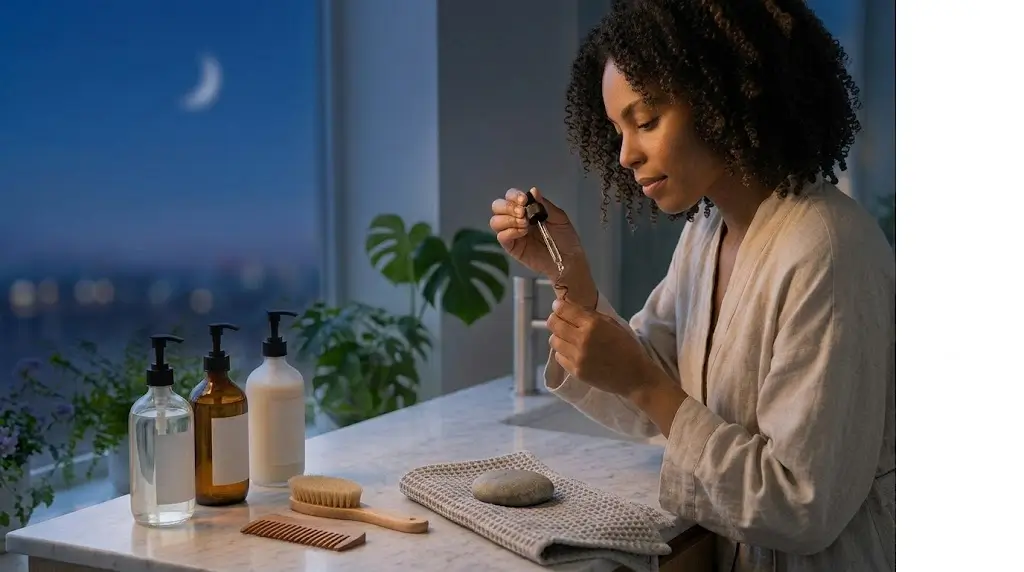
Introduction
Hair Care Routine for Hair Fall is an important part of maintaining healthier-looking hair and reducing unnecessary breakage through consistent daily habits.
Finding more hair on your brush or in the shower can be worrying. Hair shedding is a common concern, and it can happen for many reasons, including daily styling habits, stress, seasonal changes, nutrition, or natural hair growth cycles.
The good news is that a gentle and consistent hair care routine can help reduce unnecessary hair damage and support healthier-looking hair over time. Rather than relying on quick fixes, building healthy daily habits is often the most practical approach.
In this guide, you’ll learn simple morning and evening routines, washing techniques, weekly care habits, and lifestyle tips that can help you care for your hair more effectively.
Table of Contents
⚡ Quick Answer
If you’re experiencing hair fall, focus on a gentle routine:
- Wash your hair with a mild shampoo suitable for your hair type.
- Avoid excessive heat styling.
- Condition the mid-lengths and ends after shampooing.
- Detangle gently with a wide-tooth comb.
- Keep your scalp clean without over-washing.
- Eat a balanced diet and stay hydrated.
- Be patient—healthy hair care is built through consistent habits.
Why Does Hair Fall Happen?
Hair naturally goes through a growth cycle that includes growth, rest, and shedding. Seeing some hair strands fall each day is a normal part of this cycle.
However, excessive hair fall may have different contributing factors, such as:
- Frequent heat styling
- Tight hairstyles
- Harsh chemical treatments
- Stress
- Nutritional deficiencies
- Certain medical conditions
- Hormonal changes
If hair loss is sudden, severe, or accompanied by other symptoms, it’s important to consult a qualified healthcare professional for evaluation.
🌟 Expert Insight
Healthy hair routines focus on protecting the hair and scalp from unnecessary damage. Gentle washing, careful detangling, and minimizing avoidable stress on the hair are habits that often make a meaningful difference over time.
Build a Daily Hair Care Routine
A daily routine doesn’t have to be complicated. The goal is to create habits that are easy to follow consistently.
The sections below will walk you through each step, from morning care to nighttime protection, helping you build a practical routine that fits into everyday life.
🌿 Related Reading
Taking care of overall hair health is the foundation of every successful routine.
Our complete guide brings together daily care habits, washing tips, scalp care advice, and routines for different hair types—all in one place.
👉 Complete Hair Care Guide
🌍 Trusted Resource
For evidence-based information about common hair and scalp concerns, visit the American Academy of Dermatology (AAD).
🌅 Hair Care Routine for Hair Fall: Daily Morning Morning Hair Care Routine
The way you care for your hair in the morning can influence how it looks and feels throughout the day. A gentle routine helps reduce unnecessary stress on both the hair strands and the scalp.
You don’t need an elaborate routine. A few consistent habits can make your hair easier to manage while helping reduce avoidable breakage.
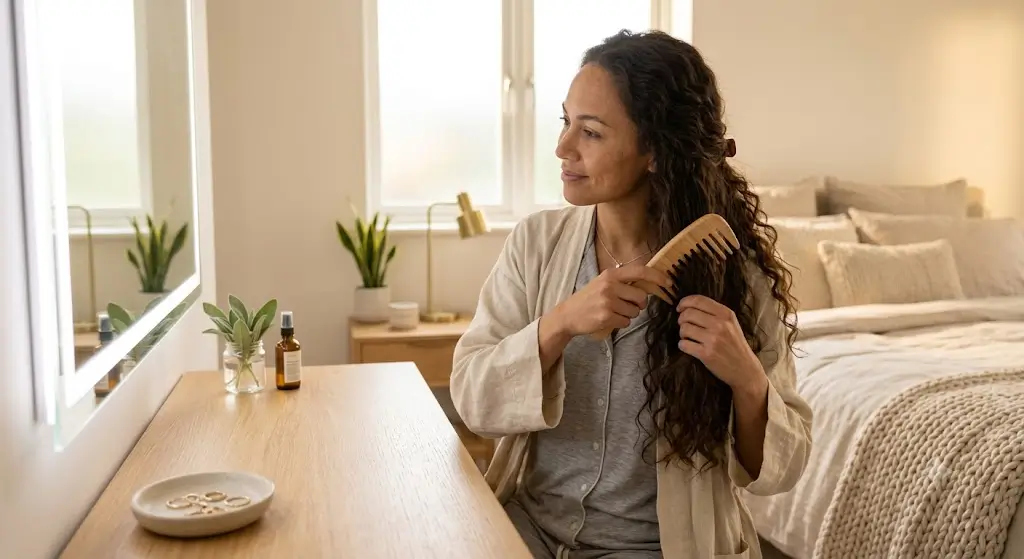
Step 1 – Check Your Hair Before Styling
Before brushing or styling, take a moment to look at your hair.
Ask yourself:
- Does your scalp feel oily or clean?
- Are the ends dry?
- Is your hair tangled?
- Do you plan to use heat styling today?
This quick check helps you choose the right care for the day instead of using the same routine every morning.
🌟 Expert Insight
Hair fall is not always caused by weak hair roots. Everyday habits such as rough brushing, excessive heat, and tight hairstyles can also increase hair breakage.
Building gentle habits is often more effective than constantly changing products.
Step 2 – Detangle Hair Gently
Never pull a brush through tangled hair.
Instead:
- Start from the ends.
- Work upward slowly.
- Use a wide-tooth comb or a brush designed for gentle detangling.
- Hold the hair near the roots while brushing to reduce tension.
This simple habit may help reduce unnecessary breakage.
📊 Table 1 – Best Tools for Gentle Detangling
| Tool | Best For | Benefit |
|---|---|---|
| Wide-Tooth Comb | Wet or damp hair | Helps reduce pulling |
| Soft Paddle Brush | Dry hair | Gentle daily brushing |
| Detangling Brush | Long hair | Easier knot removal |
💡 Quick Tip
Avoid brushing your hair repeatedly throughout the day unless necessary. Excessive brushing can increase friction and contribute to breakage in some people.
Step 3 – Wash Only When Needed
Many people believe that washing hair every day will stop hair fall. However, the ideal washing frequency depends on your hair type, scalp condition, activity level, and personal preferences.
The goal is to keep the scalp clean without over-washing or under-washing.
📌 Signs Your Hair May Need Washing
- Hair looks noticeably oily.
- The scalp feels uncomfortable or itchy.
- Sweat has built up after exercise.
- Styling products have accumulated.
🌿 Related Reading
🧴 Is your scalp becoming oily quickly?
A routine designed for oily hair can help you keep your scalp feeling fresh without unnecessary overwashing.
👉 Hair Care Routine for Oily Hair
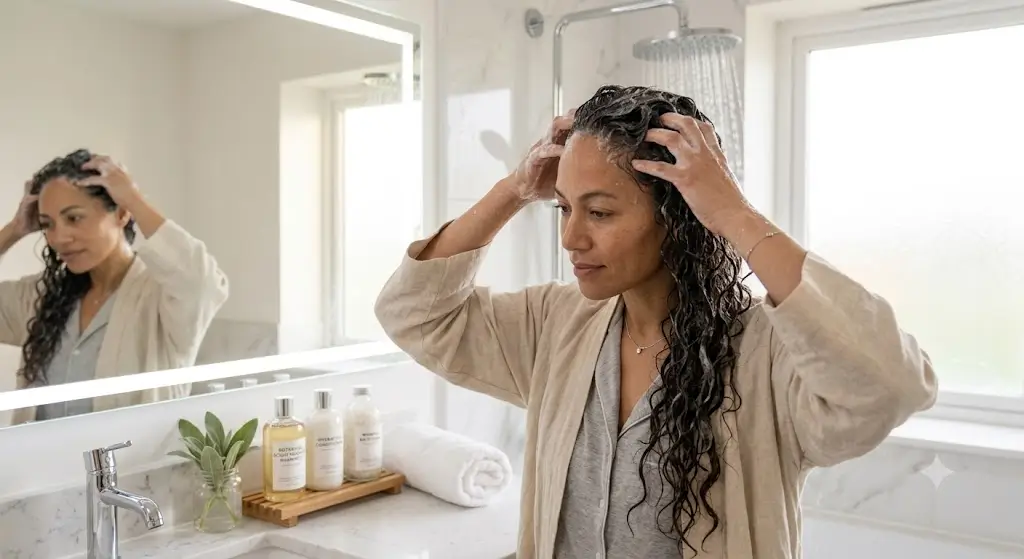
Step 4 – Shampoo the Right Way
When washing your hair:
- Wet your hair thoroughly with lukewarm water.
- Apply a small amount of shampoo to your scalp.
- Massage gently using your fingertips.
- Avoid scratching with your nails.
- Let the lather cleanse the lengths as you rinse.
Using your fingertips instead of your nails helps protect the scalp from unnecessary irritation.
⚠️ Common Shampoo Mistakes
Avoid these habits:
❌ Using very hot water
❌ Scratching the scalp with fingernails
❌ Using too much shampoo
❌ Rubbing wet hair aggressively with a towel
❌ Washing hair more often than necessary for your hair type
🌍 Trusted Resource
The American Academy of Dermatology (AAD) recommends gentle hair care practices and avoiding unnecessary trauma to the hair and scalp.
⭐ Reader Self-Check
Before moving on to your next hair wash, ask yourself:
- ✔ Am I using lukewarm water?
- ✔ Am I massaging my scalp gently?
- ✔ Am I avoiding harsh rubbing?
- ✔ Am I choosing products that suit my hair type?
Small improvements in technique can often make your routine gentler and more consistent.
💧 Conditioner: How and Where to Apply
Many people focus only on shampoo, but conditioner is equally important—especially if you’re dealing with hair fall and breakage.
Conditioner helps improve softness, reduce tangles, and make hair easier to manage. Less tugging during brushing can mean less unnecessary hair breakage.
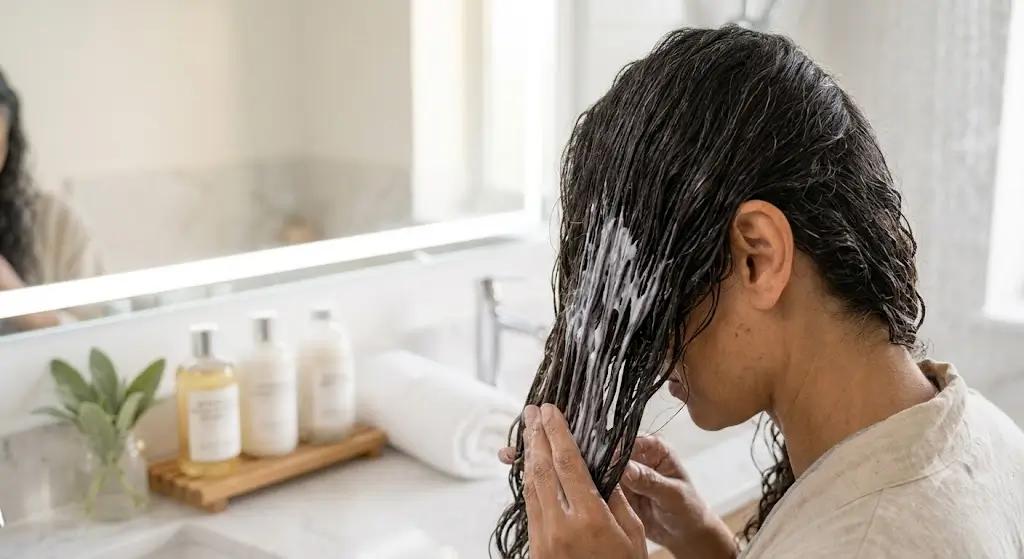
The Correct Way to Apply Conditioner
After shampooing:
- Gently squeeze out excess water.
- Take a moderate amount of conditioner.
- Apply it mainly to the mid-lengths and ends.
- Avoid applying large amounts directly to the scalp unless the product is specifically designed for scalp use.
- Leave it on for the time recommended on the label.
- Rinse thoroughly with lukewarm water.
🌟 Expert Insight
Hair fall and hair breakage are not the same thing.
- Hair fall = hair sheds from the root.
- Hair breakage = the hair strand snaps due to damage, dryness, friction, or heat.
A good conditioner may help reduce breakage, which can make hair appear fuller and healthier over time.
📊 Table 2 – Conditioner Placement Guide
| Hair Area | Apply Conditioner? | Why |
| Scalp | Usually avoid | May feel heavy for some people |
| Roots | Use sparingly | Can reduce volume |
| Mid-lengths | Yes | Helps improve softness |
| Ends | Yes | Often the driest area |
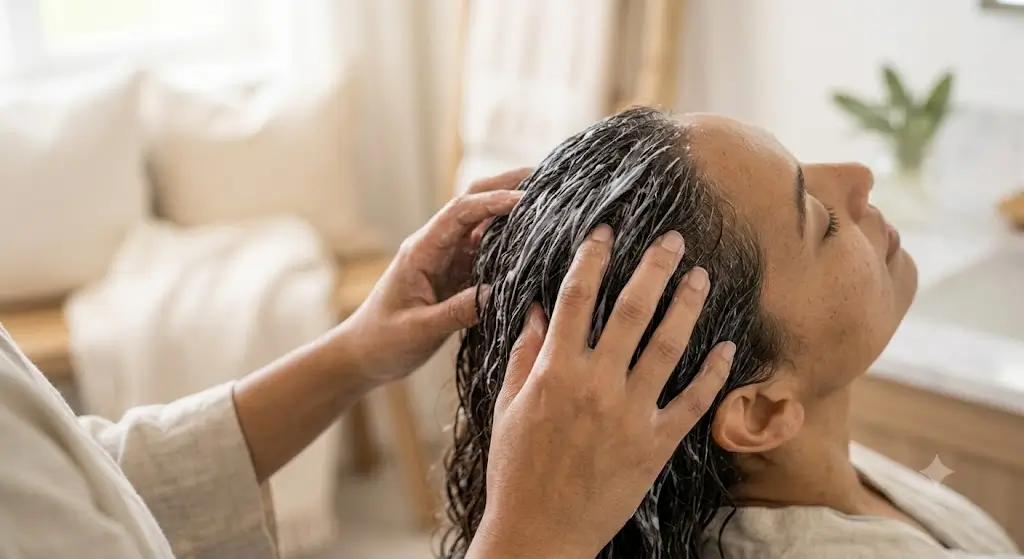
💆 Scalp Massage: A Gentle Daily Habit
A gentle scalp massage can be a relaxing addition to your routine.
How to Do It
- Use clean fingertips.
- Apply light pressure.
- Move in small circular motions.
- Massage for 2–3 minutes.
- Stop if you feel discomfort.
This is a comfort and self-care practice; it should not be treated as a guaranteed treatment for hair loss.
🌿 Related Reading
💆 Want a complete scalp-friendly routine?
Our detailed guide explains morning habits, gentle washing techniques, and daily care practices that support overall hair health.
👉 Morning Hair Care Routine
🌞 Heat Styling and Hair Protection
Excessive heat can increase dryness and make hair more prone to breakage.
If you use a hair dryer, straightener, or curling iron:
- Apply a heat protectant first.
- Use the lowest effective temperature.
- Avoid repeated passes over the same section.
- Allow hair to air-dry partially before blow-drying.

📊 Table 3 – Heat Styling Habits
| Habit | Better Choice |
| Maximum heat | Low or medium heat |
| Daily straightening | Reduce frequency when possible |
| Multiple passes | One gentle pass |
| Styling soaking-wet hair | Towel dry first |
💡 Quick Tip
Try having at least 2–3 heat-free days each week. Many readers find that reducing unnecessary heat makes their hair feel softer and easier to manage.
🧴 Choosing the Right Hair Care Products
When selecting products for hair fall concerns, focus on gentle cleansing and scalp comfort rather than dramatic claims.
Look for products that:
- Suit your hair type (oily, dry, curly, fine, etc.).
- Cleanse without leaving the hair feeling excessively stripped.
- Make your hair easier to detangle.
- Fit into a routine you can follow consistently.
⚠️ Common Product Mistakes
Avoid:
- ❌ Frequently switching shampoos every few days.
- ❌ Using multiple strong treatments at the same time.
- ❌ Applying large amounts of product hoping for faster results.
- ❌ Believing “instant hair growth” claims.
Consistency is usually more important than constantly changing products.
🌍 Trusted Resource
The American Academy of Dermatology (AAD) provides practical guidance on gentle hair care and reducing unnecessary damage from styling and handling.
⭐ Reader Action Box
Start These 3 Habits Today
Before you buy a new product, try these simple habits:
- ✔ Condition the mid-lengths and ends after every wash.
- ✔ Massage your scalp gently for 2–3 minutes.
- ✔ Reduce unnecessary heat styling this week.
Small, consistent changes often have a bigger long-term impact than trying many products at once.
🌙 Evening & Night Hair Care Routine
A healthy hair care routine doesn’t end in the morning. Your evening habits also play an important role in protecting your hair from unnecessary friction and breakage while you sleep.
A few simple nighttime habits can help your hair stay more manageable the next day.
Step 1 – Brush Hair Gently Before Bed
If your hair is tangled after a long day:
- Use a wide-tooth comb or a soft brush.
- Start detangling from the ends.
- Work upward slowly.
- Never pull hard on knots.
Gentle detangling before bed may reduce friction overnight and make morning styling easier.
Step 2 – Sleep on a Clean Pillowcase
Your pillowcase comes into contact with your hair every night.
Keeping it clean can improve overall hair hygiene.
Many people also prefer smooth fabrics, as they may reduce friction compared with rougher materials.
📊 Table 4 – Night Hair Care Checklist
| Habit | Why It Helps |
|---|---|
| Brush gently before bed | Helps reduce tangles |
| Sleep with dry hair | Wet hair is generally more fragile |
| Keep pillowcase clean | Supports scalp hygiene |
| Avoid tight hairstyles | Reduces unnecessary tension |
| Tie long hair loosely | Helps reduce friction while sleeping |
🌟 Expert Insight
Many people focus only on shampoos and treatments.
However, daily habits such as gentle handling, reducing friction, and avoiding excessive tension often have a meaningful impact on keeping hair looking healthy.
🥗 Nutrition and Hair Health
Hair health is influenced by many factors, including overall nutrition.
A balanced eating pattern helps support normal body functions, including healthy hair growth.
Rather than relying on a single “superfood,” aim for a varied diet that includes a range of nutrient-rich foods.

Nutrients Commonly Associated with Healthy Hair
| Nutrient | Food Sources |
|---|---|
| Protein | Eggs, fish, beans, lentils |
| Iron | Spinach, legumes, lean meats |
| Zinc | Pumpkin seeds, nuts |
| Vitamin D | Fortified foods, sunlight (where appropriate) |
| Omega-3 Fats | Salmon, walnuts, flaxseeds |
Note: If you suspect a nutritional deficiency or have persistent hair loss, consult a qualified healthcare professional before taking supplements.
💡 Healthy Lifestyle Habits
Simple daily habits can support your overall hair care routine:
- Stay well hydrated.
- Aim for regular sleep.
- Manage everyday stress where possible.
- Avoid smoking.
- Protect your hair from unnecessary heat and harsh treatments.
Consistency is often more beneficial than frequently changing products.
🌿 Premium Related Reading
────────────────────────────────────────
🌿 Recommended Next Read
Looking after damaged hair can help reduce
breakage and improve overall manageability.
Our complete guide explains simple daily
habits, moisturizing techniques, and
protective care routines.
👉 Read: Hair Care Routine for Damaged Hair
⚠️ Common Daily Mistakes
Avoid these habits if possible:
- ❌ Brushing aggressively.
- ❌ Using excessive heat every day.
- ❌ Skipping conditioner regularly.
- ❌ Wearing very tight hairstyles for long periods.
- ❌ Expecting instant results from new products.
Healthy-looking hair usually develops through consistent care over time.
🌍 Trusted Resource
For practical hair and scalp care guidance, refer to the American Academy of Dermatology (AAD).
⭐ Reader Action Plan
Start This Week
✔ Brush gently morning and night.
✔ Wash your hair according to your hair type.
✔ Use conditioner correctly.
✔ Reduce unnecessary heat styling.
✔ Eat a balanced diet.
✔ Get enough sleep.
Small improvements in daily habits can add up over time.
📅 Weekly Hair Care Planner
Consistency is one of the most important parts of a healthy hair care routine. Instead of changing products frequently, following a simple weekly schedule can help you build long-term habits.
🗓️ Sample Weekly Routine
| Day | Hair Care Task |
|---|---|
| Monday | Gentle shampoo + conditioner |
| Tuesday | Gentle brushing + scalp massage |
| Wednesday | Heat-free styling day |
| Thursday | Regular hair care + hydration |
| Friday | Shampoo (if needed) + conditioner |
| Saturday | Deep conditioning treatment (if suitable) |
| Sunday | Clean brushes, review your routine, prepare for the week |
Tip: Adjust this schedule based on your hair type, activity level, and personal preferences.
❌ Hair Fall Myths vs ✅ Facts
| Myth | Fact |
|---|---|
| Washing hair causes hair fall | Washing removes hairs that were already in the shedding phase. |
| Cutting hair makes it grow faster | Haircuts improve appearance but do not change the growth rate. |
| One product works for everyone | Hair care should be tailored to your hair type and needs. |
| Instant results are normal | Healthy hair care usually requires consistent habits over time. |
⭐ Key Takeaways
- Build a gentle and consistent daily routine.
- Wash according to your hair type rather than a fixed schedule.
- Condition the mid-lengths and ends.
- Avoid unnecessary heat and tight hairstyles.
- Eat a balanced diet and stay hydrated.
- Be patient—healthy-looking hair is usually the result of consistent care.
❓ Frequently Asked Questions (FAQ)
1. How often should I wash my hair if I have hair fall?
There is no single answer. Wash often enough to keep your scalp clean while choosing a routine that suits your hair type and lifestyle.
2. Does brushing hair too much increase hair fall?
Aggressive or excessive brushing may contribute to breakage. Gentle detangling is generally a better approach.
3. Should I avoid conditioner if my hair is falling?
Not necessarily. Applying conditioner mainly to the mid-lengths and ends can improve manageability and help reduce breakage.
4. Can stress affect hair health?
Stress can be associated with increased hair shedding in some people. If you’re concerned about ongoing hair loss, consult a healthcare professional.
5. When should I seek medical advice?
If hair loss is sudden, severe, occurs in patches, or is accompanied by pain, redness, or other symptoms, seek evaluation from a qualified healthcare professional.
🌿 Final Related Reading
────────────────────────────────────────

🌿 Continue Building Your Hair Care Routine

Looking for a complete step-by-step guide
covering different hair types and daily
care routines?

👉 Read:Complete Hair Care Guide

────────────────────────────────────────
Following a Hair Care Routine for Hair Fall consistently can help you build healthier hair care habits over time.
📝 Conclusion
Hair fall can have many contributing factors, and there is rarely a single solution that works for everyone. A gentle, consistent hair care routine—combined with healthy lifestyle habits—can help reduce avoidable damage and support healthier-looking hair over time.
Remember that lasting improvements usually come from daily habits rather than quick fixes. If you notice sudden or significant hair loss, seek advice from a qualified healthcare professional for personalized guidance.