Hair Care Routine for Hair Fall: Where to Start
Noticing more hair than usual on your brush, pillow, or in the shower can feel concerning. But seeing some hair shedding does not automatically mean that something is wrong.
Hair naturally moves through different stages of growth and rest, so some daily shedding is expected. What matters more is noticing whether your usual pattern has changed and whether other signs appear alongside the shedding.
A practical hair care routine for hair fall should not promise an instant solution. Instead, it should focus on gentle handling, sensible washing, careful detangling, reasonable styling habits, and knowing when a change may deserve professional attention.
The goal is to create a routine that is simple enough to maintain and gentle enough to reduce unnecessary pulling, friction, and everyday hair stress.
Table of Contents
Hair Shedding and Hair Breakage Are Not the Same
Before changing your entire hair-care routine, it helps to understand the difference between hair shedding and hair breakage.
Hair Shedding
Hair shedding happens when a complete hair strand naturally comes away from the scalp as part of the hair-growth cycle.
Hair Breakage
Hair breakage happens when a strand breaks somewhere along its length.
These two situations can look similar when you notice loose hair, but they are not necessarily caused by the same factors.
Rough brushing, repeated pulling, tight hairstyles, frequent heat styling, and other forms of mechanical stress can contribute to breakage.
That is why a gentle hair-care approach can still be useful even when you are mainly concerned about increased shedding.
What Should You Notice First?
You do not need to count every strand that falls.
Instead, pay attention to your usual pattern.
Ask yourself:
- Has your normal amount of shedding noticeably changed?
- Are you seeing shorter broken pieces of hair?
- Does your scalp look or feel different?
- Did the change appear suddenly or gradually?
- Are you noticing a clearly defined thinning or bald area?
- Have you recently changed your hair products or styling routine?
- Have you started using more heat or tighter hairstyles?
These observations can help you think more clearly about what you are seeing instead of immediately changing every part of your routine.
A Simple Morning Hair Routine
Your morning routine does not need to be complicated.
A few gentle habits can help make everyday hair care easier.

Step 1 — Check Your Hair Before Brushing
Take a moment to see whether your hair is tangled or compressed from sleeping.
If you have knots, do not immediately pull a brush through them.
Separate the hair into manageable sections and work gradually.
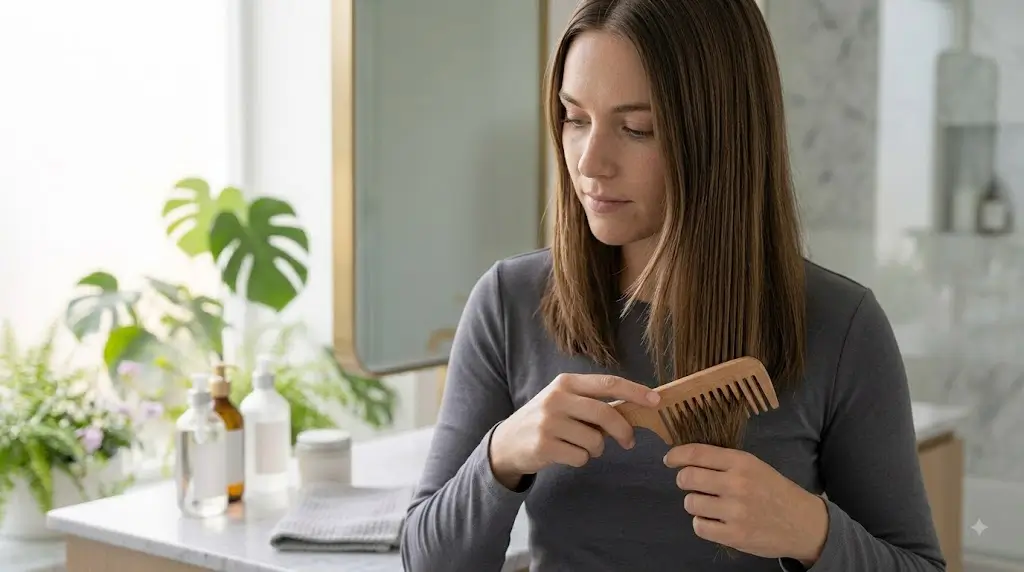
Step 2 — Detangle From the Ends
A simple method is:
Ends → Middle → Roots
Start at the ends and work upward slowly.
If you encounter resistance, stop rather than forcing the brush through the knot.
Step 3 — Avoid Unnecessary Pulling
Be mindful when tying, clipping, or styling your hair.
A comfortable hairstyle with less tension is often a more practical everyday choice than a style that repeatedly pulls at the same areas.
Gentle Hair Handling Matters
One of the easiest ways to improve a hair care routine for hair fall is to look at the small mechanical stresses that happen throughout the day.
Try to avoid:
- Aggressively brushing through knots
- Repeatedly pulling the same section
- Very tight hairstyles
- Rough towel drying
- Excessive manipulation of wet hair
- Repeated high-heat styling when it is unnecessary
Instead:
Handle gently → detangle patiently → reduce unnecessary friction.
This is not a promise that gentle hair care will stop every type of hair loss.
It is simply a sensible approach to everyday hair handling.
Do Not Panic After One Hair-Washing Session
Seeing more loose hair than expected during a shower can be unsettling.
However, one washing or brushing session does not necessarily tell you what is happening over time.
Instead of immediately buying a new product or changing everything, consider:
Observe → simplify → handle gently → monitor the pattern.
If you continue noticing a significant change, or if the change is sudden, persistent, patchy, or otherwise concerning, professional guidance may be more appropriate than relying entirely on cosmetic hair-care products.
When Should You Pay Closer Attention?
Hair shedding can have different causes, and a cosmetic routine cannot identify the underlying reason.
Pay closer attention if you notice:
- Sudden or substantial hair loss
- Clearly defined bald or thinning patches
- Persistent or worsening hair loss
- Significant scalp pain or irritation
- Other unexplained changes
If any of these concerns arise, consider speaking with a qualified healthcare professional.
We will not present shampoo, oil, supplements, hairstyles, or home routines as guaranteed solutions for every form of hair loss.
That distinction is important for our AdSense-safe + reader-safe standard.
PART 1 — KEY TAKEAWAYS
For a gentle approach to hair-fall care:
✔ Observe changes instead of reacting to one day of shedding.
✔ Handle hair gently.
✔ Detangle gradually from ends to roots.
✔ Reduce unnecessary pulling and friction.
✔ Avoid relying on miracle hair-growth claims.
✔ Pay attention to sudden, persistent, or patchy changes.
✔ Seek professional guidance when the situation is concerning.
If you want to build a stronger foundation for your everyday routine, our Complete Hair Care Guide covers practical habits for caring for your hair and scalp.
A Gentle Hair-Washing Routine
Washing your hair is an important part of everyday care, but more aggressive cleansing is not necessarily better.
Your ideal washing routine can depend on your scalp, hair texture, activity level, styling habits, climate, and personal preference.
The goal is simple:
Clean the scalp effectively → avoid unnecessary friction → keep the routine comfortable and consistent.

Step 1 — Wet Your Hair Thoroughly
Before applying shampoo, make sure your scalp and hair are thoroughly wet.
This can help the shampoo spread more evenly and may reduce the temptation to use excessive amounts of product.
There is no need to rush this step.
Step 2 — Cleanse the Scalp Gently
Apply an appropriate amount of shampoo and use your fingertips to massage the scalp gently.
Avoid aggressively scratching with your nails.
A comfortable massage is enough. You do not need to scrub harder simply because you are concerned about hair shedding.
Step 3 — Rinse Thoroughly
Rinse the shampoo thoroughly rather than leaving unnecessary residue behind.
Pay attention to areas where product tends to collect, while continuing to avoid rough handling.
Step 4 — Choose a Comfortable Water Temperature
Very hot water can leave some people’s scalp or hair feeling dry or uncomfortable.
A practical approach is to use lukewarm water and avoid excessively hot showers.
You do not need an extreme temperature routine.
Comfortable + gentle + consistent is the goal.
Step 5 — Conditioner Still Matters
Conditioner can help improve softness, manageability, and ease of detangling.

If your hair is prone to tangling or feels dry through the lengths, appropriate conditioning may make everyday handling easier.
You do not necessarily need a large amount.
A simple approach is to apply conditioner according to the product directions, with particular attention to the mid-lengths and ends when those areas need more conditioning.
Conditioner Placement Guide
| Hair Area | General Approach |
|---|---|
| Scalp | Use sparingly unless the product is designed for scalp use |
| Roots | Keep lightweight if flatness is a concern |
| Mid-lengths | Apply as needed |
| Ends | Often benefit most from conditioning |
Your own hair type and the product instructions should guide the final choice.
Step 6 — Detangle Without Pulling
Detangling is an important part of gentle hair care.
Instead of starting at the roots, begin at the ends.
Try this method:
Ends → Middle → Roots
- Separate the hair into smaller sections if needed.
- Remove loose knots at the ends.
- Gradually work upward.
- Hold the hair gently near the roots if you encounter resistance.
- Never force a comb or brush through a stubborn knot.
Taking your time can make detangling more comfortable and reduce unnecessary pulling.
If dryness is also making your hair difficult to manage, our Hair Care Routine for Dry Hair guide covers practical ways to build a gentler daily routine.
QUICK READER TIP
What If Your Hair Gets Tangled Easily?
Before buying another product, try changing how you detangle.
A suitable wide-tooth comb or detangling brush may make the process easier, and working in smaller sections can give you better control.
Gentle technique first. More products second.
Step 7 — Dry Your Hair Gently
Wet hair requires thoughtful handling.
After washing:
- Do not aggressively rub your hair with a towel.
- Gently squeeze out excess water.
- Pat or wrap your hair softly.
- Allow it to dry naturally when practical.
- Avoid pulling wet hair tightly into a hairstyle.
You do not need to make drying complicated.
The main idea is to reduce unnecessary friction and pulling while your hair is wet.
Step 8 — Do Not Overreact to Hair in the Shower
It can be tempting to become alarmed when you notice loose strands during washing.
But seeing hair in the shower does not automatically tell you why it is happening or whether your overall hair loss has changed significantly.
Try to look at the broader pattern rather than one washing session.
If the change appears sudden, persistent, patchy, substantial, or otherwise concerning, consider professional guidance rather than relying only on cosmetic hair-care changes.
A Simple Wash-Day Flow
If you prefer a quick reference, use this:
Wet thoroughly
↓
Cleanse the scalp gently
↓
Rinse well
↓
Condition appropriately
↓
Detangle from ends upward
↓
Remove excess water gently
↓
Dry without aggressive rubbing
This keeps your hair care routine for hair fall simple, practical, and easier to maintain.
Give Your Scalp a Simple, Consistent Routine
A healthy-looking hair-care routine does not need to involve a long list of scalp products.
The first step is understanding what your scalp actually needs.
For some people, the scalp may feel oily quickly. Others may experience dryness or sensitivity. Your routine should therefore be based on your individual needs rather than copying someone else’s routine exactly.
A practical approach is to keep scalp care simple:
- Cleanse appropriately
- Avoid unnecessary scratching
- Pay attention to persistent discomfort
- Choose products that suit your scalp
- Avoid constantly changing products without a clear reason
Consistency is usually more useful than creating an unnecessarily complicated routine.
Avoid Scratching or Aggressive Scalp Massage
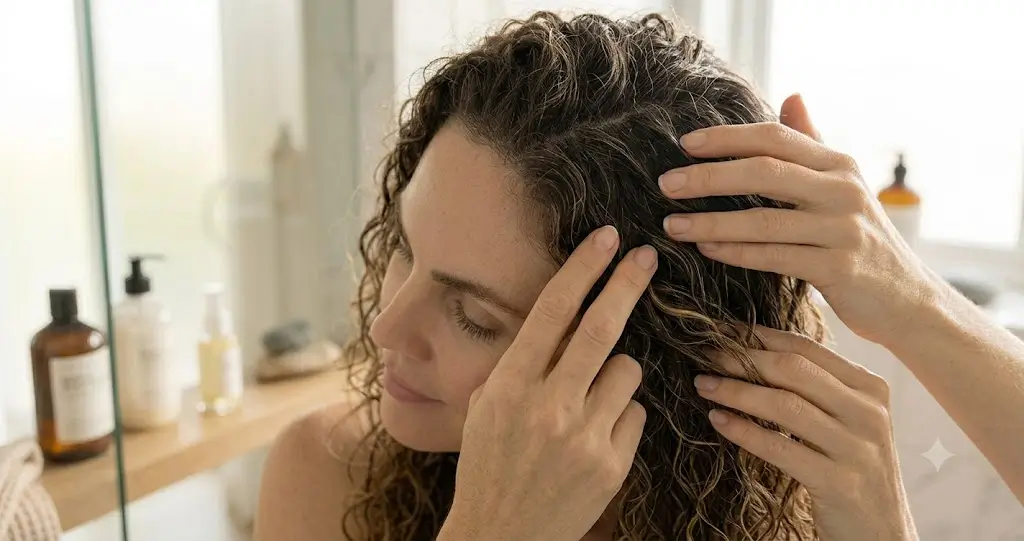
A scalp massage can feel relaxing, but there is no need to use excessive pressure.
If you massage your scalp, use your fingertips gently rather than scratching with your nails.
Avoid vigorous rubbing if your scalp already feels irritated or uncomfortable.
The goal of everyday hair care is not to create more mechanical stress.
Gentle is enough.
Heat Styling: Use It Thoughtfully
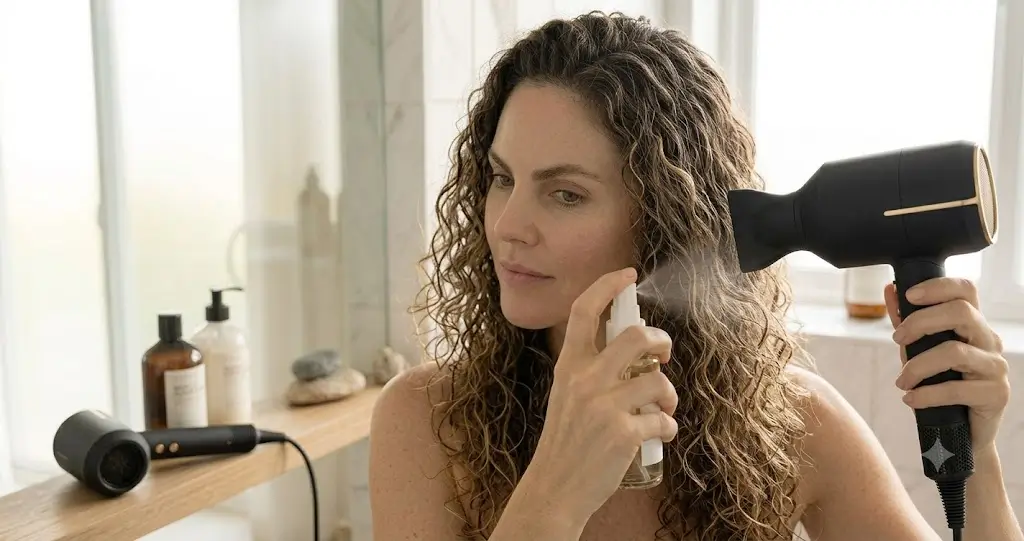
Hair dryers, straighteners, curling tools, and other heated styling devices can be useful when used carefully.
However, frequent high-heat styling can add stress to the hair shaft and may contribute to dryness or breakage.
If you regularly use heat:
Keep These Habits in Mind
- Use the lowest practical heat setting.
- Avoid holding a hot tool on the same section for too long.
- Allow hair to dry partially before using additional heat when appropriate.
- Use heat-protective products according to their directions.
- Avoid repeatedly restyling the same section.
You do not necessarily have to stop heat styling completely.
The more practical goal is less unnecessary heat and more controlled styling.
Tight Hairstyles Deserve Attention
A hairstyle can look great while still creating repeated tension on the hair.
If you frequently wear tightly pulled ponytails, buns, braids, or similar styles, consider alternating them with looser options when practical.
Pay attention to how your scalp feels.
If a hairstyle causes noticeable pulling, discomfort, tenderness, or repeated tension, it may be worth changing the way it is worn.
A Simple Rule
If your hairstyle hurts, pulls, or feels excessively tight, loosen it.
Comfort should not be sacrificed simply for appearance.
Choose Hair Products for Your Actual Needs
Hair-care shelves can be overwhelming.
Shampoos, conditioners, masks, oils, serums, sprays, treatments, and styling products all make different claims.
You do not need to use all of them.
Instead, ask:
- What does my hair actually need?
- Is my scalp comfortable with this product?
- Does the product make my hair easier to manage?
- Am I using it because I need it, or because I saw a trend online?
- Am I changing products too frequently?
A simple routine with products you tolerate well can be easier to maintain than a crowded shelf of constantly changing products.
Be Careful With Hair-Fall Product Claims
When people become concerned about shedding, it is easy to look for products that promise dramatic results.
Be cautious with claims such as:
- “Stops hair fall instantly”
- “Guaranteed new hair growth”
- “Permanent results”
- “Works for everyone”
- “No medical evaluation needed”
Hair loss can have different causes, so one cosmetic product cannot reasonably be presented as a universal answer.
A reader-first hair care routine for hair fall should focus on realistic expectations rather than exaggerated promises.
Hair Oils and Home Remedies: Keep Expectations Realistic
Hair oils and home-care practices are popular in many routines.
Some people may enjoy them because they can make hair feel softer, smoother, or easier to manage.
But feeling that your hair is softer does not necessarily mean that the underlying cause of hair loss has been addressed.
If you use an oil or home-care product:
- Use it because it suits your routine.
- Follow reasonable product practices.
- Stop if it causes irritation or discomfort.
- Avoid assuming that a cosmetic effect proves a medical benefit.
Most importantly, do not delay appropriate professional care because a home remedy is marketed as a complete solution.
A Simple Heat-and-Styling Checklist
Before styling your hair, ask:
Is this necessary today?
Can I use less heat?
Can I make the hairstyle looser?
Am I pulling the hair unnecessarily?
Would a simpler style reduce repeated manipulation?
These small questions can help you build a more sustainable everyday routine without completely giving up the hairstyles you enjoy.
QUICK READER TIP
Think “Less Stress,” Not “No Styling”
You do not have to eliminate every styling product or heated tool.
Instead, look for opportunities to reduce repeated stress:
Lower heat → less pulling → fewer unnecessary passes → gentler handling.
A realistic routine is more likely to become a long-term habit than an extreme routine that is difficult to maintain.
If you often struggle with frizz while trying to keep your hair manageable, our Hair Care Routine for Frizzy Hair guide offers practical everyday care ideas.
Build a Simple Night Hair Routine
Your hair-care routine does not stop when the day ends.
A few simple habits before bed can help reduce unnecessary pulling and friction while you sleep.
You do not need a complicated nighttime routine.
Instead, focus on making your hair comfortable and easy to manage.
Step 1 — Gently Detangle Before Bed
If your hair has become tangled during the day, gently work through the knots before sleeping.
Start at the ends and gradually move upward.
Avoid repeatedly brushing the same section simply to make it perfectly smooth.
The goal is to remove unnecessary tangles without creating additional pulling.
Step 2 — Avoid Sleeping With Very Tight Hairstyles
A tightly secured ponytail, bun, or braid may create unnecessary tension if worn for long periods.
If you prefer tying your hair at night, consider a comfortable, looser style.
The right choice can depend on your hair length, texture, and sleeping habits.
The important principle is simple:
Comfortable hair → less unnecessary tension.
Step 3 — Give Your Hair a Break From Constant Styling
If your hair is styled tightly or manipulated throughout the day, nighttime can be a good opportunity to leave it in a simpler state.
You do not need to keep your hair perfectly styled around the clock.
A low-manipulation nighttime routine can make everyday hair care easier and more sustainable.
For a more complete bedtime routine, explore our Night Hair Care Routine guide for practical tips on preparing your hair before sleep.
Your Everyday Hairstyle Can Make a Difference
Hairstyles are an important part of personal style, but repeated tension is worth paying attention to.
If you regularly wear your hair tightly pulled back, consider alternating between styles when practical.
For example:
Tight style → looser style → hair down → low-tension style
This does not mean that you need to stop wearing the hairstyles you enjoy.
Instead, avoid creating the same tension in the same areas every day whenever possible.
Common Hair-Care Mistakes to Avoid
Sometimes improving a hair care routine for hair fall is less about adding another product and more about removing unnecessary habits.
Mistake 1 — Brushing Too Aggressively
Brushing quickly through knots can create unnecessary pulling.
Better approach:
Detangle smaller sections and start from the ends.
Mistake 2 — Using Excessive Heat
Repeated high-heat styling can increase dryness and contribute to breakage.
Better approach:
Use lower practical settings and avoid unnecessary repeated passes.
Mistake 3 — Wearing Very Tight Hairstyles Every Day
Repeated tension can make a hairstyle uncomfortable and may place stress on the same areas.
Better approach:
Rotate between comfortable, lower-tension styles when practical.
Mistake 4 — Changing Products Too Often
Trying a new product every few days can make it difficult to understand what actually works for your hair.
Better approach:
Keep your routine simple and make changes one at a time.
Mistake 5 — Chasing Every Hair-Growth Trend
Social media can make new hair-care techniques and products appear irresistible.
But popularity does not automatically mean that something is suitable for everyone.
Better approach:
Ask whether the advice is realistic, appropriate for your needs, and supported by trustworthy information.
Mistake 6 — Treating Every Hair Concern as the Same
Hair shedding, breakage, dryness, scalp irritation, and visible thinning are not necessarily the same problem.
Trying to solve every concern with the same product can lead to frustration.
Instead, identify what you are actually noticing before changing your entire routine.
A Low-Maintenance Hair Routine Can Still Be Effective
You do not need ten products and a complicated schedule to care for your hair thoughtfully.
A simple routine might look like this:
Morning
Gentle detangling → simple styling → avoid unnecessary pulling
Wash Day
Cleanse → condition → detangle carefully → dry gently
Evening
Check for tangles → loosen tight styles → reduce unnecessary manipulation
Weekly
Review what is working → notice changes → simplify anything unnecessary
This type of routine can be easier to maintain because it fits into everyday life rather than requiring a major lifestyle change.
💡 QUICK READER TIP
Take Photos Instead of Checking Your Hair Every Hour
If you are genuinely concerned about a change in hair density, repeatedly checking your hair throughout the day can make the situation feel more stressful.
If appropriate, consider taking occasional photos under similar lighting and from similar angles.
This can make it easier to notice broader changes over time rather than reacting to every individual strand.
If you notice a clear, persistent, or concerning change, professional assessment is more useful than relying entirely on photographs or cosmetic products.
When to Simplify Your Routine
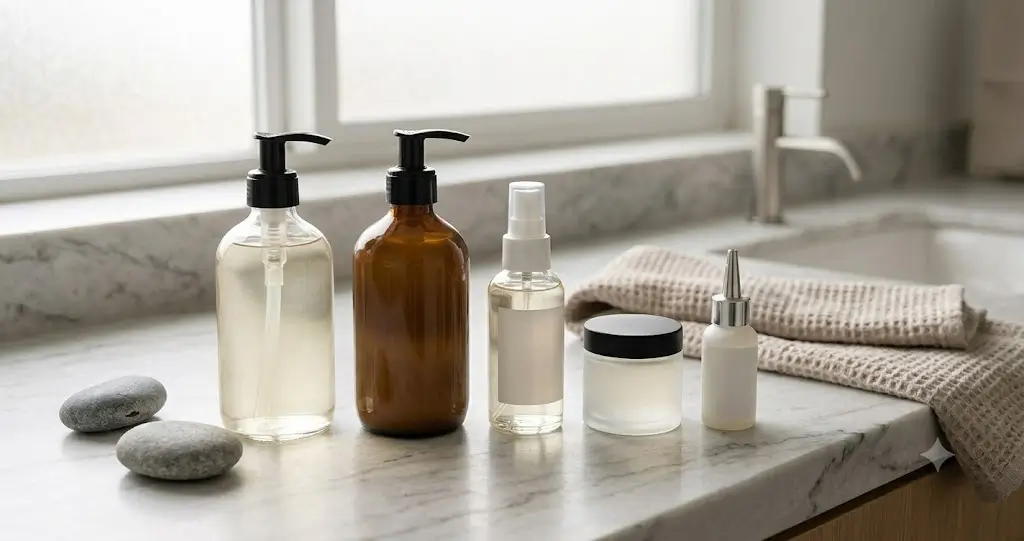
If your bathroom shelf is full of shampoos, oils, masks, serums, and treatments, it may be time to step back.
Ask:
What do I actually need?
A useful hair-care routine should be:
- Comfortable
- Practical
- Easy to maintain
- Appropriate for your hair and scalp
- Flexible enough for your lifestyle
More products do not automatically mean better hair care.
Sometimes, a simpler routine is easier to follow consistently.
🔗 For a broader look at everyday habits that may make hair care less effective, explore our Common Hair Care Mistakes guide.
What to Remember About Hair-Fall Care
A good hair care routine for hair fall does not need to be complicated.
The most useful approach is usually to understand what has changed, handle your hair gently, and build habits that you can maintain consistently.
Focus on:
- Gentle washing
- Appropriate conditioning
- Careful detangling
- Less unnecessary heat
- Comfortable, low-tension hairstyles
- Simple morning and night routines
- A balanced lifestyle
- Realistic expectations
- Paying attention to persistent or concerning changes
Most importantly, do not judge your overall hair health based on one shower, one brushing session, or one day of shedding.
A Simple Routine to Save
If you prefer a quick reference, use this:
🌅 Morning
Check for tangles → Detangle gently → Choose a comfortable style → Avoid unnecessary pulling
🚿 Wash Day
Wet thoroughly → Cleanse gently → Condition appropriately → Detangle carefully → Dry gently
☀️ During the Day
Minimize unnecessary heat → Avoid excessive pulling → Keep styling practical
🌙 Night
Detangle if necessary → Loosen tight styles → Reduce unnecessary friction
📅 Weekly
Review your routine → Clean brushes and combs → Notice changes in your scalp and hair
This is a flexible framework, not a fixed medical schedule.
Your washing frequency, products, and styling habits should depend on your hair, scalp, lifestyle, and personal needs.
📅 Your Simple Weekly Hair-Care Planner
| Day | Suggested Focus |
|---|---|
| Monday | Gentle wash + conditioner if needed |
| Tuesday | Gentle detangling + low-tension styling |
| Wednesday | Scalp and hair check |
| Thursday | Minimize unnecessary heat styling |
| Friday | Wash according to your scalp needs |
| Saturday | Gentle detangling + simple styling |
| Sunday | Clean brushes and review your routine |
Important: This is not a medical prescription or fixed schedule.
The best routine is the one that fits your scalp, hair type, lifestyle, and personal needs.
❓ Frequently Asked Questions
1. What is a good hair care routine for hair fall?
A practical routine can include gentle cleansing, appropriate conditioning, careful detangling, reduced unnecessary heat, comfortable hairstyles, and consistent everyday care.
However, the right routine depends on your hair and scalp, and cosmetic care cannot address every possible cause of hair loss.
2. How often should I wash my hair when I am experiencing hair fall?
There is no single washing schedule that works for everyone.
Your preferred frequency can depend on your scalp, hair type, activity level, styling habits, and personal comfort.
The goal is to keep the scalp clean and comfortable without unnecessarily irritating or drying it.
3. Can conditioner be used when you have hair fall?
Conditioner can improve softness and manageability, which may make detangling easier.
Use an appropriate amount according to the product directions, particularly on the mid-lengths and ends when those areas need conditioning.
4. Should I brush my hair less if I notice more shedding?
You do not necessarily need to stop brushing.
Instead, focus on gentle detangling.
Start at the ends, work upward gradually, and avoid forcing a brush or comb through stubborn knots.
5. Does heat styling cause hair fall?
Heat styling and hair shedding are not necessarily the same issue.
Frequent or excessive heat can contribute to hair-shaft dryness and damage, which may increase breakage.
If you use heated tools, use them thoughtfully and avoid unnecessary high heat.
6. Are tight hairstyles bad for hair?
Repeatedly wearing very tight hairstyles can create unnecessary tension.
If a hairstyle causes pulling, discomfort, tenderness, or noticeable breakage, consider switching to a looser, more comfortable style.
7. Can hair oil stop hair fall?
Hair oils may be useful as part of a cosmetic routine for some people, such as helping hair feel softer or easier to manage.
However, you should not assume that an oil will address every underlying cause of hair loss or guarantee new hair growth.
8. Should I take hair-growth supplements if I am losing hair?
Do not automatically start supplements based only on online advice.
Hair loss can have different causes, and supplementation is not appropriate for everyone.
If you suspect a nutritional deficiency or have persistent hair loss, consider discussing it with a qualified healthcare professional.
9. When should I seek professional advice for hair loss?
Consider professional guidance if you notice sudden or substantial hair loss, clearly defined bald or thinning patches, persistent scalp pain or irritation, ongoing worsening, or other unexplained changes.
A cosmetic hair-care routine is not designed to diagnose the underlying cause.
10. Can a simple hair-care routine improve the appearance of my hair?
A consistent routine can help you manage your hair more gently and may improve its softness, manageability, and overall appearance.
But the result depends on your hair type, condition, styling habits, and the reason for any hair loss.
Avoid expecting instant or guaranteed transformation from cosmetic products or routines.
🩺 When to Get Professional Advice
A cosmetic hair care routine for hair fall is not designed to diagnose or treat medical causes of hair loss.
Consider speaking with a qualified healthcare professional if you notice:
- Sudden or substantial hair loss
- Clearly defined bald or thinning patches
- Persistent scalp pain
- Significant redness or irritation
- Ongoing or worsening shedding
- Other unexplained symptoms
Do not assume that every change in hair density is caused by shampoo, conditioner, styling, or hair products.
Getting an appropriate assessment can be more useful than repeatedly changing products.
Recommended source types
- American Academy of Dermatology (AAD)
- NHS (National Health Service)
- MedlinePlus / U.S. National Library of Medicine

🌿 Final Takeaway
Building a hair care routine for hair fall is about consistency rather than perfection.
Gentle washing, appropriate conditioning, careful detangling, sensible heat use, comfortable hairstyles, and simple daily habits can make your routine easier to maintain.
Most importantly, hair shedding can have different causes, and cosmetic hair care cannot address every one of them.
If you notice a sudden, persistent, worsening, or clearly patchy change, consider seeking professional advice rather than relying entirely on home remedies or cosmetic products.
Keep the routine gentle. Keep expectations realistic. And pay attention to meaningful changes over time.