
INTRODUCTION
How Often Should You Wash Your Hair?
There is no single hair-washing schedule that works for everyone.
Some people find that their scalp becomes oily quickly and needs frequent washing, while others can go longer between washes without their hair feeling greasy or uncomfortable. Your hair type, scalp condition, lifestyle, and how quickly your hair becomes oily or dirty can all influence how often you need to wash it.
That is why the question is not simply, “How many times a week should I wash my hair?”
A better question is:
“How often does my scalp and hair actually need washing?”
Dermatologists recommend adjusting your washing routine according to your hair type and how often your scalp becomes dirty or oily. For example, people with straight hair and an oily scalp may need more frequent shampooing, while people with dry, curly, textured, or thick hair may need to shampoo less often.
The goal is not to wash your hair as often as possible or to avoid shampooing for as long as possible. Instead, it is to find a practical routine that keeps your scalp clean while helping your hair remain comfortable, manageable, and healthy-looking.
In this guide, we will look at the factors that can affect hair-washing frequency, how different hair types may respond to washing, and simple ways to build a routine that fits your individual needs.
If you are still building a routine around your individual hair needs, our guide on How to Build a Simple Hair Care Routine That Fits Your Hair Type can help you put these habits together.
Table of Contents
Why Hair Washing Frequency Is Not the Same for Everyone
Hair-washing habits can vary significantly from person to person.
Two people can use similar products but need completely different washing schedules. One person may notice an oily scalp within a day, while another may find that their hair remains comfortable for several days between washes.
This difference does not necessarily mean that one person has a better routine than the other.
Your Scalp Matters
Your scalp produces natural oils called sebum. The amount of oil your scalp produces can affect how quickly your hair looks or feels greasy.
If your scalp becomes oily quickly, you may prefer more frequent shampooing. If your scalp and hair tend to feel dry, washing too frequently may leave the lengths feeling even drier.
The American Academy of Dermatology recommends washing based on how often your hair becomes dirty or oily rather than following one universal schedule.
Your Hair Type Matters Too
Hair texture can also influence your routine.
Straight hair may allow scalp oil to travel more easily along the hair shaft, making oiliness more noticeable. Curly, coily, thick, or textured hair can have different moisture needs and may require a different approach to washing and conditioning.
This is why a hair-washing routine should be personal rather than copied from someone else.
Your Lifestyle Can Change Your Routine
Your everyday activities can also affect how often your hair needs washing.
For example, you may need to adjust your routine when you:
- Exercise or sweat frequently
- Spend time in hot or humid conditions
- Swim regularly
- Use several styling products
- Wear hats or head coverings for long periods
- Notice more oil or product buildup than usual
Instead of treating your washing schedule as a strict rule, think of it as something you can adjust when your hair or scalp needs change.
How Often to Wash Different Hair Types
Your hair type can influence how often you feel comfortable washing your hair, but there is no universal schedule that works for every person.
The same washing frequency may feel perfectly comfortable for one person and leave another person’s hair feeling oily, dry, or difficult to manage. Instead of following a fixed number of washes, pay attention to how your scalp and hair respond.
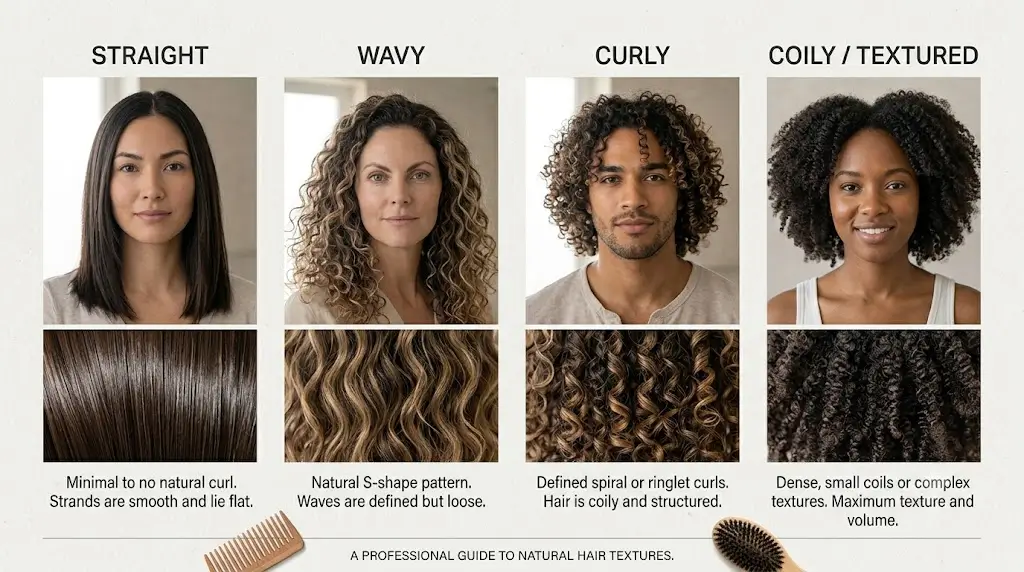
Straight Hair
Straight hair can sometimes show scalp oil more quickly because natural oils can travel down the hair shaft relatively easily.
If your scalp becomes oily soon after washing, you may prefer a more frequent washing routine. If your scalp remains comfortable and your hair does not look or feel greasy, you may not need to wash as often.
The important point is to respond to your scalp rather than washing simply because a particular schedule is popular online.
Wavy Hair
Wavy hair can fall somewhere between straight and curly hair when it comes to washing needs.
Frequent washing may not be necessary if the scalp remains comfortable and the hair does not become noticeably oily or weighed down. At the same time, sweat, styling products, or environmental exposure can make a wash feel useful sooner.
A gentle routine that cleans the scalp without making the lengths feel unnecessarily dry can be a practical starting point.
Curly Hair
Curly hair often needs a more individual approach because its texture and shape can affect how natural oils move through the hair.
Rather than focusing only on the number of days between washes, consider how your scalp feels and how your curls respond to cleansing and conditioning.
If the scalp feels oily or buildup becomes noticeable, washing may be appropriate. If the scalp remains comfortable and the hair is behaving well, you may prefer a longer interval.
For more curl-specific routine ideas, readers can also explore our Hair Care Routine for Curly Hair guide.
For more texture-specific guidance, you can also explore our Hair Care Routine for Curly Hair.
Coily or Very Textured Hair
Coily and very textured hair can have different moisture and handling needs from straighter hair types.
A routine that works well for straight hair may not be appropriate for highly textured hair. Gentle cleansing, suitable conditioning, and careful handling can all be important parts of maintaining manageable hair.
The goal is not to avoid washing. It is to find a cleansing frequency that works for your scalp while fitting the needs of your hair.
How Often Should You Wash an Oily Scalp?
If your scalp becomes oily quickly, you may naturally need to wash your hair more often than someone with a drier scalp.
Signs that your scalp may be ready for washing can include:
- Noticeable oiliness at the roots
- Hair that looks greasy or weighed down
- Sweat after exercise or outdoor activity
- A feeling of product buildup
- A scalp that feels less fresh than usual
If your scalp tends to become oily quickly, our guide to a Hair Care Routine for Oily Hair provides more focused everyday care ideas.
Rather than deciding that you must wash every specific number of days, use these signs as practical clues.
The American Academy of Dermatology notes that people with an oily scalp may need to shampoo more frequently, while washing frequency can be lower for people with dry, curly, or textured hair.
A Simple Approach for Oily Hair
If your scalp becomes oily quickly:
- Focus shampoo mainly on the scalp.
- Use a gentle technique rather than vigorous scrubbing.
- Rinse thoroughly.
- Condition the lengths and ends according to your hair’s needs.
- Adjust the frequency if your scalp becomes uncomfortable or your hair feels excessively dry.
This approach keeps the focus on scalp cleanliness without unnecessarily overworking the hair lengths.
What About Dry or Easily Dried-Out Hair?
Dry-feeling hair may need a different approach from an oily scalp.
If your hair feels rough, brittle, or unusually dry after frequent washing, consider whether your routine can be simplified or adjusted.
That does not automatically mean that you should stop washing your hair.
Instead, consider:
- How frequently you actually need shampoo
- Whether your shampoo feels too drying
- Whether you are applying shampoo mainly to the scalp
- Whether you are conditioning the lengths adequately
- Whether frequent heat styling or chemical processing is contributing to dryness
If your main concern is dry hair rather than scalp oiliness, our Hair Care Routine for Dry Hair guide can provide more focused routine ideas.
If dry-feeling hair is your main concern, our Hair Care Routine for Dry Hair guide explores additional practical care habits.
Don’t Confuse Dry Hair With a Dry Scalp
This distinction is useful.
Dry hair describes how the hair strands feel or behave.
Dry scalp refers to the skin of the scalp feeling dry or uncomfortable.
They can occur together, but they are not exactly the same concern.
That is another reason why your hair-washing routine should be based on what you are actually experiencing rather than a generic schedule.
How to Tell When Your Hair Needs Washing
Instead of following a strict washing calendar, it can be more helpful to notice changes in your scalp and hair.
Your routine may need adjusting when you notice:
- Your scalp becoming noticeably oily
- Sweat or dirt building up after exercise or outdoor activities
- Hair looking greasy or weighed down at the roots
- Styling products accumulating on the hair
- Your scalp feeling less fresh or comfortable
- Your usual hairstyle becoming difficult to manage because of buildup
These signs do not necessarily mean that you need to wash your hair immediately every time. They are simply useful clues that can help you decide whether your current routine is working well.
On the other hand, if your hair repeatedly feels excessively dry, rough, or difficult to manage after washing, your routine may need to be gentler or less frequent.
Think About Your Scalp First
When deciding whether it is time to wash, pay particular attention to your scalp rather than only the ends of your hair.
The scalp is where oil, sweat, dead skin cells, and styling-product residue can accumulate. Your hair lengths may have different needs, especially if they are dry, curly, chemically treated, or prone to breakage.
This is why a balanced routine often means cleaning the scalp carefully while treating the lengths more gently.
Hair-washing habits are only one part of scalp care; Protecting Exposed Scalp Skin from Direct Sunlight is another practical consideration for outdoor days.
How to Shampoo Without Over-Drying Your Hair
The way you shampoo can matter just as much as how often you wash.
A simple technique can help you keep your routine focused on the scalp while reducing unnecessary handling of the hair lengths.
1. Wet Your Hair Thoroughly
Before applying shampoo, make sure your hair and scalp are thoroughly wet.
This helps the shampoo spread more easily and can make it easier to cleanse without using excessive product.
2. Concentrate Shampoo on the Scalp
Apply shampoo mainly to the scalp and roots, rather than aggressively working it through every inch of the hair.
As you rinse, the shampoo and water can travel through the lengths.
3. Massage Gently
Use your fingertips and a gentle massaging motion.
Avoid aggressively scratching or scrubbing the scalp with your fingernails.
A hair-washing routine should leave your scalp feeling clean—not unnecessarily irritated.
4. Rinse Thoroughly
Take enough time to rinse the shampoo away.
Any remaining product should be thoroughly washed out rather than left sitting on the scalp.
5. Condition According to Your Hair’s Needs
Conditioner can be particularly useful for the lengths and ends, especially when those areas feel dry or become tangled easily.
The exact amount and placement can depend on your hair type, length, and texture.

What About Dry Shampoo?
Dry shampoo can be convenient when you want to refresh the appearance of your hair between regular washes.
It can help absorb some oil and make hair look less greasy temporarily.
However, dry shampoo should not automatically replace your normal scalp-cleansing routine.
If you use dry shampoo frequently, pay attention to how your scalp and hair respond. If buildup becomes noticeable or your scalp feels uncomfortable, your normal washing routine may be more appropriate.
Think of dry shampoo as a between-wash convenience, rather than a complete replacement for washing.
Can Washing Your Hair Too Often Cause Problems?
Washing frequency needs to be personalised.
For someone with an oily scalp, frequent washing may be useful. For someone with dry, curly, coily, or textured hair, washing too frequently may make it more difficult to maintain comfortable-looking hair.
If your hair repeatedly feels:
- Very dry after washing
- Rough or difficult to manage
- More tangled than usual
- Uncomfortable after your routine
it may be worth reviewing your shampoo, washing technique, conditioning routine, and overall frequency.
The answer is not necessarily to stop washing.
Instead, consider whether your current routine is appropriate for your scalp and hair type.
What If You Do Not Wash Often Enough?
Washing less frequently is not automatically better either.
If your scalp becomes noticeably oily, sweaty, dirty, or affected by product buildup, going longer between washes may leave you feeling uncomfortable.
A useful routine should balance two things:
Scalp cleanliness
and
Hair comfort and manageability
Your ideal washing frequency is therefore the one that fits your individual needs—not someone else’s schedule.

A Simple Hair-Washing Routine
Once you understand your scalp and hair needs, building a washing routine becomes much easier.
Instead of following a complicated schedule, start with a few practical steps and adjust them according to how your hair responds.
Step 1: Check Your Scalp
Before washing, consider whether your scalp feels oily, sweaty, dirty, or affected by product buildup.
If it still feels comfortable and your hair looks manageable, you may not need to wash simply because a certain number of days has passed.
Step 2: Choose a Suitable Shampoo
Choose a shampoo that fits your scalp and hair needs.
If your scalp becomes oily quickly, you may prefer a cleansing routine that keeps up with that oil production. If your hair is dry, curly, coily, or textured, you may prefer an approach that places greater emphasis on preserving moisture and reducing unnecessary handling.
Step 3: Cleanse the Scalp Gently
Wet your hair thoroughly and apply shampoo mainly to the scalp.
Use your fingertips rather than your fingernails and avoid aggressive scrubbing.
The American Academy of Dermatology recommends focusing shampoo on the scalp rather than washing the entire length of the hair aggressively.
Step 4: Rinse Thoroughly
Rinse the shampoo carefully so that product is not unnecessarily left on the scalp or hair.
Step 5: Condition Where Needed
Apply conditioner according to your hair’s needs, particularly to areas that tend to feel dry or become tangled.
Step 6: Handle Hair Gently After Washing
Avoid rough towel rubbing, aggressive brushing, or unnecessary pulling.
Give your hair a gentler transition from washing to styling.
When to Talk With a Dermatologist
A hair-washing routine can help with everyday hair maintenance, but it is not a treatment for every scalp or hair concern.
Consider professional advice if you experience persistent or significant hair loss, ongoing scalp discomfort, sores, severe itching, marked scaling, or other unusual changes.
It can also be sensible to seek professional assessment if you are unsure whether a scalp or hair problem is related to your routine, a product, or another underlying issue.
Avoid repeatedly changing products in an attempt to diagnose a persistent problem yourself.
A dermatologist or other qualified healthcare professional can assess the concern more appropriately.
For broader everyday scalp-care habits, our Healthy Scalp Care Guide offers additional practical guidance
Master — Important Safety Rule
We are not saying that a particular washing frequency will treat a medical condition.
This article is about everyday hair-washing habits.
That distinction keeps our content:
Reader-safe + trustworthy + AdSense-friendly + medically responsible.
FREQUENTLY ASKED QUESTIONS
How often should you wash your hair?
There is no universal schedule. Your ideal frequency can depend on scalp oiliness, hair type, lifestyle, activity level, and how your hair responds to washing.
How often should you wash oily hair?
If your scalp becomes oily quickly, you may need to wash more frequently than someone with a dry scalp. Pay attention to oiliness, sweat, buildup, and overall scalp comfort.
How often should you wash dry hair?
Dry-feeling hair may be more comfortable with a less frequent washing routine, but there is no fixed schedule that applies to everyone. Consider your scalp needs as well as the condition of your hair lengths.
Should curly hair be washed every day?
Not necessarily. Curly hair can have different moisture and handling needs, so washing frequency should be based on your scalp and how your curls respond rather than a universal daily rule.
Should shampoo be applied to the whole length of the hair?
Shampoo is generally best concentrated on the scalp and roots rather than aggressively scrubbing the entire hair length. The rinse can help carry the cleanser through the lengths. American Academy of Dermatology Association.
Is washing your hair every day bad?
Not automatically. Some people may need frequent washing because their scalp becomes oily quickly, while others may prefer less frequent washing. Your scalp and hair type should guide your routine.
Can dry shampoo replace regular hair washing?
Dry shampoo can temporarily absorb oil and refresh the appearance of hair, but it should not automatically be treated as a complete replacement for normal scalp cleansing.
What is the best hair-washing routine?
The best routine is one that keeps your scalp appropriately clean while fitting your hair type, lifestyle, and comfort. It does not have to follow a fixed schedule used by someone else.
Final Takeaway
How often should you wash your hair?
The most useful answer is:
As often as your scalp and hair actually need—not according to a universal number.
If your scalp becomes oily quickly, you may need more frequent cleansing. If your hair is dry, curly, coily, or textured, you may prefer a different approach.
Pay attention to:
Scalp oiliness → Hair texture → Activity → Product buildup → Hair condition → Comfort
Then build a routine around those signals.
Conclusion
Hair washing does not need to become a complicated calculation.
Start by understanding your scalp and hair type. Cleanse according to your needs, focus shampoo primarily on the scalp, condition where appropriate, and handle your hair gently after washing.
Most importantly, avoid comparing your routine with someone else’s.
A routine that works for oily, straight hair may not work for dry, curly hair—and that is completely normal.
The goal is not to wash your hair more or less than everyone else. The goal is to find a practical washing routine that works well for you.