Listen to the pH neutralization rinse steps, safe oils that do not feed yeast, and 48-hour recovery protocol.
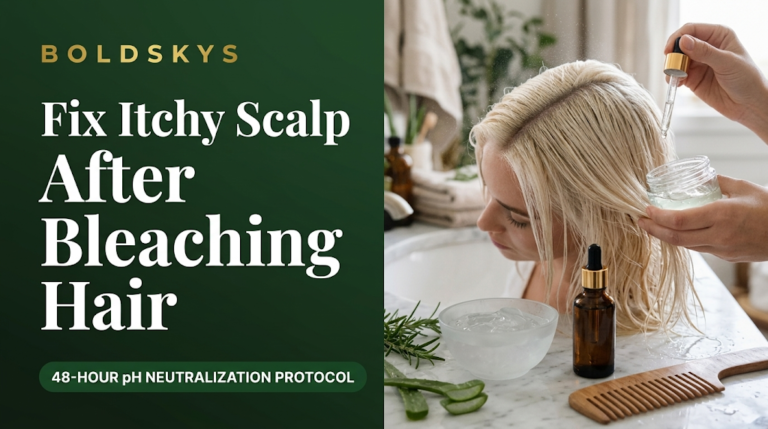
Achieving a bright platinum blonde or lifted balayage at home frequently comes with an agonizing side effect that begins anywhere from two hours to three days after rinsing out the lightener: an intense, maddeningly itchy, tight, and flaking scalp. Unlike everyday dandruff caused by fungal overgrowth, post-bleach scalp pruritus is an acute biochemical injury triggered by high-pH persulfate salts stripping away the scalp’s protective lipid barrier.
When your scalp burns, tingles, or sheds dry white scales after bleaching, reaching for anti-dandruff shampoos, tea tree oil, or heavy coconut masks will severely aggravate the inflamed skin. Resolving post-bleach scalp irritation requires clinical trichological triage: neutralizing lingering alkalis, restoring the epidermal acid mantle, and sealing exposed nerve endings with non-comedogenic biomimetic lipids.
Quick Summary: How to Fix Itchy Scalp After Bleaching Hair Fast
To stop scalp itching after bleaching immediately: Flush the scalp with cool water for 5 minutes, then pour a diluted acidic pH reset rinse (2 tablespoons of raw apple cider vinegar mixed into 2 cups of cool distilled water) across scalp partings to neutralize trapped bleach alkalis (pH 10.5+). Follow with pure, alcohol-free aloe vera gel or 5% panthenol serum on damp skin, and seal with 4 to 5 drops of 100% plant-derived squalane oil. Avoid scratching, hot water, heavy coconut oil, and oxidative toners for 10 to 14 days.
Many home colorists assume that because they washed out their bleach thoroughly, the chemical reaction has stopped. In reality, microscopic persulfate crystals and alkaline developers lodge inside follicular openings, raising the scalp’s surface pH for days and inducing low-grade chemical contact dermatitis. Simultaneously, as the damaged upper stratum corneum dries out, dead keratinocytes lift and peel, pulling on sensitive hair follicles and triggering relentless histamine itching.
This master guide breaks down the exact dermatological pathology of post-bleach scalp pruritus, includes our interactive severity calculator, and delivers a safe 5-stage home recovery protocol.
1. Scalp Biochemistry: How Alkaline Persulfates Shatter the Acid Mantle
To understand why your scalp feels tight, itchy, and flaky after lightener application, one must examine the physiology of the scalp epidermis:
Destruction of the pH 5.5 Acid Mantle: Healthy scalp skin maintains a delicate acidic hydrolipidic film hovering between pH 4.5 and 5.5. This acidic environment keeps beneficial skin flora balanced and holds corneocyte skin cells tightly sealed. Commercial hair bleaches formulated with ammonium or potassium persulfate and hydrogen peroxide operate at an extreme alkaline pH between 10.5 and 11.5.
Saponification of Sebaceous Lipids: When high-pH bleach contacts the scalp, it chemically saponifies (turns into soap) your natural protective sebum and washes away intercellular ceramides and cholesterol. Without this lipid mortar, transepidermal water loss (TEWL) accelerates dramatically, leaving scalp skin parched, tight, and cracked.
Histamine Release & Desquamation: As published in clinical dermatology evaluations indexed on PubMed, alkaline chemical trauma stimulates mast cells in the papillary dermis to release histamine, creating an intense itch-scratch cycle. Two to four days later, the injured outer layer of dead skin cells sheds rapidly in large dry flakes—a process known as post-inflammatory desquamation.
“Post-bleach scalp flaking is not fungal dandruff—it is chemical sunburn peeling. Treating it with harsh dandruff shampoos is like pouring salt on a wound.”
2. Visualizing Scalp Recovery: Alkaline Erythema vs. Restored pH 5.5
Epidermal Barrier & Follicle Calm: Drag Slider to Compare
Slide left and right to inspect scalp tissue recovery before and after 48 hours of pH neutralization and lipid sealing:
Before: Alkaline Contact Irritation
Stripped acid mantle (pH 8.5+), inflamed red follicular openings, tight peeling scales, and intense histamine itching.
After: Restored Acid Mantle (pH 5.2)
Calmed ivory-pink scalp tone, sealed intercellular lipids, hydrated non-flaking surface, and zero neurogenic itching.
Select your current scalp symptoms and bleach application details to calculate your safe recovery timeline and exact treatment regimen:
4. The 5-Stage Clinical Scalp Neutralization & Soothing Protocol
Follow this exact 5-step dermatological sequence to extinguish post-bleach itching and rebuild your scalp barrier without damaging your freshly lightened hair color:
Phase 1: Cool Water Flush ➔ Phase 2: Acidic pH Reset ➔ Phase 3: Aloe/Panthenol Quench ➔ Phase 4: Squalane Lipid Seal ➔ Phase 5: 10-Day Chemical Rest
Phase 1: The 5-Minute Cool Water Persulfate Flush
Step into the shower and adjust the water temperature to cool or lukewarm—never hot. Hot water causes vasodilation, flooding the irritated scalp with blood and triggering an immediate surge in histamine itching. Allow cool water to run steadily over your scalp for 5 full minutes to dissolve and flush away microscopic persulfate salt residues trapped inside follicular pores.
As long as you do not have open, bleeding, or weeping blisters, your scalp urgently needs an acidic reset to counteract the pH 11 bleach. Mix 2 tablespoons of raw, unfiltered apple cider vinegar into 2 cups of cool distilled water. Pour this mixture slowly over your scalp partings, massage gently with flat finger pads for 60 seconds, and rinse lightly with cool water. This immediately lowers surface pH, compacts flared skin corneocytes, and calms alkaline stinging.
Phase 3: Chilled Aloe Vera & Panthenol Humectant Quenching
While your scalp is still clean and slightly damp, part your hair into 1-inch sections and apply chilled, 100% pure alcohol-free Aloe Barbadensis leaf juice or a fragrance-free 5% Panthenol (Pro-Vitamin B5) scalp serum. Aloe vera contains bradykinase enzymes and acemannan polysaccharides that cool inflamed nerve endings on contact, while panthenol binds moisture within the epidermis.
Phase 4: Biomimetic Squalane Lipid Sealing
Humectants like aloe vera evaporate quickly if left unsealed, leaving the scalp tight again within an hour. Dispense 4 to 5 drops of 100% sugarcane-derived squalane oil onto your fingertips and press gently onto the dry, itchy patches of your scalp. Because squalane is bio-identical to human sebum and completely saturated, it stops transepidermal water loss instantly without feeling heavy or greasy.
Phase 5: The 10-Day Zero-Scratch & Chemical Moratorium
Do not scratch flaking skin with your fingernails—sub-ungual bacteria transfer easily into micro-fissures, leading to painful scalp folliculitis. Avoid all hot blow-drying directly at the roots, and postpone any oxidative hair toners until your scalp has been completely itch-free and intact for at least 10 to 14 days.
5. Trichological Myth vs. Fact: Coconut Oil, Tea Tree & Anti-Dandruff Shampoos
Tap each card below on your mobile screen to flip and reveal the peer-reviewed dermatological truth:
MYTH: Use Head & Shoulders for Flakes
“Post-bleach peeling is dandruff, so anti-dandruff shampoo will cure it.”
(Tap to Reveal Truth)
FACT: Harsh Surfactants Worsen Burns
Anti-dandruff shampoos contain strong sulfates, menthol, and zinc pyrithione designed for fungal yeast—not chemical burns. They will severely sting and dry out damaged skin.
MYTH: Apply Tea Tree Oil for Itching
“Tea tree essential oil naturally stops scalp itching fast.”
(Tap to Reveal Truth)
FACT: Causes Severe Contact Allergies
Essential oils contain volatile terpenes (like limonene and cineole) that trigger acute allergic contact dermatitis when applied to an already compromised, barrier-stripped scalp.
MYTH: Soak Scalp in Olive or Coconut Oil
“Heavy kitchen oils deeply moisturize a dry, bleached scalp.”
(Tap to Reveal Truth)
FACT: Feeds Yeast & Disrupts Lipids
Olive oil is rich in oleic acid, which increases skin permeability and irritation. Both coconut and olive oils are metabolized by scalp yeast, triggering secondary itching.
“Never apply essential oils like peppermint or tea tree to a freshly bleached scalp. Compromised skin barriers absorb volatile terpenes directly into nerve endings.”
6. Clinical Ingredient Matrix: Safe Soothers vs. High-Risk Irritants
When your scalp barrier is compromised by alkaline lighteners, ingredient selection makes the difference between 48-hour relief and two weeks of misery. Reference this dermatological compatibility table:
Topical Ingredient
Biochemical Classification
Effect on Post-Bleach Scalp
Clinical Verdict
100% Sugarcane Squalane
Saturated Biomimetic Hydrocarbon
Seals transepidermal water loss; 0% yeast growth; non-stinging.
Gold Standard Safe: Ideal lipid barrier sealant.
Panthenol (Pro-Vitamin B5)
Soothing Humectant & Epithelializer
Accelerates keratinocyte repair and calms neurogenic itching.
Highly Recommended: Apply daily on damp scalp.
Pure Alcohol-Free Aloe Vera
Polysaccharide Botanical Gel
Cools thermal erythema and hydrates without heavy residue.
Safe & Effective: Ensure zero added fragrance/alcohol.
Peppermint / Tea Tree / Rosemary EO
Volatile Essential Oil Terpenes
Penetrates broken stratum corneum; induces severe chemical stinging.
Strictly Avoid: Wait 14 days until barrier heals.
Sodium Lauryl Sulfate (SLS)
Anionic Detergent Surfactant
Strips remaining scalp lipids; exacerbates peeling and redness.
Strictly Avoid: Switch to sulfate-free cream washes.
Once your scalp barrier has fully healed after 14 days and all flaking has stopped, you can safely resume healthy hair growth and color maintenance routines. Explore our gentle, cold-pressed scalp nourishment protocols in our guide on how to make rosemary water for hair growth at home, or if your bleached hair strands feel overly elastic, follow our emergency gummy bleached hair repair protocol.
Step 1: Cool Flush: Rinse scalp with cool water for 5 full minutes (strictly zero hot water).
Step 2: pH Reset: Pour 2 tbsp Apple Cider Vinegar diluted in 2 cups cool distilled water over scalp; rinse lightly.
Step 3: Quench: Apply chilled, alcohol-free 100% Aloe Vera gel or 5% Panthenol serum along partings.
Step 4: Seal: Press 4 to 5 drops of 100% plant squalane oil gently onto dry, itchy areas.
Step 5: Protect: No scratching, no heavy coconut/olive oil, no heat styling, and no peroxide toners for 14 days.
8. The Boldskys Scalp & Color Recovery Silo (Master Internal Link Hub)
Master Post-Bleach Recovery Matrix: Track Your Scalp & Hair Health
Healing both your scalp skin and bleached hair fibers requires coordinated care across our dermatological and trichological pillars. Track your recovery steps below:
9. Frequently Asked Questions
Why is my scalp so itchy and peeling days after bleaching my hair?
Post-bleach itching and peeling occur because alkaline persulfate bleach (pH 10.5 to 11.5) dissolves the scalp’s protective acid mantle and strips intercellular stratum corneum lipids. This causes severe transepidermal water loss (TEWL) and triggers mild irritant contact dermatitis. As the damaged upper skin layer sheds 2 to 4 days later, dry flaking and histamine itching peak.
Can I put coconut oil or olive oil on an itchy scalp after bleaching?
No, avoid heavy culinary oils like coconut or olive oil on an inflamed post-bleach scalp. Olive oil is high in oleic acid, which disrupts skin barrier lipids further and feeds Malassezia yeast, worsening itching and dandruff. Instead, use 100% pure plant squalane or chilled aloe vera gel, which soothe inflammation without clogging follicles.
How long does scalp irritation last after bleaching hair?
Mild alkaline dryness and itching typically resolve within 3 to 5 days when treated with a pH-balancing acidic rinse and soothing humectants. Moderate chemical scalp burns with crusting or heavy peeling take 7 to 14 days for the epidermis to fully regenerate.
Should I wash my hair if my scalp is itchy after bleaching?
Do not wash with harsh sulfate shampoos, hot water, or anti-dandruff shampoos containing zinc or selenium right away, as they will sting open micro-fissures. Instead, rinse with cool water and apply a soothing aloe or panthenol serum. Wait 72 hours before using an ultra-gentle, fragrance-free cream cleanser.
Can I use purple shampoo or toner while my scalp is still itchy from bleach?
Never apply oxidative toners mixed with peroxide developer while your scalp is itchy, red, or peeling—the peroxide will inflict severe chemical burns. If you must neutralize brassiness, apply a gentle deposit-only purple conditioner strictly to the mid-lengths and ends, keeping it at least 1 inch away from your scalp.
When should I see a doctor for a post-bleach scalp reaction?
Seek immediate medical attention from a dermatologist or urgent care physician if you experience clear or yellow fluid oozing, deep open blisters, facial or ear swelling, intense throbbing pain, fever, or sudden patchy hair shedding from the roots, as these indicate a severe second-degree chemical burn or acute allergic reaction to PPD/persulfates.
Editorial & Trichology Disclaimer: The scalp care protocols and pH neutralization guidelines published on Boldskys are for educational, cosmetic, and informational purposes only. This content is backed by peer-reviewed dermatological literature but does not constitute personal medical diagnosis or individualized dermatological treatment. If severe blistering, weeping fluid, facial swelling, or intense chemical burns occur, discontinue all home remedies immediately and seek prompt medical care from a board-certified dermatologist or urgent care physician.
×
Before You Scratch Your Scalp!
Save your 48-Hour Post-Bleach Scalp Neutralization & Relief Cheat Sheet directly to your phone so you know the exact soothing steps in the shower.