Introduction
Healthy-looking hair is influenced by many daily habits. While choosing suitable hair care products is important, everyday routines can also affect how your hair looks and feels over time.
Many people unknowingly make small hair care mistakes that may contribute to dryness, breakage, tangles, or scalp discomfort. Fortunately, simple changes to your routine may help reduce unnecessary damage and improve overall hair manageability.
In this guide, we’ll explore common hair care mistakes, explain why they matter, and share practical tips that may help you build healthier hair care habits.
If you’re just starting your hair care journey, our Complete Hair Care Guide explains the daily, weekly, and monthly habits that form the foundation of a healthy hair care routine.
Mistake #1: Washing Your Hair Too Frequently
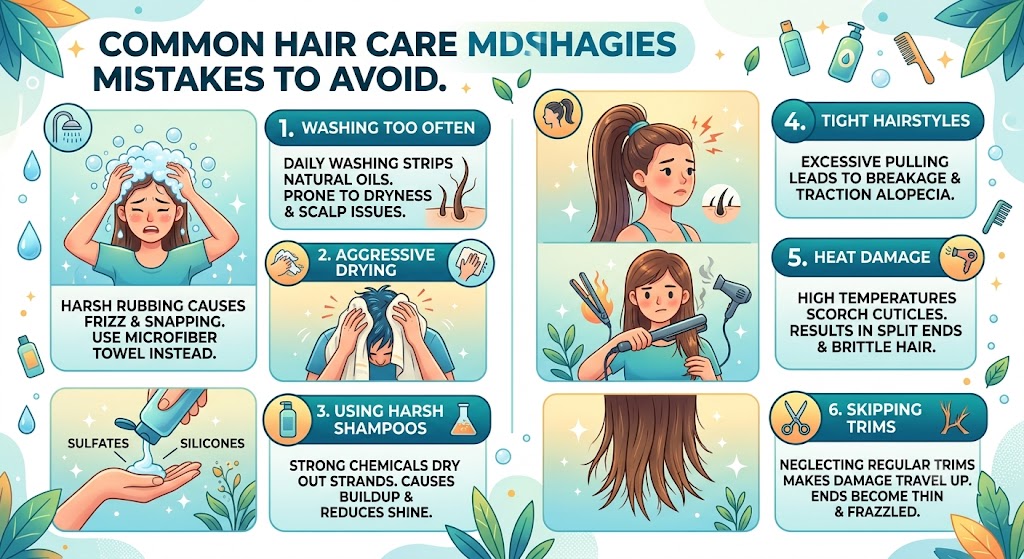
Some people wash their hair every day without considering their hair type or scalp condition.
While frequent washing may suit certain individuals, it may leave some hair types feeling dry by removing natural oils.
Instead of following a fixed schedule, adjust your routine according to your hair type, lifestyle, climate, and personal comfort.
Not sure how often you should wash your hair? Read our detailed guide on how often you should wash your hair to choose a routine that matches your hair type and lifestyle.
Mistake #2: Using Water That Is Too Hot
Very hot water may leave some people’s hair and scalp feeling dry or uncomfortable.
Many people find that washing with lukewarm water is more comfortable while still helping to cleanse the scalp effectively.
After washing, some people prefer a brief cool rinse for comfort, although there is no strong evidence that it improves hair growth.
Mistake #3: Applying Shampoo to the Entire Hair Length
Shampoo is primarily intended to cleanse the scalp, where oil, sweat, and product buildup naturally collect.
As you rinse, the shampoo usually cleans the rest of the hair.
Applying excessive shampoo directly to the hair lengths every wash may leave some hair types feeling drier.
Instead:
- Focus shampoo on the scalp.
- Massage gently using your fingertips.
- Rinse thoroughly.
- Apply conditioner mainly to the mid-lengths and ends unless the product instructions recommend otherwise.
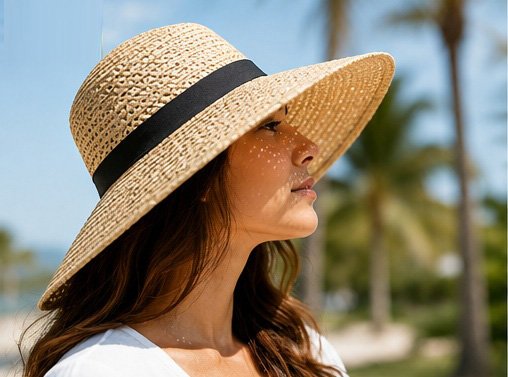
One often-overlooked outdoor hair-care mistake is forgetting about exposed scalp skin, so our guide to Scalp Sun Protection explains simple ways to make this part of your routine.
Healthy Habit
A gentle washing routine often works better than an aggressive cleansing routine.
Simple, consistent habits are usually easier to maintain over time than complicated routines involving many products.
Mistake #4: Skipping Conditioner Every Time
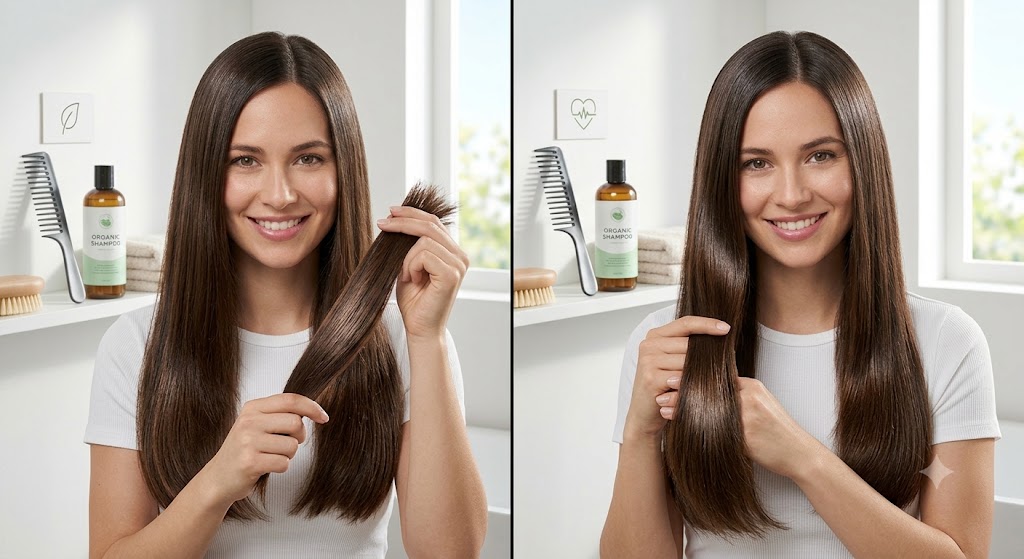
Many people focus only on shampoo and forget the importance of conditioner.
While not everyone needs the same type or amount of conditioner, using a suitable conditioner may help improve hair manageability, reduce tangles, and minimize friction during brushing.
For most hair types:
- Apply conditioner mainly to the mid-lengths and ends.
- Follow the product’s instructions.
- Rinse thoroughly after the recommended time.
If your hair tends to become oily quickly, you may choose a lightweight conditioner designed for your hair type.
If your hair already shows signs of damage, our Hair Care Routine for Damaged Hair guide provides practical daily care tips to help protect your hair from further damage.
Mistake #5: Brushing Wet Hair Too Aggressively
Wet hair is generally more delicate than dry hair.
Pulling or brushing forcefully may increase breakage for some people.
Instead:
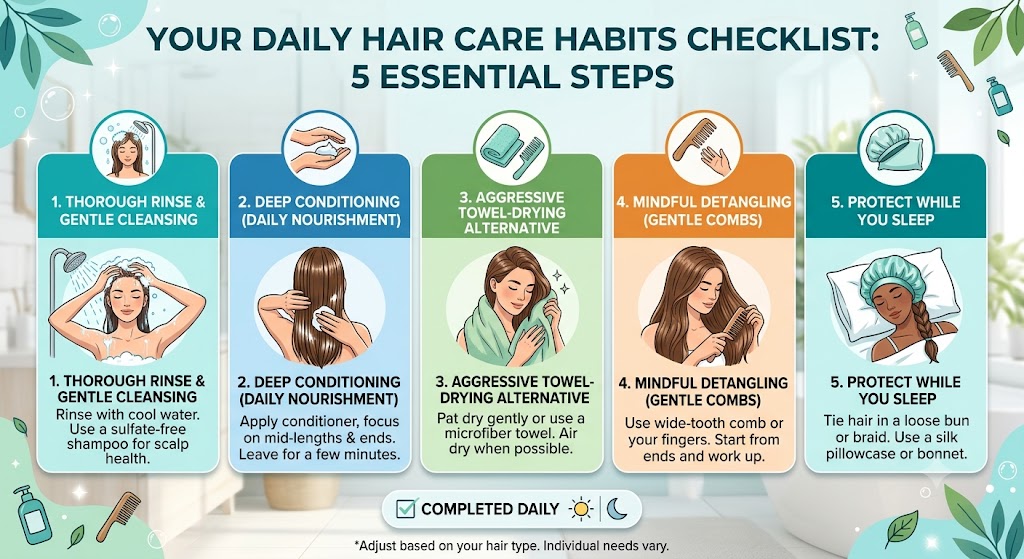
- Use a wide-tooth comb or a brush designed for wet hair.
- Start detangling from the ends.
- Gradually work your way toward the roots.
- Be patient and avoid pulling on knots.
Gentle detangling may help reduce unnecessary stress on your hair.
One simple way to improve everyday hair care is to learn How to detangle hair gently instead of repeatedly pulling through stubborn knots.
Mistake #6: Using Heat Styling Too Frequently
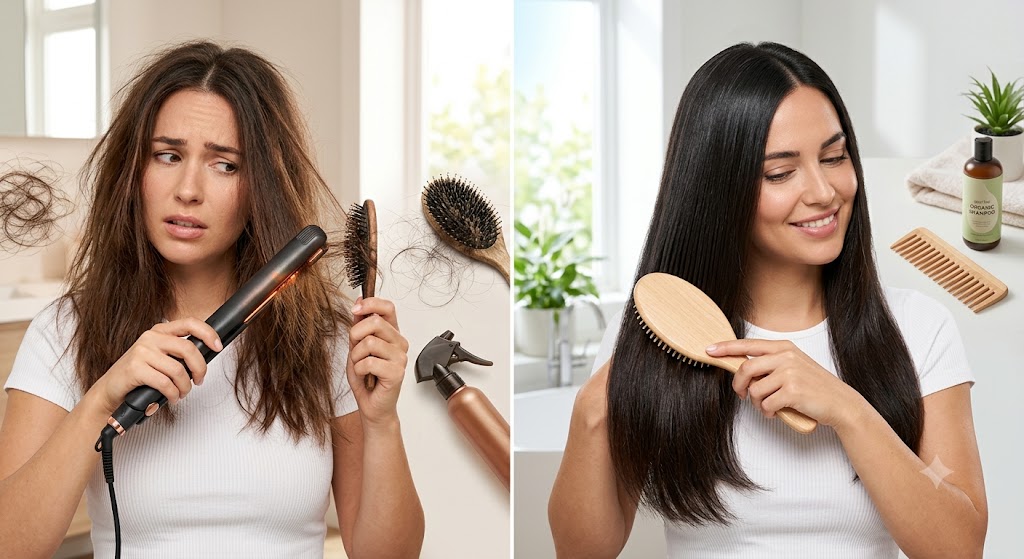
Hair dryers, straighteners, and curling irons are popular styling tools.
However, frequent or excessive heat exposure may affect the appearance and manageability of some hair types over time.
If you regularly use heat styling tools:
- Use the lowest effective heat setting.
- Follow the manufacturer’s instructions.
- Allow your hair to dry naturally whenever practical.
- Consider using products specifically formulated for heat styling if appropriate for your routine.
Simple adjustments may help reduce unnecessary heat exposure.
If your hair already feels rough or fragile from styling, our Hair Care Routine for Damaged Hair guide offers additional ideas for gentler everyday hair care.
Mistake #7: Wearing Tight Hairstyles Every Day
Tight ponytails, buns, braids, or other hairstyles can place repeated tension on the hair.
Over time, frequent tension may contribute to hair breakage or, in some cases, traction-related hair loss.
To reduce unnecessary stress on your hair:
- Avoid wearing very tight hairstyles every day.
- Change your hairstyle regularly.
- Use soft fabric hair ties instead of elastic bands with metal parts.
- Allow your hair to rest between tightly styled days.
Comfortable hairstyles are often gentler on your hair and scalp.
Mistake #8: Ignoring Your Scalp
Healthy-looking hair starts with proper scalp care.
Some people focus only on hair products while overlooking their scalp.
Simple scalp care habits include:
- Washing according to your hair type and scalp needs.
- Rinsing shampoo thoroughly.
- Avoiding excessive product buildup.
- Keeping styling products away from the scalp unless directed by the product instructions.
If you experience persistent itching, redness, pain, unusual flaking, or other ongoing scalp concerns, seek advice from a qualified healthcare professional or dermatologist.
Using too many products can be especially frustrating when hair is prone to buildup, so learning how to care for low porosity hair can help you keep your routine more intentional.
Quick Tip
Healthy hair care is not about buying the most expensive products.
Consistent daily habits, gentle handling, and choosing products suitable for your hair type are often more important than using a large number of products.
Mistake #9: Using Too Many Hair Products at the Same Time
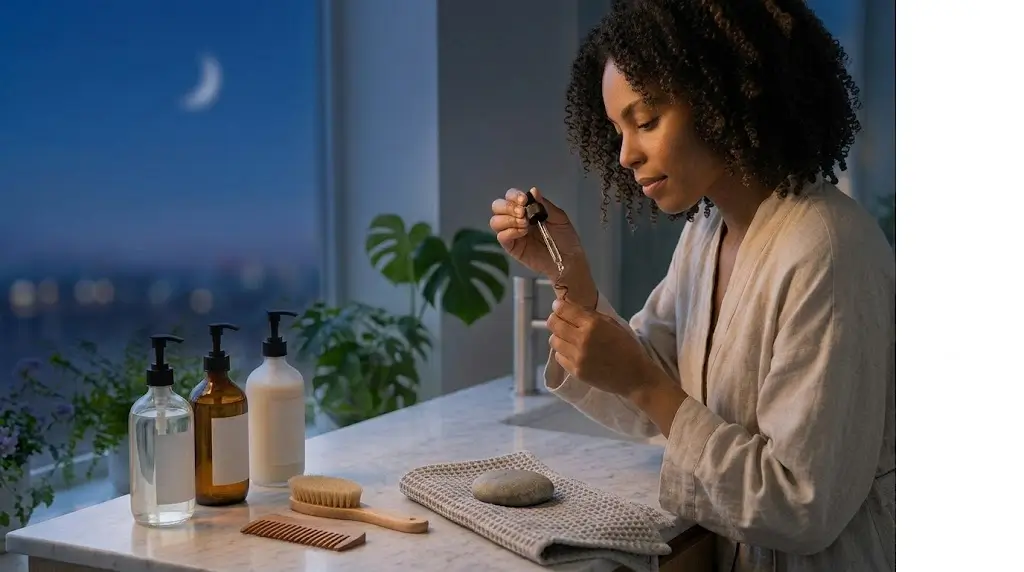
It can be tempting to try multiple shampoos, serums, oils, sprays, and styling products in the hope of achieving faster results.
However, using too many products at once may make it difficult to understand which products work well for your hair. In some cases, excessive product use may also contribute to buildup, making hair feel heavy or greasy.
Instead:
- Introduce one new product at a time.
- Follow the product’s instructions.
- Give your hair time to adjust before making additional changes.
- Choose products that suit your hair type and scalp needs.
A simple, consistent routine is often easier to maintain than a complicated one.
If your hair becomes weighed down easily, our guide to a hair care routine for fine hair explains how to keep product use more intentional.
Mistake #10: Ignoring Regular Hair Trims
Some people avoid trimming their hair because they believe it will help their hair grow longer more quickly.
Hair trimming does not increase the rate of hair growth. However, trimming split ends may improve the overall appearance of your hair and help reduce further splitting.
Many people choose to trim their hair every few months, depending on their hairstyle, hair condition, and personal preferences.
Mistake #11: Poor Nutrition and Inadequate Hydration
Hair health is influenced by many factors, including overall nutrition.
A balanced diet that includes adequate protein, vitamins, minerals, and healthy fats supports normal body functions involved in maintaining healthy hair.
General healthy habits include:
- Eating a balanced variety of foods.
- Drinking enough water throughout the day.
- Getting sufficient sleep.
- Managing stress where possible.
- Following a healthy lifestyle.
If you suspect a nutritional deficiency, consult a qualified healthcare professional before taking supplements.
Mistake #12: Following Viral Hair Care Trends Without Verification
Hair care trends on social media can spread quickly.
However, not every trend is suitable for every hair type or supported by reliable evidence.
Before trying a new hair care method:
- Consider whether it is appropriate for your hair type.
- Follow product instructions carefully.
- Look for information from recognized health organizations or qualified professionals.
- Be cautious of claims that promise instant or guaranteed results.
Healthy hair care usually develops through consistent daily habits rather than quick fixes.
Frequently Asked Questions (FAQ)
Can one hair care mistake permanently damage my hair?
Not necessarily.
Many common hair care mistakes can often be corrected by improving your routine. However, repeated exposure to excessive heat, harsh chemicals, or continuous tension may contribute to ongoing hair damage in some individuals.
How do I know if my hair care routine is working?
Signs may include:
- Hair feels easier to manage.
- Reduced breakage during brushing.
- Improved comfort of the scalp.
- Hair appears healthier over time.
Results vary depending on individual hair type and lifestyle.
Should I stop using all styling products?
Not necessarily.
Many people use styling products successfully.
The key is choosing products that suit your hair type and using them according to the manufacturer’s instructions.
Can changing my routine improve hair health?
Simple adjustments such as gentle washing, reducing heat exposure, avoiding tight hairstyles, and using suitable products may improve the appearance and manageability of your hair over time.
When to See a Doctor
Consider consulting a qualified dermatologist or healthcare professional if you experience:
- Sudden or excessive hair loss.
- Bald patches.
- Persistent scalp pain.
- Ongoing redness or swelling.
- Bleeding or discharge from the scalp.
- Severe itching that does not improve.
- Hair changes associated with other concerning health symptoms.
Early professional evaluation may help identify underlying causes and guide appropriate management.
Trusted Resources
For additional evidence-based information about healthy hair and scalp care, you may find these trusted resources helpful:
Trusted Resources
For readers who would like to explore additional evidence-based information about healthy hair and scalp care, the following trusted resources may be helpful:
- American Academy of Dermatology (AAD): Hair and Scalp Care
- NHS (National Health Service): Hair Loss
- Mayo Clinic: Healthy Hair Care
Medical Disclaimer
This article is intended for educational and informational purposes only. It is not a substitute for professional medical advice, diagnosis, or treatment. Hair care needs vary from person to person. If you have persistent scalp concerns, significant hair loss, or questions about treatments suitable for your individual needs, consult a qualified healthcare professional or dermatologist. Never ignore or delay seeking professional medical advice because of information you have read online.
Conclusion
Healthy-looking hair is often the result of consistent daily habits rather than expensive products or quick fixes. Avoiding common hair care mistakes, choosing products that suit your hair type, and treating your hair gently may help improve its appearance and manageability over time.
Remember that everyone’s hair is different. A routine that works well for one person may not be suitable for another. Pay attention to your hair’s needs, make gradual adjustments when necessary, and seek professional medical advice if you experience persistent hair or scalp concerns.
Building healthy hair care habits is a long-term process, and small positive changes can make a meaningful difference over time.
Quick Hair Care Checklist
✅ Daily
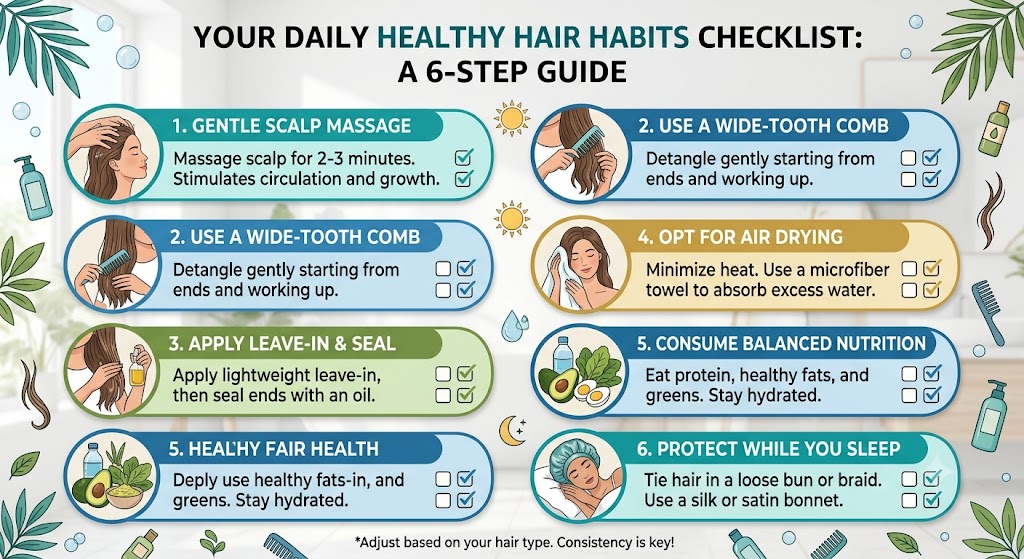
- Wash your hair according to your hair type and scalp needs.
- Avoid excessive heat styling whenever possible.
- Detangle your hair gently.
- Protect your hair from unnecessary friction and damage.
✅ Weekly
- Use conditioner suitable for your hair type.
- Clean your hairbrush and comb.
- Check for product buildup.
- Review your styling habits.
✅ Monthly
- Trim split ends if needed.
- Review whether your products still suit your hair.
- Check your scalp for persistent changes.
- Adjust your routine according to seasonal or lifestyle changes.
Key Takeaways
✔ Small daily habits can influence your hair’s overall condition.
✔ Avoid unnecessary heat, harsh handling, and excessive product use.
✔ Choose products suitable for your hair type.
✔ A healthy scalp supports healthy-looking hair.
✔ Be cautious about viral hair care trends that promise unrealistic results.
✔ Consult a qualified healthcare professional if you experience ongoing scalp problems or significant hair loss.